For decades, a single line spoken by a 13-year-old girl on a 1969 sitcom remained harmless entertainment. But in the age of social media and modern health debates, that same line transformed into a weapon used against her, forcing Maureen McCormick to confront a legacy she never asked for. The actress, best known for playing Marcia Brady on The Brady Bunch, has now shut the door on that chapter of her life entirely, refusing to watch the episode again. The controversy centers on the thirteenth episode of the show’s first season, titled “Is There a Doctor in the House?
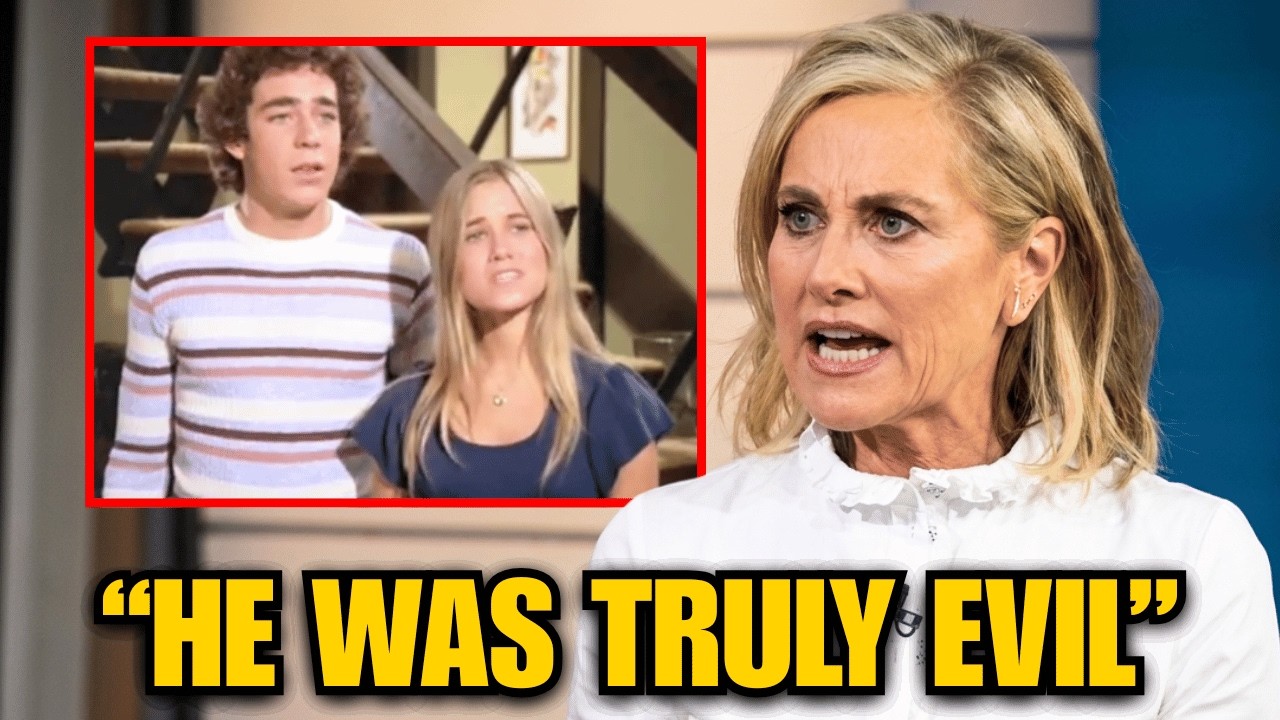
” In the episode, all six Brady children come down with the measles and are quarantined in one bedroom. Rather than depicting the illness as serious or frightening, the script portrayed it as a cozy, playful staycation, complete with board games, comics, and shared soup. At one point, McCormick’s character, Marcia, looks toward the camera and cheerfully declares, “If you have to get sick, you can’t beat the measles. ” The studio audience laughed on cue, and the moment passed without notice in late December 1969
The Brady Bunch was created by Sherwood Schwartz as an escape from a turbulent America, a world where every problem could be solved within 22 minutes.
The colorful set, synthetic green grass, and deliberate absence of real-world conflict made the show a comfort food for millions of families. But that same polished perfection placed an immense burden on its young cast, especially McCormick, who became a national ideal of teenage girlhood. Off-screen, thepressure of embodying Marcia Brady contributed to a difficult personal journey for McCormick, including struggles with addiction, anxiety, and body dysmorphia following the show’s cancellation in 1974. Years later, McCormick rebuilt her life, achieving long-term recovery, writing a bestselling memoir about her struggles, getting married, and focusing on her health and creativity.
However, a half-century after the episode first aired, her childhood image was pulled back into the spotlight against her will. As anti-vaccine rhetoric grew across social media, memes featuring Marcia Brady’s measles quote began circulating widely, used to suggest that childhood diseases are trivial and even enjoyable. These posts presented the fictional world of The Brady Bunch as historical evidence, ignoring both the scripted nature of the sitcom and the real-world dangers of the measles, which caused hundreds of deaths and serious complications in children annually before widespread vaccination. McCormick was horrified to discover her 13-year-old face being used without her consent to promote a message directly contradicting medical science and her own beliefs.
In response, she broke her silence publicly, clearly stating her anger at having her image exploited by anti-vaccine campaigns. She affirmed her complete trust in medical science, her support for life-saving vaccines, and her decision to fully vaccinate her own daughter. She also drew a sharp contrast between the cozy fantasy filmed on the studio set and her own childhood experience with the measles, which she described as a painful, frightening illness involving high fever, severe light sensitivity, and days spent alone in a dark room—
McCormick’s forceful rebuttal resonated across media, stripping from the anti-vaccine movement one of its preferred pop-culture shields. But the experience permanently altered her relationship with that specific episode.
What was once a forgotten piece of her professional portfolio became tainted by controversy and misuse. As a result, McCormick now maintains an unwavering boundary: she refuses to watch that episode from 1969 ever again. More broadly, she has said she does not watch reruns of The Brady Bunch at all, explaining that once she has seen her work, she prefers to move forward rather than dwell on her televised adolescence
Today, McCormick has fully reclaimed ownership of her life and career. She has successfully transitioned into home renovation and lifestyle television, notably starring in HGTV’s “A Very Brady Renovation,” where she reunited with former castmates to restore the show’s famous house.
She has also showcased her design talents on the series“Frozen in Time. ” Beyond her creative projects, she remains an active advocate for mental health awareness, addiction recovery, and animal welfare. Living a quiet, fulfilling life in Southern California with her husband, Michael Cummings, she continues to pursue new endeavors on her own terms.
Her story serves as a powerful reminder that while one cannot control the past, one retains full authority over the future, defined not by a character written in 1969 but by the independent, resilient woman she has become


