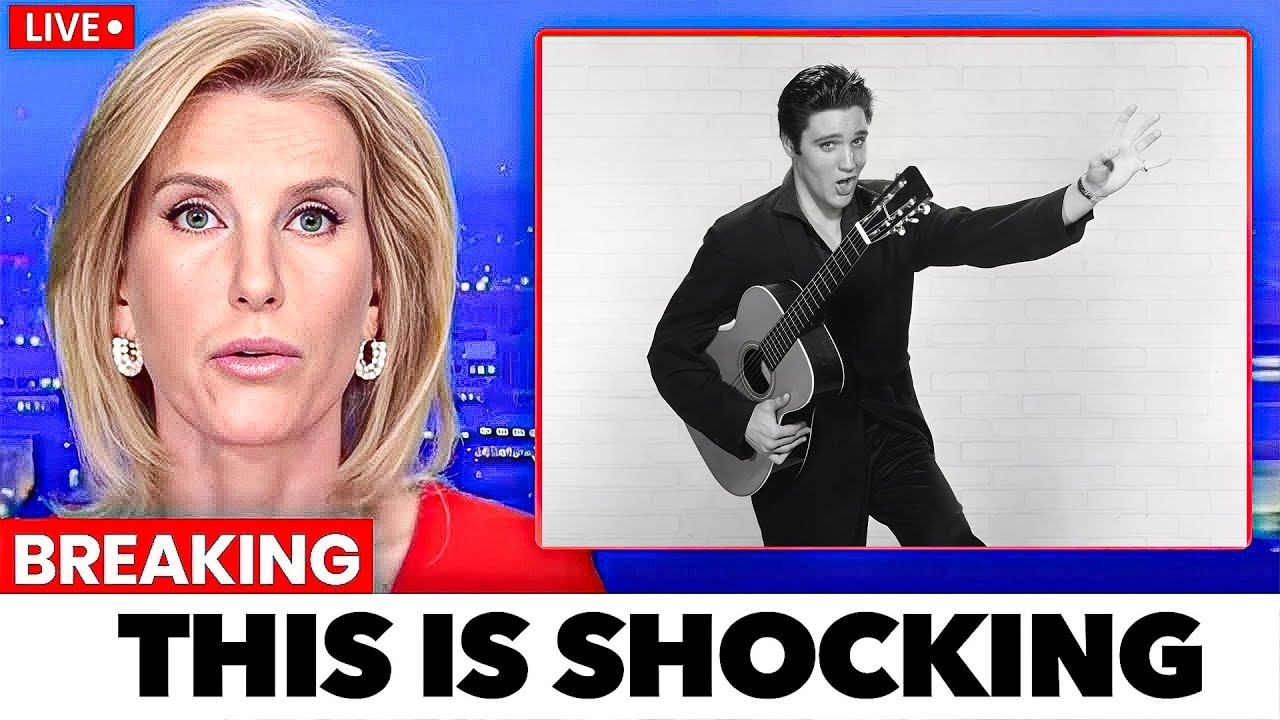
Elvis Presley was pronounced dead at Baptist Memorial Hospital on August 16, 1977, and the world was told he suffered a massive heart attack. But the official story, repeated for decades, was challenged by medical evidence that emerged from sealed autopsy files and toxicology reports, pointing to a death driven by prescription drug abuse and years of physical decline that doctors had long enabled. The king of rock and rollwas only 42, yet his body, according to forensic examiners, looked decades older, ravaged by an enlarged heart, a scarred liver, and a colon so impacted that doctors believed it could have ruptured at any time. The autopsy, led by Shelby County Coroner Dr.
Jerry Francisco, was clouded in controversy from the start, as he declared the cause of death within hours, before toxicology results were complete, citing cardiac arrhythmia. Behind the scenes, medical insiders whispered that the quick pronouncement was a deliberate effort to protect Elvis’s legacy, his family, and the multi-million dollar industry built on his image. When toxicology results finally came back, they revealed high levels of codeine, significantly above therapeutic range, along with Quaaludes, Placidyl, Valium, and Demerol, a cocktail that depressed his central nervous system, slowed his breathing, and placed unbearable strain on his already weakened heart. While Francisco insisted drugs played direct role, other doctors present disagreed, arguing that the combination was more than enough to cause respiratory failure, triggering cardiac arrest.
The Presley family, led by Elvis’s father Vernon, requested that large portions of the autopsy file be sealed for 50 years, until the year 2027, officially to protect privacy, but many insiders believed it was to bury evidence that Elvis’s death was preventable and drug-related. For years, medical experts, including forensic pathologists who reviewed the files, publicly contradicted the official narrative, accusing local authorities of protecting Elvis’s reputation over the truth. Years of prescription drug dependence, including more than 10,000 doses of amphetamines, barbiturates, and narcotics prescribed by his physician Dr. George Nichopoulos in a nine-month span, had left his organs in ruin, and his body failing long before that August morning.
While Elvis had been talking about marriage, the future, and getting healthy in his final days, his reliance on pills to function and sleep had become a well-known open secret in Memphis, one that no one stopped. Beyond the autopsy, decades later, a series of discoveries inside Graceland’s sealed basement added another layer to Elvis’s hidden reality. What was meant to be a private storage space instead revealed itself as a time capsule of his fears, regrets, and obsessions with death and escape. Those who entered found handwritten notebooks filled with confessions like “Fame is the loneliest prison, and I am its warden and prisoner all the same,” and his raw, unpolished recordings, made alone with his guitar, where he whispered into the dark about the crushing weight of being Elvis Presley.
Hidden among dusty boxes were personal letters addressed to his ex-wife Priscilla and daughter Lisa Marie, expressions of love, sorrow, and warnings about the vultures of fame, messages he never sent. A locked safe contained not cash or jewels, but a worn journal where he wrote of feeling controlled by handlers, of dreams of disappearing, and of being worked to death whatever he chose. Alongside the safe, stacks of obituaries of fellow musicians who died young, files of police reports, maps with highlighted routes, and disguises including wigs and uniforms suggested Elvis had been contemplating escaping Graceland entirely, slipping away from the identity that had consumed him. These artifacts, hidden away for decades, painted a portrait of a man preparing for endings, haunted by the fear that fame itself was a gilded cage that would eventually destroy him.
And while the mystery of his final night remains, these findings forced a painful reexamination of the final years of a man trapped between his legend and his humanity. Priscilla Presley’s name has always been entwined with Elvis’s own, their love story, celebrated by millions, has long been one of the most romanticized in entertainment history. Yet behind the fairy tale narrative that defined his legacy, hidden truths about their relationship have slowly surfaced, revealing a story marked by control, betrayal, and survival. Priscilla Beaulieu, born in Brooklyn in 1945, met Elvis at a party in West Germany in 1959, when she was just 14 years old, and he was 24.
Her stepfather’s military career had moved the family constantly, leaving her lonely and desperate for connection, a vulnerability Elvis recognized and charmed. Despite her parents’ initial alarm over the age gap, Elvis convinced them his intentions were pure, and their relationship began nightly, conducted in secret, a dynamic that blurred the line between a fairy tale and the exploitation of a child. When she moved into Graceland in 1963, the world believed she had entered a dream, but behind the mansion’s gates, she discovered she had entered a gilded prison. Elvis dictated what she wore, how she did her hair, and her makeup, molded her into the woman he imagined rather than the girl she was.
The Memphis Mafia, his inner circle, monitored her every move, reporting back to him if she stepped out of line. She was often left alone for weeks while he toured, filming, and having affairs, leaving her lonely, trapped in a mansion that felt more like a fortress than a home. And while she endured his infidelities in silence, she eventually began craving the independence she had never known. She began an affair with her karate instructor, Mike Stone, a relationship that offered her attention and respect that Elvis denied her.
When Elvis discovered the affair, his rage was explosive, and he reportedly spoke of wanting Stone killed, though no such order was ever carried out. By the time their divorce was finalized in 1973, the marriage had long since collapsed, though the couple presented a united front, walking out of the courthouse hand in hand for the cameras. The split shocked fans, but for Priscilla, it was the beginning of her reinvention. After Elvis’s death in 1977, she took control of Elvis Presley Enterprises, turning the nearly bankrupt Graceland into one of the most profitable tourist attractions in America, opening its doors to the public in 1982 against widespread skepticism.
She stepped into Hollywood, starring in films like the Naked Gun series, building her own celebrity identity independent of his shadow. Yet her journey was not without scars, as she bore the weight of hidden secrets, including the 2008 revelation that she had been injected with industrial-grade silicone by an unlicensed doctor, leaving her disfigured until corrective surgeries, and her efforts to control Elvis’s legacy in ways some former insiders accused her of reshaping history for her own benefit. In candid moments over the years, Priscilla admitted the relationship was never the perfect romance fans imagined, confessing that her marriage, while filled with love, was marked by control and manipulation, and that she spent years learning to make decisions for herself, to rebuild herself from the ground up after being overshadowed for so long. The final truth of their story is not one of king and queen, but of a girl who grew up too fast, a woman who carried secrets too heavy, and a survivor who outlived the legend to tell her side of it.
For fans, seeing this truth shatters the illusion of perfect love, replacing it with a reality far more human, far more flawed, and far more haunting, yet one that reveals her real legacy is not defined simply by her connection to Elvis, but by her fight to reclaim her identity in the ruins of his myth.