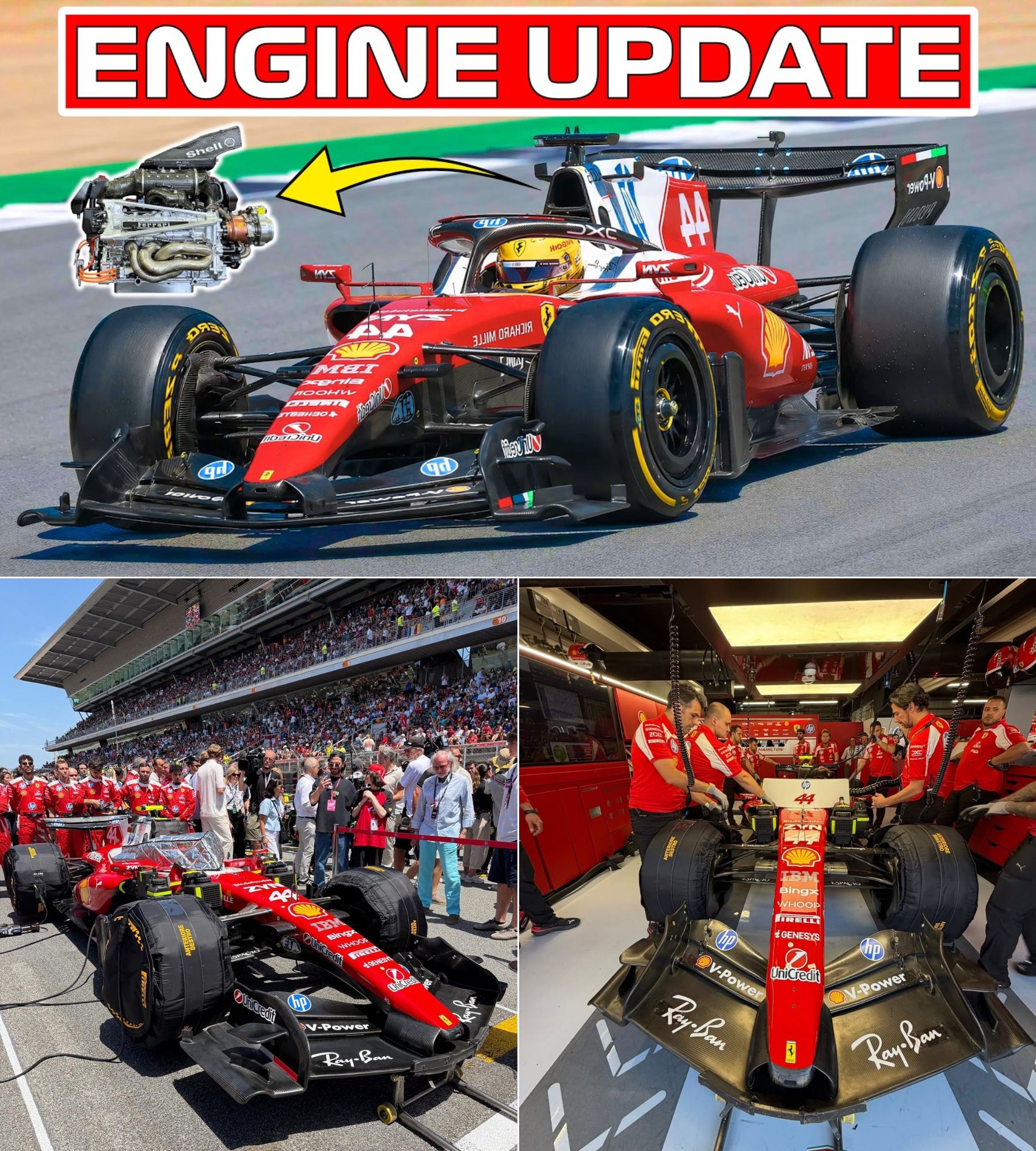
Ferrari’s recent engine upgrade has sent shockwaves through the racing community, with reports of a horsepower boost that has doubled overnight! Initially pegged at a modest five horsepower gain, the latest buzz suggests the real figure could be as high as 15, igniting excitement and debate among fans and analysts alike.
 The Italian motorsport scene was abuzz yesterday when Auto Race Italy broke the news about Ferrari’s first ADUO-supported engine specification, which was expected to add a modest five horsepower to the SF26’s power unit. While this was seen as a positive step, it was hardly a game-changer. However, today, Motorsport Italia’s Franco Nuniz has thrown a curveball, claiming the actual increase is 15 horsepower—three times the earlier estimate.
This discrepancy isn’t simply a matter of one outlet being right and the other wrong. Instead, it reflects two credible sources interpreting the same development from different perspectives and timelines. Interestingly, a technical analysis published just days before these reports hinted at the reason behind the conflicting numbers. According to that breakdown, Ferrari’s engineers are tracking two figures: a current deficit of about 25 horsepower compared to Mercedes and a goal to reduce that gap to no more than 10. Subtracting the latter from the former gives us the 15 horsepower figure, but this isn’t a straightforward measurement of newfound power.
Before jumping to conclusions, it’s essential to understand what each number signifies. Auto Race’s five horsepower figure is conservative and specific, representing the gain from the latest engine specification alone. It’s a clear indication of what the engine can deliver in isolation. On the other hand, Motorsport Italia provides a broader context, estimating how much of the competitive gap Ferrari hopes to close, factoring in not just the engine changes but also the revised fuel and their interactions.

Both numbers could be accurate in their own right. The five horsepower could stem from the hardware itself, while the additional gains might come from improved fuel efficiency and combustion processes. Ferrari’s engine, unique for its steel cylinder head, withstands higher temperatures and pressures than the aluminum alternatives used by most competitors. This design allows for a more efficient combustion cycle, leading to better energy extraction from the fuel.
Speaking of fuel, Ferrari has been collaborating closely with Shell to develop a fuel formulation tailored to this hotter combustion environment. This intricate relationship between hardware and fuel chemistry is crucial, making it challenging to determine how much of the horsepower gain comes from each component.

In a twist that has flown under the radar, Charles Leclerc’s recent struggles might also be tied to these developments. Following a technical debrief after the Barcelona Grand Prix, Ferrari engineers are investigating whether the electronic failures that led to Leclerc’s retirement in Spain could be linked to his earlier issues in Monaco. While no definitive cause has been confirmed, this investigation could provide insights into the team’s performance woes.
As the racing world turns its attention to the Red Bull Ring, where Leclerc has historically performed well, the stakes are high. If the electrical issues are resolved and the new engine specification delivers even the conservative five horsepower gain, Leclerc could have a significant advantage at a track that suits his driving style.

While Lewis Hamilton’s recent victory has overshadowed Ferrari’s struggles, both cars need to contribute consistently to the championship fight. The outcome of Leclerc’s investigation could be just as critical as the horsepower debate, especially as the team heads into a crucial race weekend.
As the Red Bull Ring approaches, fans are left wondering: will Ferrari’s new engine specification truly close the gap to Mercedes, or will the numbers remain just that—numbers? The answer may soon be revealed on the track.