Scientists have traced the origins of human blood types back roughly 20 million years, revealing that the diversity in how our blood is classified is not a random biological accident but a record of survival shaped by ancient diseases and pathogens. The systems that determine whether someone is type A, B, AB, or O predate the entire human genus, inherited from a common ancestor shared with chimpanzees, gorillas, and other primates. A landmark genetic study published in the Proceedings of the National Academy of Sciences, led by researcher Laura Segurel of the University of Chicago, compared DNA sequences inside the blood type gene across primates and concluded that the A and B variants were inherited from a shared ancestor rather than evolving independently in each species. “Their evidence is rather convincing that this is a shared, very old capability that has remained throughout the divergence of the species,” said Martin Olsson, a transfusion specialist at Lund University in Sweden, commenting on the findings.
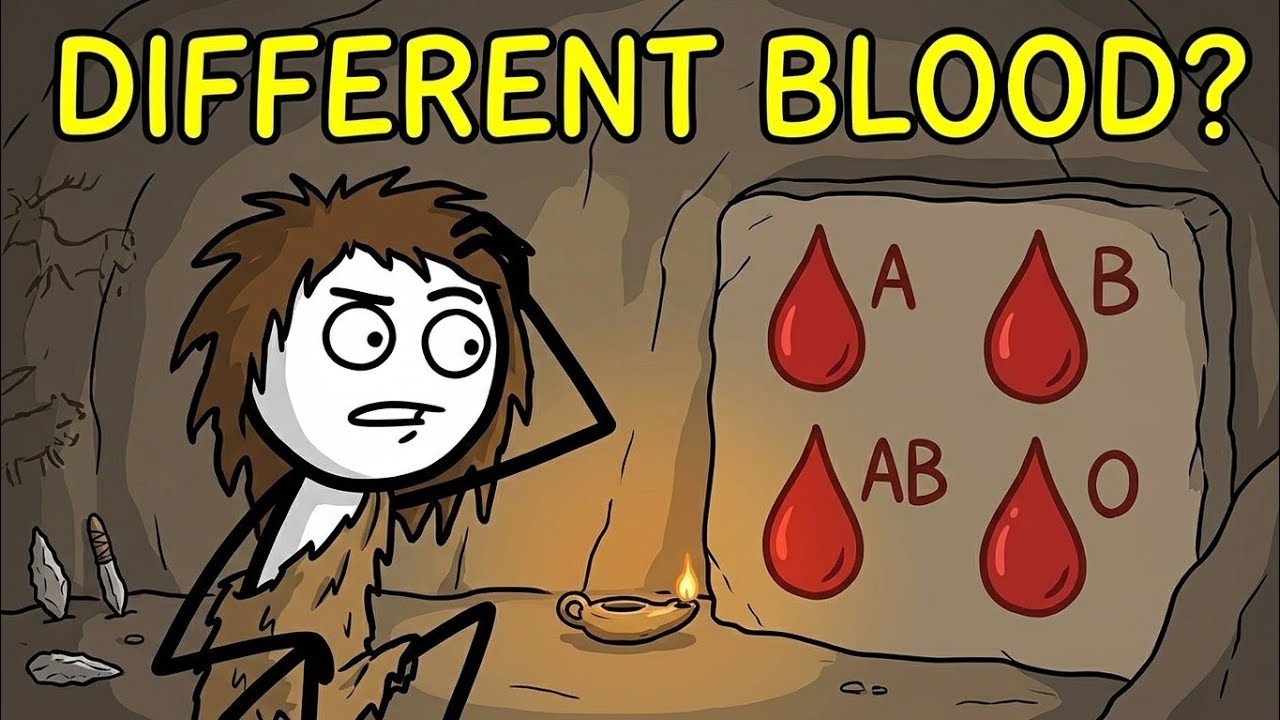
This means the molecular markers on human red blood cells are older than the split from the chimpanzee lineage roughly 6 million years ago and have been maintained continuously through tens of millions of years of evolution, a sign that they serve a critical survival function. Blood types refer to specific sugar molecule structures, called antigens, attached to the surface of red blood cells. Type A cells display one antigen, type B another, type AB displays both, and type O displays neither, which is why the O designation comes from the German word “ohne,” meaning without. The medical importance of these differences stems from the immune system’s response to foreign antigens.
A person with type A blood carries antibodies against type B, while someone with type O carries antibodies against both A and B, and type AB individuals carry neither, allowing them to receive any blood type. The immune system did not develop this aggressive response to foreign blood types in anticipation of modern transfusions, which only became reliably survivable after Karl Landsteiner identified the blood group system in 1900 in Vienna, a discovery that earned him the Nobel Prize in Physiology or Medicine in 1930. Instead, the immune system was preparing for pathogens, many of which carry surface molecules that mimic the antigens found on human red blood cells. This molecular mimicry creates a dangerous dynamic: a pathogen wearing a structure similar to type A antigen is more deadly to people with type A blood, whose immune systems classify the antigen as self and hesitate to attack, while someone with type O blood, carrying anti-A antibodies, can launch an immediate defensive response.
This mechanism is believed to drive blood type diversity as a form of population-level immune defense, ensuring that not everyone is equally vulnerable to the same pathogen. The clearest documented example involves malaria, specifically Plasmodium falciparum, the most lethal malaria parasite, which infects red blood cells and clumps them into obstructive structures called rosettes that can block brain blood vessels and cause deadly cerebral malaria. The A and B antigens help hold these rosettes together, making them larger and more dangerous, while type O cells lack those structures, producing smaller, less cohesive clumps that break apart more easily. A matched case-control study of 567 Malian children found type O blood present in only 21% of severe malaria cases compared to 44 to45% among milder cases and healthy controls, translating to a 66% reduction in the odds of developing severe malaria for type O individuals.
Researchers believe this sustained selective pressure, malaria disproportionately killing type A and B individuals generation after generation in endemic regions, is a primary reason type O became the oldest and most globally common blood type, withthe timing of its emergence in the DNA record coinciding with the period before humans migrated out of Africa. As ancient humans moved into new environments with different disease landscapes, blood type frequencies shifted accordingly. A study in Scientific Reports examining genetic data from 22 ancient Homo sapiens who lived between 46,000 and 16,500 years ago, alongside DNA from 14 Neanderthal specimens, found the process was not passive. New environments brought new pathogen pressures, selecting for different blood type variants.
Researchers identified a critical bottleneck period when early Homo sapiens, after leaving Africa, spent roughly 15,000 years on the Persian Plateau between the Zagros Mountains, an area described as a “genetic incubator” where new mutations emerged and spread before populations pushed further into Eurasia. Today, global blood type distribution reflects these ancient pressures: type O dominates in regions where malaria was endemic, type A is most common in Central and Northern Europe, type B forms a geographic belt from northern India through Central Asia into northern China, and type AB remains rare everywhere except slightly higher frequencies in parts of Japan and Korea. The Neanderthals, whose DNA survives in 1 to4% of non-African people today, offer another chapter. Researchers at Aix-Marseille University, publishing in PLoS One, decoded the blood type genetics of three Neanderthal genomes and one Denisovan genome, analyzing seven blood group systems including Rh.
Neanderthals had type O and carried alleles for A and B, appearing similar to modern humans, but their Rh system revealed peculiar partial forms of the Rh-D antigen, missing specific molecular components found in complete forms common in most modern humans. Partial antigens can be immunologically problematic because a person carrying one can generate an immune response against complete versions, which the immune system may read as foreign. This was likely not an issue among Neanderthals, where everyone carried similar partial variants, but became dangerous when modern Homo sapiens arrived and interbreeding began. Neanderthal mothers carrying hybrid fetuses that inherited complete Rh antigens from Homo sapiens fathers may have mounted immune attacks against their own pregnancies, contributing to reproductive failure.
“Neanderthals have an Rh blood group that is very rare in modern humans,” lead author Stephan Mazieres told Live Science. Combined with evidence of genetic inbreeding, this painted a picture of low immune adaptability that left Neanderthals poorly positioned to survive the genetic collision with an incoming more diverse species. The blood type story continues to affect modern health. Type O protects against severe malaria but increases vulnerability to severe cholera, witha 1996 gastrointestinal outbreak in Scotland finding that 87.
5% of patients who died were type O. Type A faces elevated risks from certain cardiovascular conditions and some cancers, and blood type associations with COVID-19 severity, venous thromboembolism risk, and gastric cancer rates continue to accumulate in medical literature, none of which appear coincidental. The flags on red blood cells, shaped by diseases ancestors survived, are still interacting with the diseases of today in ways researchers are mapping. Every one of the approximately 25 trillion red blood cells in the human body carries a molecular record of ancestral survival, compressed into antigen structures that predate our species and were shaped by parasites, plagues, migrations, and even interbreeding events between species.
Rather than being a random biological detail or hospital paperwork entry, blood type is a 20-million-year-old evolutionary record, a chapter of survival that began before humans existed, played out across every continent, and remains ongoing in the biology of every person alive today.