A Neanderthal burial site discovered in a cave in Iraq in 1960 contained enormous concentrations of pollen from multiple plant species, including yarrow, groundsel, and ephedra. Researchers interpreted the find as deliberate placement of medicinal plants in the grave. Several of those exact plants are still used in herbal medicine today and some have been clinically studied for genuine medicinal properties. Long before modern medicine, humans developed effective treatments through accumulated trial and error passed down across generations.
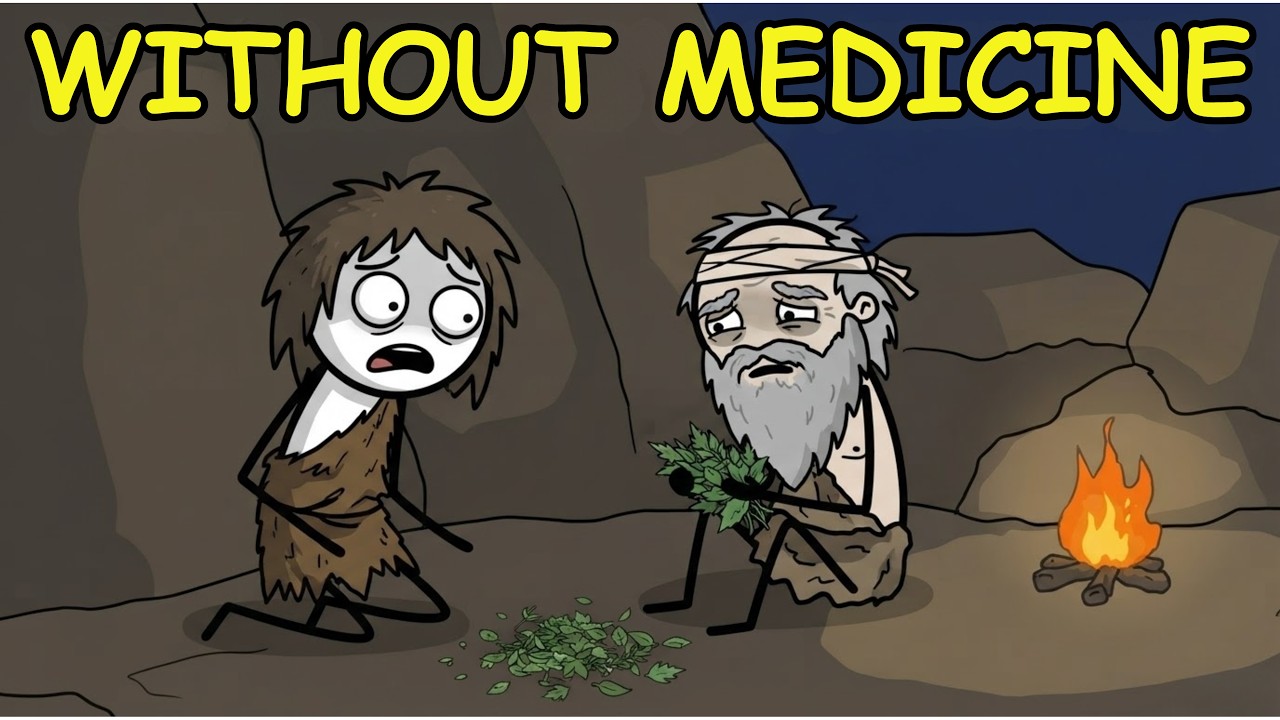
Willow bark, which contains salicin—the compound aspirin is based on—was used independently across ancient Egypt, Greece, China, and indigenous North America to treat pain and fever. Garlic was used as an antibiotic by ancient Egyptians and has documented antimicrobial properties. Turmeric, used for millennia in Ayurvedic medicine, contains curcumin with anti-inflammatory effects. Ancient healers developed sophisticated preparation methods, knowing which plants to boil, dry, or combine in specific proportions.
Some herbal preparations involved dozens of ingredients, each serving a role—some as active compounds, some to mask bitter taste, some to aid absorption, some to counteract side effects. This was empirical pharmacology developed without laboratory equipment, effectively one massive uncontrolled clinical trial with all of humanity as the sample size. Wound care was a constant necessity in a world where hunting, war, and accidents were everyday occurrences. Ancient Egyptians used honey extensively on wounds, a practice with genuine scientific basis—honey has low pH, high sugar content, and releases small amounts of hydrogen peroxide, creating a hostile environment for bacteria.
Modern medicine has rediscovered this, with clinically approved Manuka honey now used in wound care. Certain clays rich in minerals like montmorillonite have antimicrobial properties and were used by indigenous cultures worldwide. Maggot therapy, where fly larvae eat only dead tissue from infected wounds, was used by indigenous Australians, Mayan people, and military surgeons throughout history—and is still used in modern hospitals for wounds unresponsive to antibiotics. Spider webs applied to wounds to stop bleeding were used by Greeks, Celts, and Native Americans; spider silk contains vitamin K, which plays a role in blood clotting.
Archaeological evidence shows trepanning—drilling or scraping a hole in the skull—dates back over 9,000 years. Bones show signs of healing around the holes, proving patients survived the procedure. Some skulls show multiple trepanning sites, indicating the same person underwent the operation more than once. A skeleton found in France dating to around 7,000 years ago shows a forearm amputation with clear signs of bone regrowth, meaning the patient survived long enough for the stump to heal.
That required surgical skill plus post-operative care, wound management, and community support. This stands in stark contrast to 19th-century European hospitals, where unsanitary conditions sometimes produced higher mortality rates than battlefield surgeries. Hospitals in the 1840s were so unhygienic that infection risk was sometimes worse than staying home. Joseph Lister only made antiseptic practice standard in the 1860s.
Ancient surgeons working outdoors in fresh air with clean stone tools may have accidentally achieved better sterility conditions than their 19th-century counterparts. Ancient humans also survived because of what was inside them. Populations exposed to pathogens over generations developed inherited resistance. Children who survived childhood—many did not—were often immunologically robust adults.
This explains why the arrival of Europeans in the Americas was so devastating to indigenous populations. Diseases like smallpox, measles, and influenza had been building resistance in European populations for centuries, while indigenous Americans had no prior exposure. Death tolls in some regions reached 90 percent. The gut microbiome is another factor modern research is increasingly linking to immune function and overall health.
Ancient humans likely had spectacular microbiomes by modern standards because they ate diverse diets of wild plants, fermented foods, and animal products, and were regularly exposed to soil and its microorganisms. Fermented foods appear across virtually every ancient culture—kimchi, sauerkraut, kefir, kvass, injera—and each served as a natural probiotic supplement. Studies comparing modern hunter-gatherer populations to industrialized populations find dramatically higher microbial diversity among hunter-gatherers, which is consistently associated with better immune function and lower rates of autoimmune disease. The placebo effect also played a genuine role.
Documented neuroscience shows that believing you will get better can produce measurable changes in pain perception, immune function, and recovery time—even when patients know they are taking a placebo. Ancient healers understood this without having language for it. The ritual surrounding treatment, the confidence of the healer, the visible participation of the community, and the belief that something active was being done sent powerful signals to the patient’s brain. Modern research confirms that social support improves survival rates and that bedside manner has measurable effects on patient outcomes.
Ancient medicine had hard limits. Bacterial infections that crossed certain thresholds were death sentences. Appendicitis killed people who today are saved by routine one-hour surgery. Childbirth was extraordinarily dangerous.
Dental infections spreading to the jaw could be fatal. Infant mortality was staggering—in many ancient populations, between 25 and 50 percent of children died before adulthood. Average life expectancy figures of 30 to 35 years are heavily skewed by childhood deaths; those who survived childhood could easily live into their 50s, 60s, or 70s. Specific ancient medical traditions reveal remarkable sophistication.
The Ebers Papyrus from around 1550 B. C. E. describes over 700 remedies, the cardiovascular system, and surgical procedures.
Traditional Chinese medicine developed acupuncture, herbal medicine, and detailed mapping of the body over thousands of years. Ayurvedic medicine from the Indian subcontinent identified medicinal properties of hundreds of plants. A physician around 600 B. C.
named Sushruta described surgical procedures including rhinoplasty—rebuilding a nose—so sophisticated that 18th-century British surgeons traveled to India to learn from practitioners still using his techniques. The ancient Greeks gave us Hippocrates, who made the radical claim that disease is caused by natural factors—diet, environment, and physical imbalances—not angry gods. This premise that the body operates according to understandable natural laws became the foundational basis of all modern medicine. The oldest known medical texts, clay tablets from ancient Sumer over 4,000 years old, list specific plant-based treatments for specific symptoms in a format recognizably clinical: symptom, treatment, method.
That is the same structure a doctor uses today when writing a prescription. Ancient humans survived without modern medicine because they were never truly without medicine. They had plants containing genuinely active compounds, wound care techniques that were often surprisingly effective, immune systems hardened by generations of pathogen exposure, fermented foods maintaining gut health, and healers who understood the psychological power of ritual and community care. Most important of all, they had each other.
Social support has measurable effects on health and survival, and modern research finds loneliness to be a powerful risk factor for early death comparable to smoking. Ancient humans lived in tight-knit communities where the sick were cared for, the weak were protected, and the elderly were valued for their knowledge. The fundamentals of health remain unchanged. Diverse real food, connection with other people, physical movement, stress management, and adequate sleep are the same core advice given today as was given around a fire 10,000 years ago.
Modern tools are unrecognizably different, but the human underneath them is not.