The global food system has quietly built its most successful supply chain around a single biological anomaly, a bird engineered to produce nearly ten times the eggs of its wild ancestor, leaving thousands of other edible egg species on the culinary sidelines not because they are inferior, but because they never scaled.
This is the conclusion of a deep dive into the biology, economics, and cultural history of egg consumption, which reveals that the humble chicken egg, which dominates breakfast tables and baking recipes worldwide, is less a testament to nutritional superiority and more a monument to agricultural optimization. The question of why we don’t eat the eggs of ducks, geese, crocodiles, or turtles has a complex answer rooted in selective breeding, industrial momentum, and the stark realities of sustainability, rather than in the flavor or health benefits of the alternatives.
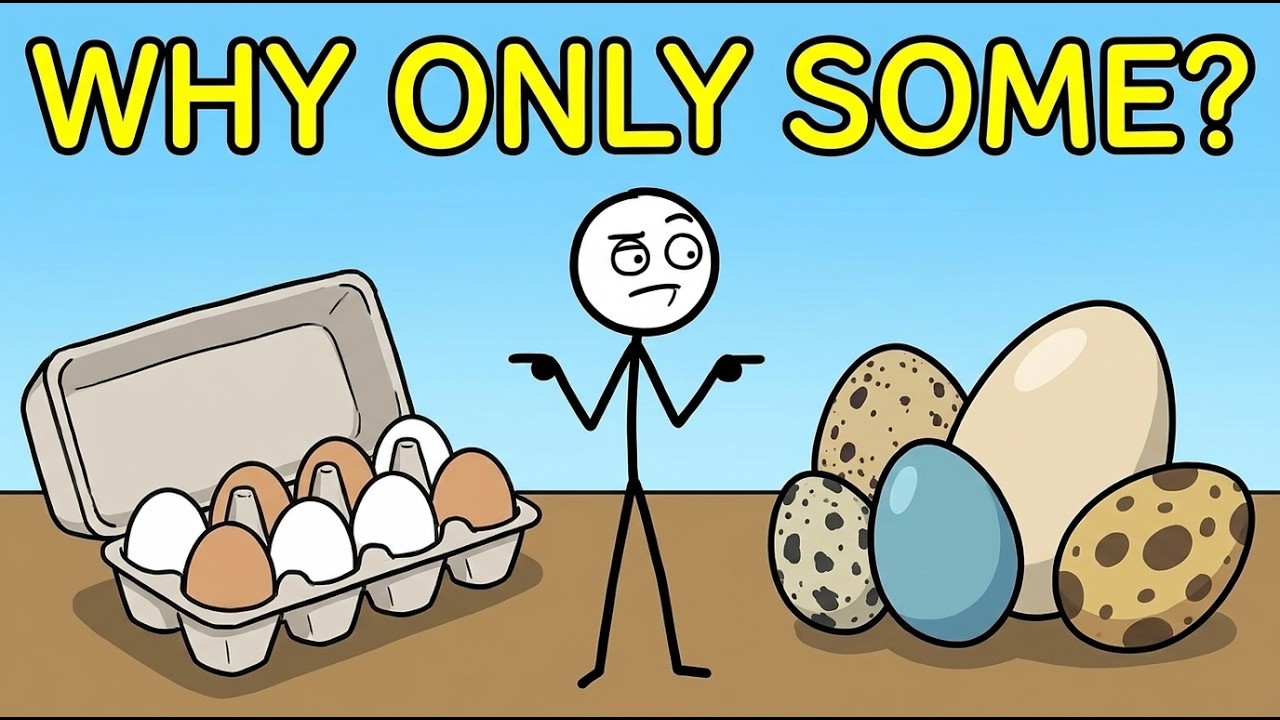 The biological reality is that the category of “eggs” encompasses radically different objects. A bird egg is a self-contained developmental environment, with a hard shell and a consistent profile of protein and fat that makes it broadly substitutable as food. Fish eggs, by contrast, are small, soft, and function as luxury condiments rather than primary protein sources.
Reptile eggs, such as those from crocodiles, are biologically closer to bird eggs but feature a leathery shell that changes their handling and cooking properties, often described as creamier and stronger in flavor than chicken eggs.
The dominance of the chicken is not an accident of taste but a triumph of efficiency. A modern laying hen produces between 250 and 300 eggs per year, a rate approximately ten times that of the ancestral red jungle fowl. This output is the product of thousands of years of selective breeding, intensified dramatically by 20th-century agricultural genetics, creating an animal that is essentially a continuous egg-laying machine.
No other bird comes close to this efficiency under comparable conditions, with ducks producing 150 to 200 eggs annually, geese a mere 20 to 40, and turkeys around 80 to 100.
Chickens also possess other characteristics that cemented their dominance. They are small, requiring less space and feed per egg than larger birds. They are omnivores, adaptable to diverse agricultural contexts, and reach sexual maturity in about 18 to 20 weeks, allowing for rapid turnover in breeding programs.
Their docile temperaments enable high-density operations, creating a perfect storm of biological traits that, when combined with systematic breeding, produced an animal optimally suited to the scale of modern food systems.
 The incumbency advantage of this global supply chain is now so profound that it would take extraordinary circumstances to displace it. Yet, the alternatives that do exist reveal that the chicken egg is not the only viable option. Duck eggs, the most widely consumed alternative, are particularly valued in East and Southeast Asia for baking, where their larger yolk and higher fat content produce cakes that rise higher and have a more pronounced flavor.
They are also the basis for century eggs, a preserved delicacy with a complex, savory flavor that has been a staple of Chinese cuisine for centuries.
Quail eggs are consumed across Asia, Europe, and Latin America as a delicacy or garnish, while goose eggs, roughly three times the size of a chicken egg, are valued for their rich, fatty flavor in parts of Europe. Ostrich eggs, equivalent to about 24 chicken eggs in volume, have been consumed in Africa for over 60,000 years, with archaeological evidence showing their shells were used as containers. These eggs are not eaten more widely due to labor-intensive handling or short laying seasons, not due to poor taste.
The nutritional comparison is where the dominance of the chicken egg looks most like an accident of history. Duck eggs contain significantly more vitamin B12, vitamin D, and omega-3 fatty acids than chicken eggs of the same size. Their higher fat content means more fat-soluble vitamins, including vitamin A, vitamin E, and choline, a nutrient critical for brain development.
Goose eggs show similar patterns of higher vitamin density, and quail eggs have measurably different ratios of amino acids and higher concentrations of certain micronutrients relative to their size.
 For specific nutritional goals, other eggs may be objectively superior to the chicken egg. The assumption that the chicken egg is the default and optimal form of egg nutrition is not supported by comparative analysis. The chicken egg is nutritionally excellent, but it is not the only excellent option, and in several measurable ways, it is not the best.
The eggs we do not eat often fall into categories defined by conservation or cultural barriers. Turtle eggs, once a traditional food source for coastal communities in Central America and Southeast Asia, are now largely illegal to consume due to the endangered status of most sea turtle species. The cultural history of turtle egg consumption collides directly with conservation biology, creating tension in communities where the eggs have been a food for generations.
The collapse of these populations is a direct result of harvesting pressure outstripping the reproductive rate of the source species.
Crocodile and alligator eggs, eaten in parts of Southeast Asia and Africa, are described as having a flavor similar to chicken eggs but richer and gamier. There is no fundamental biological reason why they couldn’t be produced commercially at scale in regions with managed populations, and some small-scale production exists. Snake eggs, consumed in China and Vietnam, appear in traditional medicine contexts, while insect eggs, such as ant pupae known as escamoles in Mexico, have been a delicacy since before European contact, described as having a nutty, buttery flavor.
The pattern is consistent: eggs that are eaten widely come from animals that can be kept or managed at scale, are produced in sufficient numbers, and exist within food cultures that normalized their use early enough for infrastructure to develop. Eggs that are not widely eaten lack one or more of these characteristics. The animal is hard to domesticate, the eggs are too small or too few, or the food culture that would have normalized them never developed the institutional momentum.
 The global food system’s concentration around chicken eggs is, among other things, a response to the unsustainability of depending on wild egg sources at population scale. The chicken solved the sustainability problem that wild egg collection couldn’t solve, but at the cost of concentration and all the vulnerabilities that concentration brings. A disease that targets chickens, such as avian influenza, can disrupt egg supply across entire regions simultaneously, making the single-species monoculture a single point of failure in the food system.
The eggs we don’t eat represent both alternatives and cautionary tales. The turtle egg represents what happens when a food source is consumed beyond the capacity of its source population to sustain it. The caviar market represents what happens when a luxury food becomes so valued that it drives its own source species toward extinction.
The crocodile egg, the goose egg, and the quail egg represent genuine nutritional alternatives that remain at the margins of global food culture for reasons that are historical and economic rather than biological.
The chicken egg is extraordinary and deserves its position at the center of global food culture. But the answer to why we don’t eat other animal eggs is not that other eggs aren’t worth eating. It is that the economic and historical forces that built the global food system around chicken eggs created an incumbency so profound that alternatives never had the space to develop their own industrial momentum.
The eggs exist, the animals that produce them exist, and the nutritional value is there. In many cases, it is superior. The infrastructure, the cultural normalization, and the 300 eggs per hen per year that made chicken eggs the default are the things that don’t exist for anything else.
That is why the word “egg” means one specific thing in almost every language and culture touched by industrial food production. Not because it was the only option, but because it was the option that scaled. The choice was deliberate, contingent, and driven by the relentless logic of agricultural efficiency, leaving a world of untapped nutritional potential just beyond the breakfast plate.


