The digital landscape for daytime drama fans has transformed into a minefield of sensationalized headlines, leaving audiences to parse reality from hyperbole. A prime example circulating within The Young and the Restless community proclaims, “Nikki Returns Her Rings & Drops a 5-Word Bombshell—Victor Can’t Stay Another Second!” For dedicated viewers of the iconic CBS soap, such a declaration triggers immediate emotional investment. However, an analytical look behind the curtain reveals that this gripping narrative exists strictly within the realm of algorithmic engagement rather than the actual scripts of Genoa City.

The headline leverages the volatile, decades-long history of Nikki and Victor Newman, television’s quintessential “supercouple.” By weaponizing high-stakes terminology—specifically the act of returning wedding rings and dropping an ambiguous “5-word bombshell”—content creators tap directly into viewer anxiety. The phrase “Victor can’t stay another second” perfectly manipulates the psychological profile of the audience, who know Victor to be an immovable, fiercely stubborn patriarch. Framing an event that could make such a man flee instantly creates an irresistible narrative vacuum, forcing fans to click.
In reality, these dramatic pronouncements are the product of sophisticated fan-page architecture optimized for monetization. Creators on platforms like Facebook and YouTube systematically deploy emotionally charged keywords to trigger platform recommendation algorithms. When a user interacts with the content, they are rarely greeted with exclusive scoops. Instead, they find a recycled montage of historical clips, standard network promotional summaries, or entirely speculative fan fiction narrated by automated voiceovers designed to maximize watch time.
The enduring power of this specific clickbait formula relies entirely on the established character traits of the Newman family. Nikki Newman, portrayed with elegant resilience by Melody Thomas Scott, has historically used her wedding rings as ultimate symbols of leverage and self-respect during the couple’s turbulent history. Similarly, Victor Newman’s ruthless business machinations and obsessive need for control provide a permanent foundation of plausible conflict. Because a major rift could happen at any moment based on their fictional personas, the fabricated headlines maintain a deceptive layer of credibility.
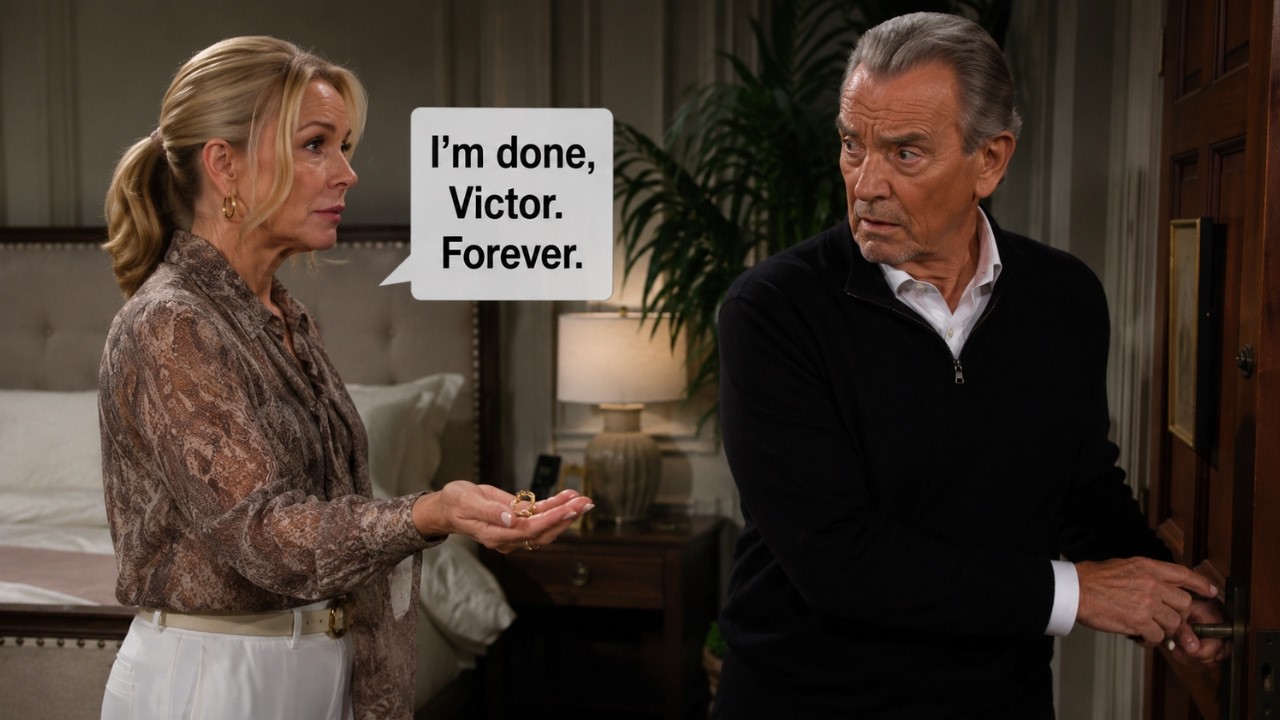
This trend highlights a growing challenge within modern entertainment journalism: the blurring line between actual production spoilers and predatory click-generation. Legitimate entertainment reporting relies on verified network press releases, actor contract status changes, and official set leaks. Conversely, digital clickbait strips away all journalistic nuance, taking minor on-screen disagreements or routine corporate subplots and inflating them into cataclysmic, show-ending relationship status changes that never actually materialize on television screens.
For the modern soap opera enthusiast, navigating this landscape requires a shift toward media literacy and critical analysis. When confronted with shocking headlines regarding legacy characters, viewers should cross-reference the claims with reputable daytime television outlets before investing emotionally. Sudden, permanent exits of core characters like Victor or Nikki Newman are invariably accompanied by extensive network marketing campaigns and mainstream media coverage, rather than hidden behind ambiguous internet links.
While the “5-word bombshell” remains a fiction designed to capture digital revenue, it serves as a testament to the cultural impact of The Young and the Restless. The fact that a single, fabricated sentence about Nikki and Victor can generate widespread fan discussion proves that after fifty years on the air, the emotional grip of Genoa City’s elite remains as powerful as ever. Audiences will continue to click, but the true drama belongs safely within the broadcast hour, untangled from the web of internet exaggeration.