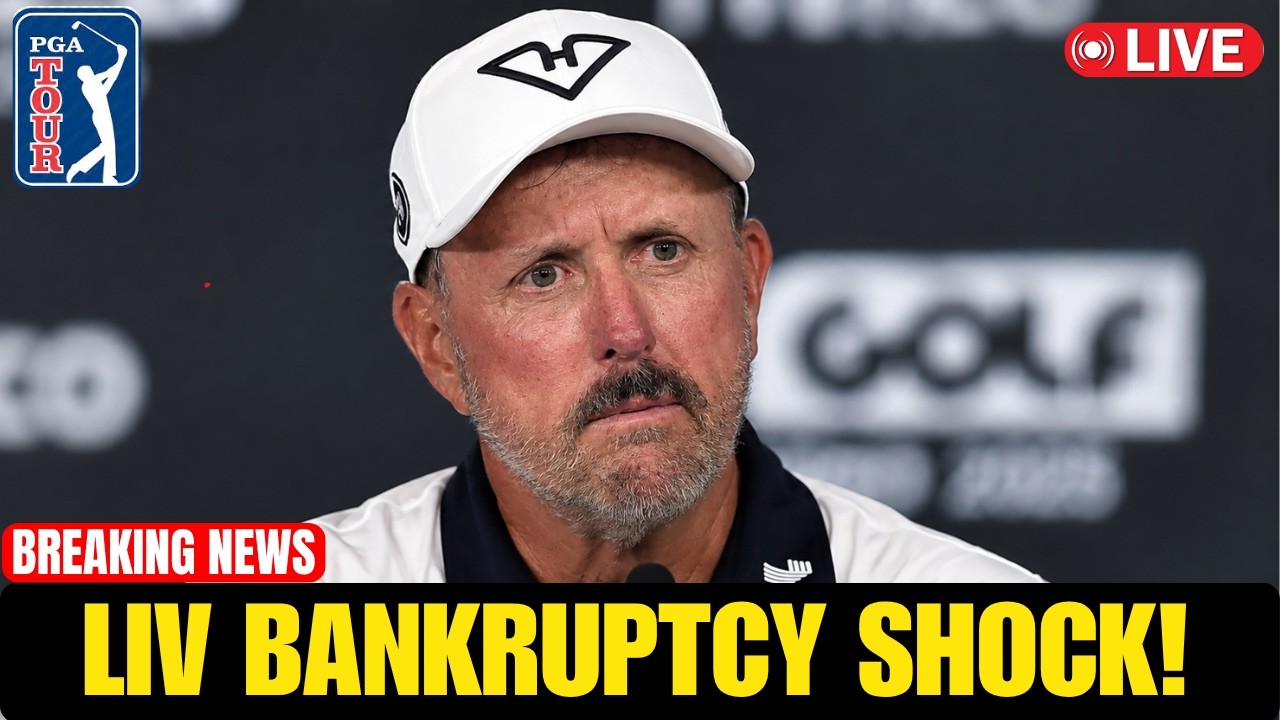
The golf world is reeling this afternoon following the release of a 128-page bankruptcy filing that has exposed the precarious financial state of LIV Golf and placed six-time major champion Phil Mickelson at the center of a collapsing empire. The document, submitted to a New Jersey court on September 8th, reveals that Mickelson is an unnamed shareholder in the Saudi-backed league, holding a 0. 23% stake, while simultaneously being owed millions in unpaid compensation.
The revelation has shattered the narrative of the league’s financial stability and left the 56-year-old legend facing an unprecedented professional void.
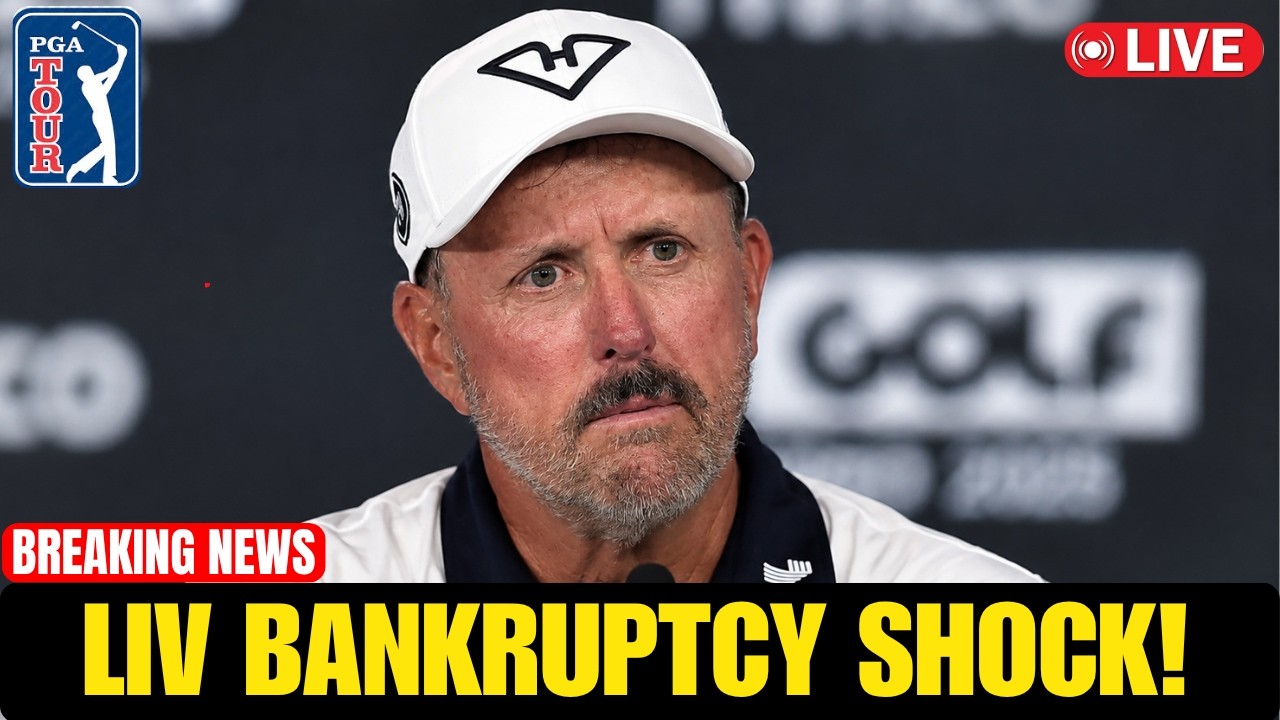 LIV Golf’s Chapter 11 filing paints a grim picture of an organization hemorrhaging cash, listing liabilities between $500 million and $1 billion against assets of only $100 million to $500 million. The league has acknowledged debts to at least 1,000 creditors, a staggering figure that underscores the depth of its financial mismanagement. The Saudi Public Investment Fund, which has injected over $5 billion into the venture since its 2022 launch, announced in April that it would cease funding after the 2026 season, triggering the collapse now unfolding in court.
The identity of the unnamed player shareholder was confirmed by a person familiar with the matter, who spoke on condition of anonymity due to the private nature of the proceedings. Mickelson’s involvement goes far beyond a simple equity stake; he was a founding figure who recruited other golfers to the breakaway tour, a move that resulted in his suspension from the PGA Tour months before LIV’s inaugural event. His reported $200 million signing bonus and 25% ownership of the HyFlyers team, which he captained, pushed his career earnings past the $1 billion threshold on an inflation-adjusted basis.
According to the bankruptcy filing, LIV Golf owes at least $45 million to 14 current and former players, with Mickelson among the creditors. The financial blow is compounded by the league’s request to reject certain player contracts, arguing that existing agreements do not reflect the contemplated compensation structure under a proposed “LIV 2. 0” model.
For Mickelson, this is a double-edged sword: it could free him from a sinking ship, but it also means the guaranteed money he was promised may evaporate entirely in the court proceedings.
Mickelson’s absence from the course has been conspicuous, marking the first time in his professional career that he missed all four major championships. He last competed in LIV’s South Africa event in March, with a family health matter cited as the reason for his withdrawal from competitive play. The US Open, the one major that has eluded him despite a record six runner-up finishes, is now permanently out of reach as he has exhausted all exemptions, closing the door on a historic pursuit.
The scandal surrounding Mickelson extends well beyond the bankruptcy court, with allegations of misconduct that have tarnished his reputation in ways that may prove irreversible. In June 2026, he was accused of making non-consensual and inappropriate physical contact with a female employee at The Farms Golf Club in Rancho Santa Fe, California. Club officials confronted him on the course, immediately expelled him from the premises, and revoked his membership following an independent investigation that substantiated the staff member’s report.
Mickelson’s attorney, Tom Clare, stated that the golfer subsequently resigned from the club, while a spokesperson claimed any misunderstanding had been cleared up. However, the incident has added to a growing list of controversies that have eroded his standing in the sport. The club’s statement was unequivocal: “This individual is no longer a member of The Farms Golf Club,” signaling a decisive break from a man who was once considered one of golf’s most beloved figures.
The gambling allegations have further complicated his legacy, with ESPN’s Outside the Lines reporting in August 2026 that Mickelson allegedly sent approximately $2. 75 million to Gregory Syla, a jailbound former handicapper who pleaded guilty to laundering money in an illegal sports gambling operation. Syla admitted to laundering nearly $3 million between February 2010 and February 2013 as a conduit for an unnamed client in an offshore gambling network, with sources identifying that client as Mickelson.
 While Mickelson faces no criminal charges and is not under investigation, the report has reinforced his long-documented history with high-stakes wagering.
Billy Walters’s autobiography, published in 2023, claimed Mickelson has wagered over $1 billion on various sports over three decades, including a single day in 2011 when he lost nearly $144,000 on 43 Major League Baseball bets. These revelations have painted a picture of a man whose risk-taking extended far beyond the golf course, with consequences that are now reverberating through his professional life. The contrast between his public persona and his private actions has become impossible to reconcile.
Golf Channel analyst Brandel Chambley has been blunt about Mickelson’s fate, estimating that the six-time major champion would have earned $30-50 million annually for the rest of his life through corporate outings had he never joined LIV. Instead, Chambley argues, Mickelson’s legacy has been irreparably damaged by his own words and actions. “The self-immolation of his legacy by saying the things he said on the way out.
I don’t think he’ll recover from that, and I don’t think he’ll find a way back to the PGA Tour,” Chambley stated.
The path back to the PGA Tour appears effectively closed for Mickelson, despite the precedent set by Brooks Koepka’s return in January 2026. Koepka qualified for the returning member program, but Mickelson does not meet the criteria, as his last major victory at the 2021 PGA Championship falls outside the qualifying window. PGA Tour CEO Brian Rolop has made it clear that rules matter, stating, “Accountability and discipline are essential for any organization and certainly for the integrity of the tour and for the game.”
The DP World Tour offers a theoretical pathway, but Mickelson’s age, lack of recent competition, and the weight of his scandals make that route highly unlikely. The bankruptcy filing reveals that LIV Golf is seeking court permission to reject executory contracts, with the league arguing that player agreements extending through the 2028 season no longer reflect the contemplated compensation structure. The proposed restructuring with London-based private equity firm BC Partners would see PIF’s equity and debt cancelled and extinguished with no economic distribution.
The term sheet for the restructuring agreement indicates that player agreements existing before the bankruptcy filing will be addressed through the courts, while LIV has made new offers for golfers to participate in a re-imagined version of the tour. The reorganized entity aims to shift 52. 5% of overall ownership to participating players, a desperate attempt to salvage something from the wreckage.
 For Mickelson, the uncertainty is paralyzing, as his 0. 23% stake in the league may become worthless.
The irony of Mickelson’s situation is devastating, as he left the PGA Tour for a reported $200 million payday, criticizing the tour’s leadership for “obnoxious greed” while dismissing Saudi Arabia’s human rights record as a “once-in-a-lifetime opportunity.” Now, the league he helped build is in bankruptcy, the money he was promised may be gone, and the game he loved has moved on without him. His estimated net worth of $300 million offers some financial cushion, but it cannot compensate for the loss of his professional standing.
The bankruptcy filing has sent shockwaves through the golf community, with players, analysts, and fans grappling with the implications of LIV’s collapse. The league’s promise to revolutionize golf has ended in financial ruin, leaving hundreds of players and employees in limbo. The Saudi Public Investment Fund’s decision to cut funding after the 2026 season was the death knell, and the court proceedings will now determine how the remaining assets are distributed among creditors.
Mickelson’s legacy, once defined by his remarkable career and his status as a fan favorite, is now being rewritten in real time. The man who won six majors, including the 2021 PGA Championship at age 50, is now a cautionary tale about the perils of chasing money at the expense of integrity. His decision to align with LIV Golf, and the controversies that followed, have overshadowed his achievements on the course, leaving a complex and tragic final chapter.
As the bankruptcy proceedings unfold, the golf world watches with a mixture of schadenfreude and sorrow. Mickelson’s future is uncertain, with no clear path back to the PGA Tour and a DP World Tour option that seems increasingly unrealistic. The family health matter that has kept him off the course remains unresolved, and the allegations of misconduct and gambling have damaged his reputation beyond repair.
The man who was once the face of golf’s fan-friendly persona is now a pariah in many circles.
The financial details of the bankruptcy are staggering, with LIV Golf owing money to at least 1,000 creditors, ranging from players to vendors to service providers. The $5 billion invested by the Saudi Public Investment Fund has been largely lost, and the proposed restructuring with BC Partners offers little hope for recovery. The court will need to determine the priority of claims, with player contracts likely to be scrutinized and potentially rejected to allow the league to reorganize.
 For Mickelson, the 0. 23% stake in LIV Golf is a bitter reminder of his gamble on the league. The equity, once touted as a path to long-term wealth, is now likely worthless, and the $45 million owed to players, including Mickelson, may never be paid.
The bankruptcy filing has exposed the fragility of the league’s financial model, which relied on unlimited Saudi funding that has now dried up.
The golf world is left to ponder what might have been, as Mickelson’s career ends not with a triumphant farewell but with a whimper of legal filings and scandal. His absence from the majors, his expulsion from The Farms Golf Club, and his entanglement in gambling allegations have all contributed to a fall from grace that is unprecedented in the sport’s history. The 56-year-old legend, once celebrated for his daring shots and charismatic personality, is now a symbol of excess and hubris.
The PGA Tour’s stance on Mickelson’s potential return is clear, with CEO Brian Rolop emphasizing the importance of accountability and discipline. The rules that allowed Koepka to return do not apply to Mickelson, and there is no indication that an exception will be made. The DP World Tour, while theoretically open, presents its own challenges, including the need for Mickelson to rebuild his reputation and prove he can still compete at a high level.
As the bankruptcy case progresses, the golf community will be watching closely to see how the court handles the player contracts and what happens to the remaining assets. The proposed LIV 2. 0 model, with player ownership, is a radical departure from the original structure, but it may be the only way to salvage anything from the wreckage.
For Mickelson, the outcome is uncertain, but the damage to his legacy is already done.
The story of Phil Mickelson is a cautionary tale about the dangers of greed and the consequences of aligning with questionable partners. His decision to join LIV Golf, and the manner in which he left the PGA Tour, has cost him his legacy, his reputation, and potentially his future in the sport. The bankruptcy filing is the final chapter in a saga that has captivated and horrified the golf world in equal measure, leaving a once-great champion with nowhere to play and no way back.