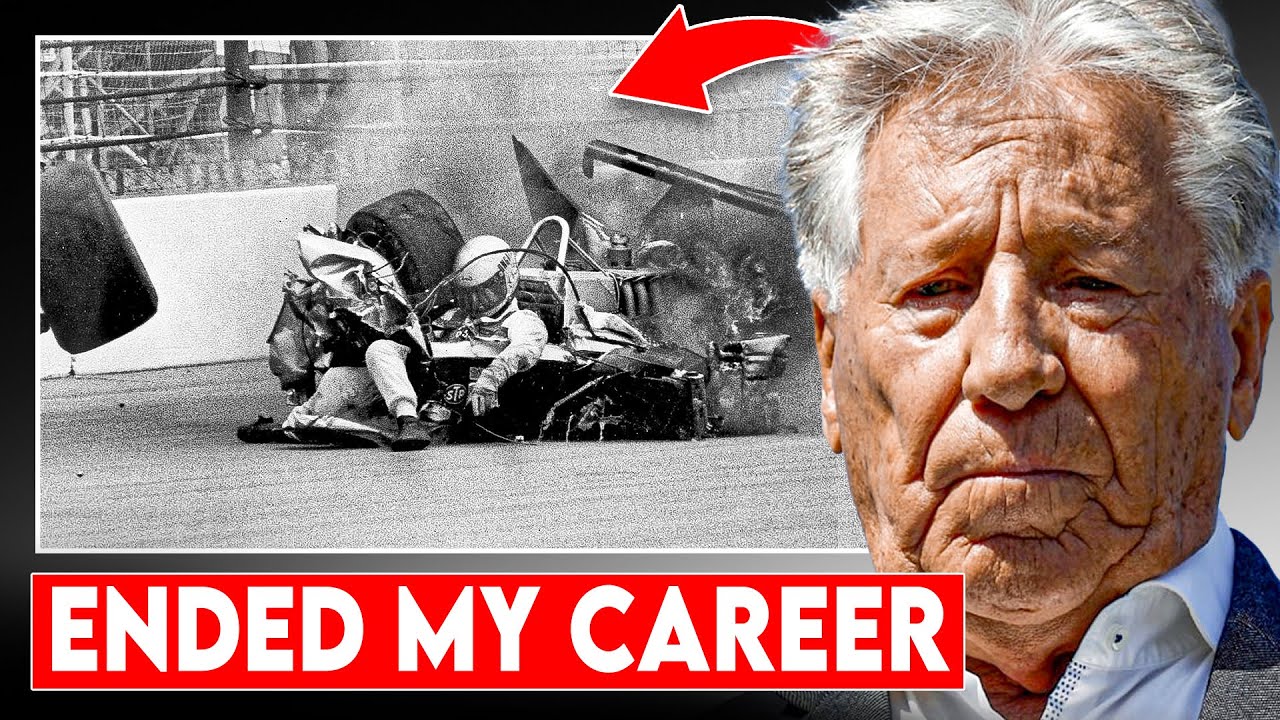
The roar of fifty thousand engines fell silent, replaced by the sickening crunch of carbon fiber and the screech of tires fighting for grip on a cold, unforgiving track. For Mario Andretti, the man who had conquered the world of motorsport, the final act of his legendary career was not scripted as a triumphant victory lap, but as a terrifying, violent dance with death at the very place he had conquered and been conquered by for decades: the Indianapolis Motor Speedway.
In a career spanning over three decades, Andretti had cheated death more times than a cat has lives. But it was a single, devastating crash in 2003, at the age of 63, that served as the definitive, brutal punctuation mark on his time behind the wheel. The crash wasn’t just a wreck; it was a message from the sport that even the greatest must eventually yield.
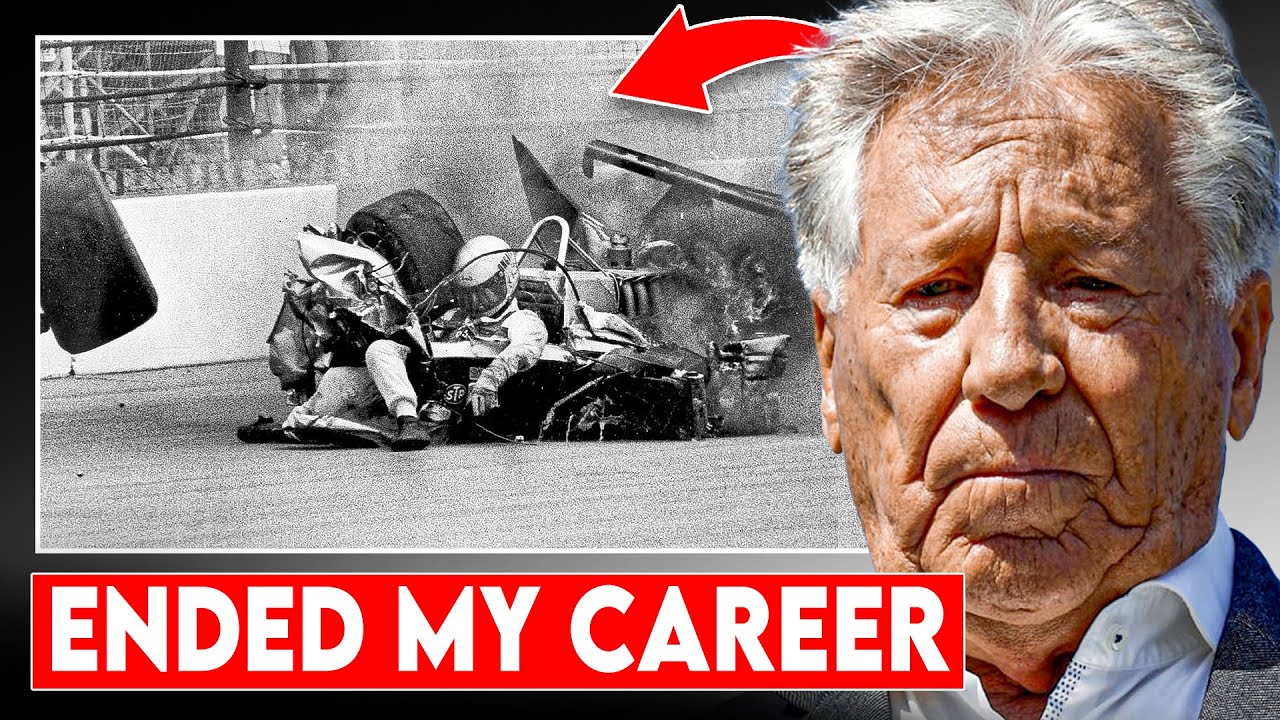 The incident, which occurred during a routine test session for his son Michael’s team, saw Andretti’s car launched into the air after striking debris, flipping violently before slamming into the SAFER barrier. The image of the car, a mangled mess of metal and ambition, cartwheeling down the straightaway, was a stark reminder that the track which had given him his greatest triumph in 1969 could just as easily take everything away.
The 2003 crash was not an isolated incident but the culmination of a long and brutal relationship with the Brickyard. For Andretti, Indianapolis was a siren’s call, a place of immense glory and profound heartbreak. His first victory in 1969 was a masterclass in endurance, a race where he famously used a single set of tires to dominate the field.
Yet, that victory was the exception in a career defined by the “Andretti Curse,” a litany of mechanical failures, strategic blunders, and sheer bad luck that seemed to plague him and his family at the Speedway. He led 170 of the first 177 laps in 1987, only to have a valve spring break with just 20 laps remaining, snatching defeat from the jaws of a certain victory.
The near-misses were as harrowing as the victories were sweet. In 1982, a multi-car pileup on the opening lap saw Andretti slam into the spinning car of Kevin Cogan, a crash that ignited a furious scuffle between the two drivers in the pits. The incident was a powder keg of frustration, a physical manifestation of the years of disappointment.
Then, in 1992, on a bitterly cold race day, Andretti’s car spun out of turn three and slammed head-on into the wall, breaking six of his toes. The pain was excruciating, but his resolve was unbreakable; he missed only one race and returned to finish sixth just four weeks later, a testament to his indomitable will. His son Jeff was not so lucky that day, suffering severe leg injuries in a separate crash, a cruel twist that highlighted the immense danger the family faced every time they strapped into a cockpit.
But the 2003 crash was different. It was not a race-day incident fueled by the heat of competition; it was a testing accident, a moment of unexpected violence that occurred when Andretti was merely trying to help his son’s team prepare for the upcoming race. The debris on the track, likely a piece of another car, acted as a launch ramp, sending his machine skyward.
 The resulting flight was a terrifying spectacle, the car flipping end-over-end before crashing down. When the dust settled, Andretti emerged with only a minor cut on his chin, a miracle that seemed to defy the laws of physics. Yet, in that moment, the decision was made.
The risk was no longer worth the reward. The fire that had burned so brightly for so long was finally extinguished by the cold reality of mortality.
Reflecting on that day, Andretti has often spoken of the crash not with fear, but with a sense of resignation. It was the universe telling him that his time was up, that he had pushed his luck to the absolute limit. The crash served as a final, stark reminder of the thin line between heroism and tragedy that every racing driver walks.
For a man who had survived the treacherous ground-effect era of Formula 1, the fiery wrecks of the 1960s, and the unforgiving ovals of American open-wheel racing, it was the debris on an otherwise quiet test day that finally brought the curtain down. His career, which began with a family fleeing post-war Yugoslavia with just $125 to their name, had seen him rise to the pinnacle of motorsport, winning the Formula 1 World Championship, the Indianapolis 500, and the Daytona 500, a triple crown of racing that remains unmatched.
The legacy of Mario Andretti is not just one of victory, but of resilience. His 29 attempts at the Indianapolis 500 are a study in perseverance, a saga of a man who refused to be broken by a track that seemed determined to deny him. From his first Formula 1 victory in South Africa in 1971 to his dominant 1978 championship season with Lotus, where he won six races, Andretti’s talent was undeniable.
 The tragedy of his teammate Ronnie Peterson’s death at Monza that year cast a long shadow over his title, a reminder of the sport’s ultimate cost. His move to Alfa Romeo and Ferrari in the early 1980s was plagued by reliability issues, yet he still managed to secure a pole position at Monza in 1982, proving that even in inferior machinery, his raw speed was unmatched.
The “Andretti Curse” became a part of racing folklore, a term used to describe the inexplicable misfortunes that befell the family at Indianapolis. From leading the race with a commanding margin only to have an engine fail, to being caught up in accidents not of his making, Andretti’s luck at the Speedway was notoriously fickle. His second-place finish in 1981, which was initially declared a victory after Bobby Unser was penalized, only to be overturned months later, was a perfect encapsulation of the chaos that surrounded him.
The penalty was replaced with a fine, and Andretti was once again denied the glory of a second win. It was a pattern of heartbreak that would have broken a lesser man, but for Andretti, it only fueled his determination.
The 1985 race saw Danny Sullivan perform his famous “spin and win” maneuver, passing Andretti for the lead before spinning directly in front of him. Sullivan’s quick recovery and pit stop allowed him to retake the lead and win the race, while Andretti was left to ponder what might have been. These moments, captured forever in racing history, define the duality of Andretti’s career.
He was a driver of immense skill and bravery, but at Indianapolis, he was often a tragic figure, a king without a crown. The 2003 crash, however, was the final, decisive chapter. It was a crash that he walked away from, but it was also a crash that he could not ignore.
 It was the signal that his body, though willing, was no longer able to withstand the punishment of a sport that demands absolute perfection.
In the years since his retirement, Andretti has become an elder statesman of motorsport, his opinion sought after by teams and drivers alike. His name remains synonymous with speed and determination, and his family’s legacy continues through his son Michael and grandson Marco. Yet, the memory of that final crash lingers.
It serves as a powerful testament to the fact that no career, no matter how glorious, can last forever. The crash that ended his career was not a failure on his part, but a recognition of the limits of human endurance. It was a final, brutal lesson from a sport that gives no quarter and asks for everything in return.
Mario Andretti gave everything, and in return, he received a legacy that will endure for generations, a legacy forged not just in victory lanes, but in the fiery crucible of the sport’s most dangerous moments.