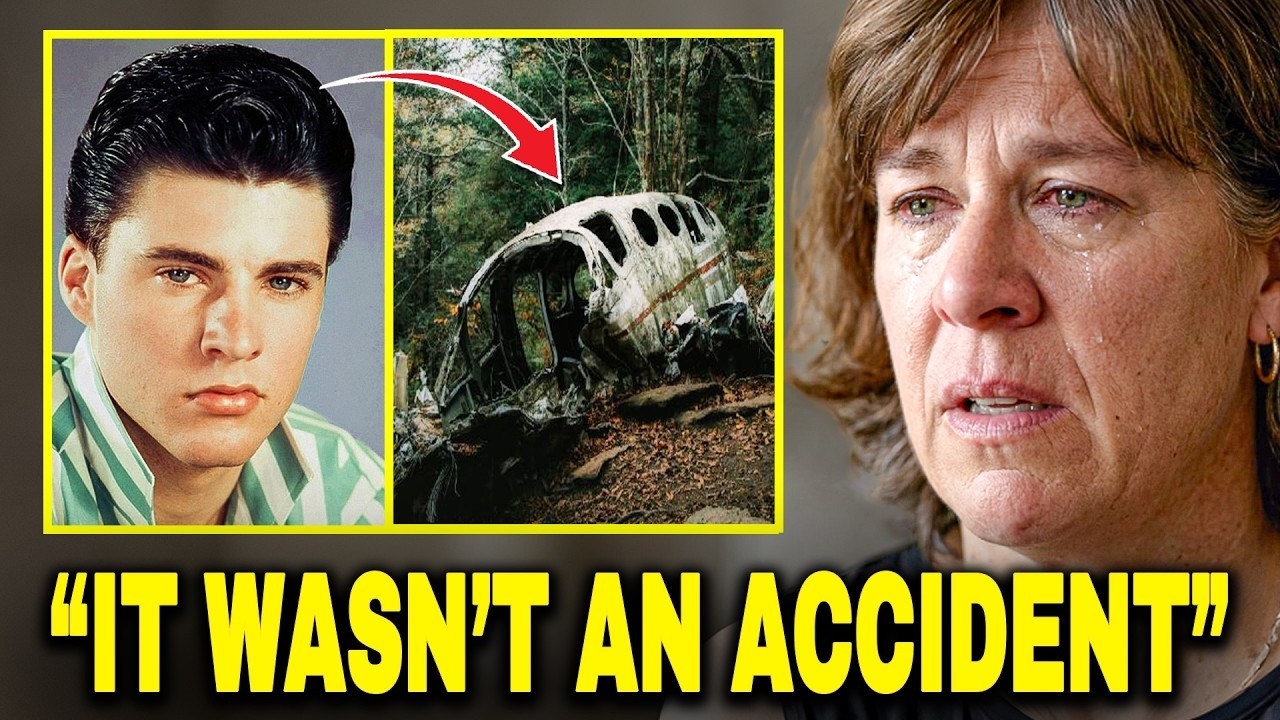
Ricky Nelson was once one of the most recognizable faces in America, the clean-cut star of a beloved family sitcom and a rock and roll icon of the 1950s. But his death on New Year’s Eve in 1985 triggered a storm of rumors that threatened to define his memory for decades, a legacy his children would spend years fighting to correct. Born Eric Hilliard Nelson on May 8, 1940, in Teaneck, New Jersey, Ricky was raised inside the entertainment industry. His father, Ozzie Nelson, led a successful band, and his mother, Harriet Hilliard, was a singer and actress.
The family became famous through radio with The Adventures of Ozzie and Harriet, which debuted in 1944 and moved to ABC television in 1952, becoming one of the era’s most successful family sitcoms. To viewers, Ricky appeared to be the perfect American teenager. Away from the cameras, however, acquaintances described him as shy, sensitive, and introverted, someone who preferred sports and a quiet life to the attention that came with his family’s fame. His musical career began almost by accident.
A teenage fan of Sun Records artists like Carl Perkins, Ricky decided to prove a girl wrong after she laughed at his joke about making a record. He took demos to multiple labels and was repeatedly rejected, as executives believed no one would buy music from someone already available on television every week. Verve Records finally gave him a chance in 1957, and his early recordings became instant hits. Between 1957 and the early 1960s, Ricky Nelson became one of the biggest names in rock and roll, using his television platform to reach audiences in unprecedented ways.
As he matured, he dropped the “y” from his name and became Rick Nelson, hoping to be taken seriously as an artist rather than remembered as a teenage TV star. The transition never fully succeeded. In 1972, he released “Garden Party,” a song inspired by being booed at a revival concert for not performing only his old hits. The lyrics captured years of frustration at being trapped inside an image fans refused to let him outgrow.
Behind the success, his personal life was unraveling. By the 1980s, with major venues no longer booking him, Rick was performing nearly 250 shows a year, mostly in small clubs and supper theaters, just to remain financially solvent. Books and biographies later claimed he turned to substances to cope with stress, disappointment, and the weight of expectations that had surrounded him since childhood. His marriage to Kristin Harmon, which began in 1963 and produced four children, also collapsed.
Both Rick and Kristin struggled with substance abuse during the 1970s. They tried therapy and rehabilitation, but the marriage ended in a bitter and financially devastating divorce. By the early 1980s, his once considerable fortune had mostly disappeared, leaving him in debt and dependent on constant touring. On December 31, 1985, Rick boarded a private plane in Alabama headed to Texas for a New Year’s Eve performance.
With him were his girlfriend Helen Blair and members of his Stone Canyon band. Shortly after takeoff, the surviving co-pilot reported problems with the aircraft’s heater. Warning lights repeatedly turned on and off, and the crew restarted the heater despite concerns. Minutes later, thick smoke filled the cabin and cockpit, blinding the pilots.
The plane crash-landed near DeKalb, Texas, but the fire spread quickly. Rick Nelson, Helen Blair, and five others died from smoke inhalation and burns before they could escape. Only the two pilots survived. When news broke on New Year’s Day 1986, rumors replaced facts almost immediately.
Speculation spread that substances on board had caused the fire. Toxicological reports deepened the suspicion after traces of illicit substances were found in several victims, including Rick. For many, that appeared to be confirmation. The official investigation told a different story.
Following an 18-month probe, the National Transportation Safety Board concluded there was no evidence that illicit substance use caused the fire. Investigators found no related equipment or proof connecting such substances to the blaze. Instead, the fire originated near the heating system, though the exact mechanical failure could not be determined. The NTSB also criticized the pilot’s handling of the emergency, stating that passengers might have survived if correct procedures had been followed.
The rumors never fully disappeared, and for years many continued to believe the false version of events. Rick’s family worked to defend his reputation, but the financial damage of his death was immediate. His children discovered that he had left behind nearly $4. 5 million in debt.
His twin sons, Gunnar and Matthew Nelson, were only 18. They faced a choice: declare bankruptcy or spend years paying the debt themselves. They chose to protect their father’s legacy. Filing for bankruptcy could have meant losing control of the family’s intellectual property, including music rights, television rights, and ownership tied to The Adventures of Ozzie and Harriet.
The brothers also believed their father would not have wanted his debts abandoned. For years, they toured relentlessly, building their own music careers while paying down what Rick owed. Their success arrived in 1990 when their album After the Rain sold millions of copies. It took nearly a decade, but they eventually cleared the debt completely.
Years later, the brothers released a memoir addressing the rumors that had haunted their father’s name since 1985, insisting that people remember the truth rather than the gossip. Behind the television smiles and the rock and roll image was a man who spent a lifetime trying to earn acceptance beyond the role the world expected him to play.