Claudine Longet once seemed to have everything Hollywood could offer.
Beauty.
Fame.
A successful music and television career.
A glamorous marriage.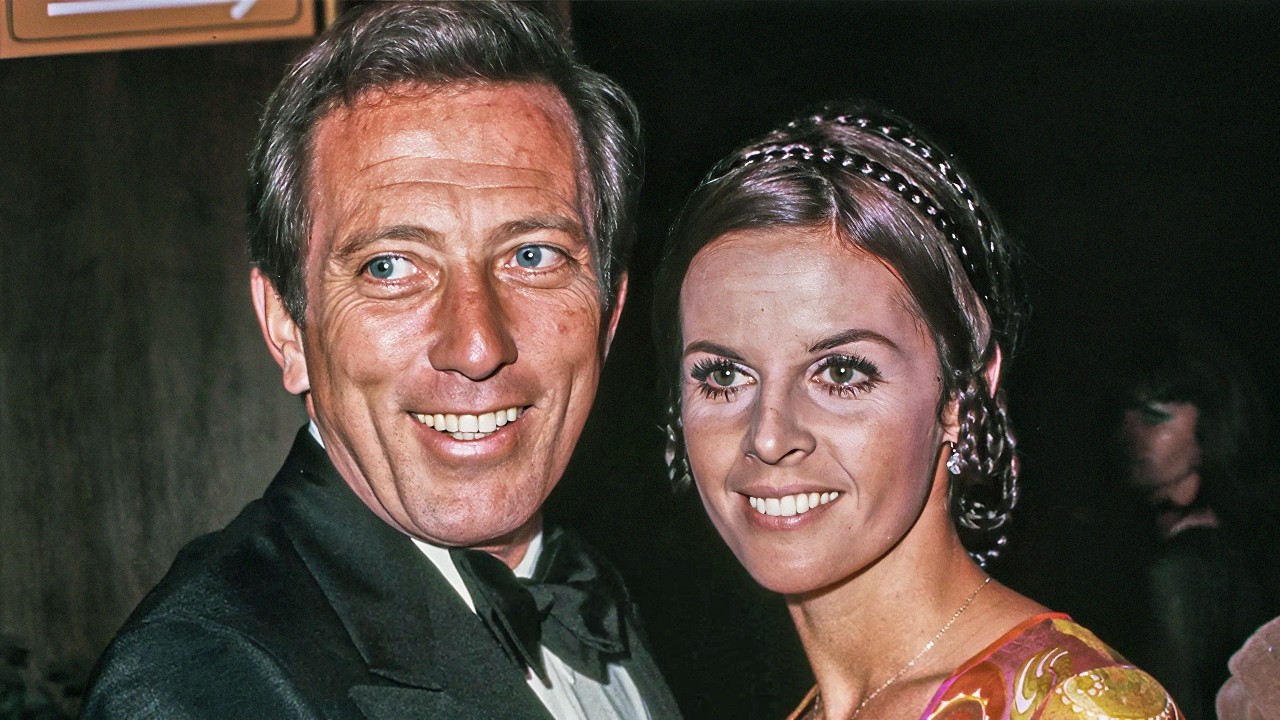
And later, a high-profile romance with one of America’s most famous skiers.
But in March 1976, that image shattered in a single moment.
Inside a home in Aspen, Colorado, Olympic skier Vladimir “Spider” Sabich was shot and killed.
The gun was in Claudine Longet’s hands.
She insisted it was an accident.
But what followed became one of the most controversial celebrity trials of the decade.
A dead athlete.
A famous actress.
Excluded evidence.
A surprisingly light sentence.
And questions that never completely disappeared.
Long before the shooting, Claudine Longet had built a very different public image.
Born in Paris, she eventually moved to the United States and entered the entertainment world.
In 1961, she married singer Andy Williams.
The relationship helped place her inside one of the most visible entertainment circles of the era.
Longet appeared on television, recorded music, and developed an image built around elegance, softness, and European sophistication.
For a time, she seemed perfectly suited to the glamorous world surrounding her.
But her marriage to Williams eventually ended.
Afterward, another relationship entered her life.
Vladimir “Spider” Sabich.
Sabich was one of the best-known figures in American skiing.
Young.
Athletic.
Charismatic.
And deeply connected to the social world of Aspen.
Together, Longet and Sabich appeared to be an ideal celebrity couple.
But behind that public image, the relationship was reportedly much more complicated.
Questions about commitment and the future created tension.
Then came March 21, 1976.
Sabich was at his Aspen home when he was shot with a .22 caliber pistol.
Longet was there.
According to her account, she had been handling the gun when it accidentally discharged.
Sabich was struck and later died.
Almost immediately, the case became national news.
The central question seemed simple.
Was it truly an accident?
Or had something happened inside the relationship that led to a fatal confrontation?
Investigators began building their case.
But serious procedural problems quickly changed everything.
Evidence that might have played an important role was excluded after authorities were found to have improperly obtained or handled portions of it.
That dramatically limited what prosecutors could present in court.
The trial became a media spectacle.
Longet’s fame ensured enormous attention.
Her former husband Andy Williams publicly supported her during the proceedings.
The case soon became about more than a shooting.
It became a debate over celebrity.
Privilege.
Police mistakes.
And whether fame had influenced the outcome.
Longet maintained that Sabich’s death had been accidental.
Prosecutors argued that her actions were criminally negligent.
In the end, she was not convicted of murder.
Instead, she was found guilty of criminally negligent homicide.
The sentence shocked many observers.
Thirty days in jail.
The punishment seemed extraordinarily small compared with the fact that a man had died.
That result became one of the main reasons the case remained so controversial.
Supporters of Longet pointed to the lack of admissible evidence proving intent.
Critics believed the investigation and trial had failed to provide full accountability.
And because key evidence had been excluded, some questions could never be resolved in court.
The story became even more unusual after the trial.
Longet later married Ron Austin, one of the attorneys who had been part of her defense team.
She largely withdrew from public life.
Instead of returning to Hollywood and attempting to rebuild her career, she remained mostly out of the spotlight.
Over the years, her silence only added to the mystery surrounding the case.
There were no endless interviews.
No major public campaign to reshape the story.
 No dramatic return to fame.
She simply disappeared from the center of public attention.
But the shooting never disappeared from popular memory.
Spider Sabich had been a major figure in American skiing.
His death occurred at a time when Aspen represented glamour, wealth, celebrity, and freedom.
The case seemed to expose the darker side of that world.
Behind the parties and famous names was a relationship that ended in tragedy.
And behind the tragedy was a legal case complicated by mistakes that permanently affected how the public understood what happened.
That is why the story of Claudine Longet continues to fascinate people decades later.
It was not only about a celebrity being charged after a fatal shooting.
It was about uncertainty.
About how evidence can shape a case.
About how public image can influence perception.
And about how one night can completely redefine a person’s life.
Before March 1976, Claudine Longet was known as a singer, actress, and former wife of Andy Williams.
After that night, her name became inseparable from Spider Sabich’s death.
The court reached its verdict.
Longet served her sentence.
Life moved on.
But the debate never completely ended.
Was it simply a tragic accident, as Longet maintained?
Or was there more to the story than the courtroom was ever able to establish?
Nearly half a century later, that uncertainty remains the reason the case still feels unresolved.
A glamorous couple.
A gunshot.
A dead athlete.
A controversial trial.
And a final version of events that many people still question.
Some Hollywood scandals fade with time.
This one never really did.