New research into prehistoric life is challenging the long-held assumption that ancient humans lived in a constant, desperate struggle for survival. Evidence suggests that early societies may have actually enjoyed more leisure time than most people do today, fundamentally reshaping how scientists understand daily existence tens of thousands of years ago. In 1966, anthropologist Richard Lee conducted a landmark study of the ! Kung San people in the Kalahari Desert, whose hunter-gatherer lifestyle closely mirrored that of prehistoric ancestors.
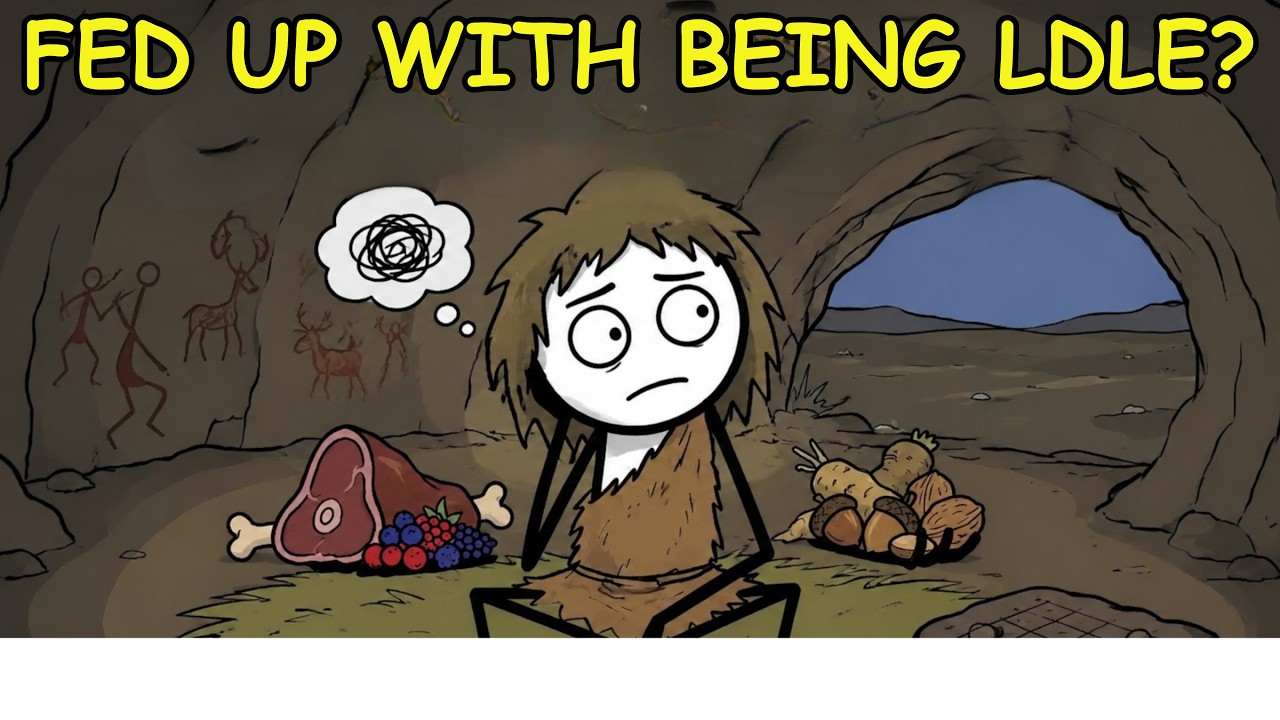
The results were startling: adults in the community needed to work only 12 to 19 hours per week to provide for all their needs. Anthropologist Marshall Sahlins later used this data to label such groups the “original affluent society,” arguing that their limited desires meant their needs were met quickly, leaving substantial time for rest and leisure. This suggests that our ancestors spent significant portions of their time not in frantic survival mode but sitting, waiting, and arguably, being profoundly bored. This state of boredom, far from being a flaw, is now understood as a powerful engine of human innovation.
Trapped in dark caves for up to 14 hours a night with no external stimulation, the human brain—a complex organ evolved for problem-solving—became desperate for input. This desperation is believed to be the catalyst for the creation of art, music, and complex social bonding. For decades, the prevailing myth was that ancient life left no room for such pursuits. However, discoveries like a precisely tuned flute carved from a vulture’s wing bone in Germany’s Ach Valley, dating back roughly 35,000 years, tell a different story.
Musicologist Friedrich Seeberger has shown that these flutes were capable of producing complex melodies, an incredible investment of time and skill. This was not a survival tool; it was a way to fill the unbearable silence of the cave. Similarly, the impulse to play games appears to be deeply rooted in prehistory. Archaeologists have found carved knuckle bones, or astragalus, worn smooth by human hands, at sites far older than any city.
While some were used for divination, many show signs of being used for gambling and simple games of chance. This points to a psychological need to create structure, risk, and reward when the environment offered none. The need to occupy a restless mind also explains the presence of ancient doodles. In Blombos Cave in South Africa, researchers found a piece of ochre dated to 73,000 years ago with a simple cross-hatched pattern scratched into it, resembling the kind of idle scribble a modern person might make on a notepad.
These marks are not sacred art but rather evidence of humans filling a stimulation gap. This search for stimulation was a primary driver of innovation. Boredom acted as an internal alarm system, pushing humans to experiment and explore. The intricate, decorative carvings on spear throwers that didn’t improve their function, and the hundreds of hours spent polishing ostrich eggshell beads, were all ways to engage a brain demanding more complex activity than survival alone provided.
One of the most powerful tools developed to combat boredom was narrative. Stories, with their cliffhangers, relatable heroes, and plot twists, served as the prehistoric equivalent of modern media. Evolutionary psychologist Robin Dunbar’s social brain hypothesis suggests that language evolved for social bonding, but gossip has its limits. Storytelling arose to fill the remaining hours by creating shared, collective experiences that held groups together through long, monotonous periods.
The drive to create mental stimulation is evident in major archaeological mysteries. The Venus figurines of the Gravettian culture, carved from mammoth ivory around 25,000 years ago, required an estimated 100 to 200 hours of meticulous work each. Similarly, the construction of Göbekli Tepe in Turkey, a 12,000-year-old temple complex built by nomadic hunter-gatherers who hauled multi-ton pillars, was an immense communal project. These undertakings were not born of simple necessity but represent massive “boredom busters”—projects that turned empty landscapes into loud, complicated, and interesting places, providing a reason to gather and a focus for collective energy.
The real question posed by this perspective is whether humanity has truly solved the problem of boredom or merely outsourced it. The prehistoric individual had to reach into the void of their own mind to create a melody that didn’t exist. In contrast, modern society offers a constant stream of external inputs designed to prevent us from ever sitting in silence. This suggests that while our ancestors were physically constrained, they may have been cognitively freer.
Their boredom was a blank canvas, a space for creating myths and songs that would last millennia. By filling the terrifying silence with bone flutes and painted shadows, they built the foundations of the human experience from raw restlessness. That same restlessness, the uncomfortable itch felt when faced with silence, is described as the most ancient part of human heritage. The choice facing each person is whether to drown out this feeling with distraction or to follow it to see where it leads.
While it is easy to view the past with pity, the archaeological record shows that tools of survival are found alongside tools of the mind: flutes, beads, figurines, and painted walls. These are fossils of boredom, proving that the human spirit refuses to be idle. The 35,000-year-old vulture bone flute now sits in a museum case, but the impulse that created it remains within every human. The silence of the cave has not gone away; modern society has just become more adept at ignoring it.
Ultimately, the definitive truth may be that humanity didn’t just endure boredom to survive—it survived so that it could finally have the time to be bored, becoming the architect of its own distraction while running from the silence that made it who it is.


