The roar of a Ferrari V12, a sound that once signified pure, unadulterated speed and daring, was silenced forever on May 8, 1982, at the Zolder circuit in Belgium. Gilles Villeneuve, the 32-year-old Canadian whose name had become synonymous with fearless brilliance, was killed during the final qualifying session for the Belgian Grand Prix. The man who had pushed the limits of physics and machinery further than anyone dared was gone, leaving a void in the sport that has never truly been filled.
The accident occurred with less than ten minutes remaining in the session, a frantic period when drivers were scrambling to set their fastest laps. Villeneuve, in his scarlet Ferrari 126C2, was on a flying lap, pushing his turbocharged machine to its absolute edge. As he approached the high-speed right-hander known as Terlamenbocht, he came upon the slower March of Jochen Mass, who was on a cool-down lap.
 In a split second, the two cars made contact, and Villeneuve’s Ferrari was launched into the air.
The physics of the impact were catastrophic. The Ferrari, traveling at an estimated 140 mph, was sent skyward, performing a violent, twisting somersault before crashing back down to earth with a force that tore the car apart. The cockpit, with Villeneuve still strapped inside, was ripped from the monocoque and thrown into the catch fencing.
The car was reduced to a mangled heap of carbon fiber and aluminum, a stark testament to the violence of the impact.
Marshals and medical staff reached the wreckage within seconds, but the scene was one of utter devastation. Villeneuve was unconscious, having suffered a massive neck fracture and severe internal injuries. He was extracted from the wreckage and airlifted to the St.
Raphael University Clinic in Leuven, but the damage was too extensive. At 9:12 PM local time, the doctors pronounced him dead. The news sent shockwaves through the paddock, a grim reminder of the razor-thin line between glory and tragedy in Formula 1.
The immediate aftermath was a blur of disbelief and grief. Jochen Mass, the driver whose car Villeneuve had clipped, was inconsolable, his own career effectively ended by the psychological trauma of the event. Ferrari team founder Enzo Ferrari, who had personally hand-picked Villeneuve from relative obscurity, was said to be devastated.
He had seen in the young Canadian a reflection of the sport’s golden age, a man who drove with a purity of purpose that transcended mere competition.
To understand the magnitude of this loss, one must understand the man himself. Villeneuve was not just a driver; he was a force of nature. Born in Saint-Jean-sur-Richelieu, Quebec, he was the son of a piano tuner, a humble beginning that instilled in him a relentless work ethic.
Before Formula 1, he was a champion snowmobile racer, a discipline that taught him car control at the absolute limit of adhesion. He won the World Championship Snowmobile Derby in 1974, a feat that showcased his innate ability to master machines that defied logic.
His path to Formula 1 was paved with grit and a refusal to conform. He raced in Formula Atlantic, often in outdated equipment, and still managed to dominate the competition. In 1976, he scored a stunning victory at Trois-Rivières, beating a field of Grand Prix stars, including the legendary James Hunt.
 That performance was a mic drop, a declaration that a new talent had arrived. Hunt, impressed, recommended him to McLaren, but the team’s management balked at his price, a decision that would haunt them for decades.
It was Enzo Ferrari who saw the true potential. In 1977, he gave Villeneuve a test at Fiorano. The times were not spectacular, but the Italian saw something beyond the stopwatch.
He saw a man who was willing to risk everything for a single, perfect lap. Ferrari signed him, and the legend was born. His first full season in 1978 was a learning curve, marred by crashes and technical issues, but his raw speed was undeniable.
He qualified on the front row at Long Beach and led the race before a collision ended his hopes.
The breakthrough came in 1978 at his home Grand Prix in Montreal. Villeneuve won, becoming the first Canadian to win the Canadian Grand Prix. The scene was pandemonium; the crowd invaded the track, and Villeneuve was hoisted onto their shoulders.
It was a moment of national euphoria, a validation of his country’s belief in him. He was no longer just a driver; he was a national hero, a symbol of Canadian pride on the world stage.
The 1979 season saw Villeneuve partnered with Jody Scheckter, a pairing that produced one of the most iconic battles in Formula 1 history. At the French Grand Prix at Dijon, Villeneuve and René Arnoux engaged in a wheel-to-wheel duel for second place that is still considered the greatest fight in the sport’s history. Lap after lap, they swapped positions, their cars touching at speeds exceeding 160 mph.
It was a display of sheer, unadulterated racing, a ballet of aggression and skill. Villeneuve emerged victorious, but the real winner was the sport itself.
That race encapsulated Villeneuve’s philosophy. He drove with his heart on his sleeve, a man who believed that racing was a pure contest of courage and skill. He famously ignored team orders at the 1979 Italian Grand Prix, refusing to hand over a position to Scheckter, which may have cost him the championship.
 He didn’t care about the politics; he only cared about the race. He was a purist in a sport that was becoming increasingly commercialized.
The 1982 season was a turbulent one for Ferrari. The team was embroiled in a bitter internal war between Villeneuve and his new teammate, Didier Pironi. At the San Marino Grand Prix at Imola, Villeneuve believed Pironi had reneged on a pre-race agreement to hold positions.
The betrayal cut deep, and Villeneuve vowed he would never speak to Pironi again. The tension was palpable as the circus arrived at Zolder for the fifth round of the championship.
Qualifying on that fateful Saturday was a desperate scramble. Villeneuve was determined to prove a point, to show the world that he was still the fastest man on the planet. He was on a hot lap, pushing the car beyond its limits, when he encountered the slow-moving March of Jochen Mass.
The collision was a tragic miscalculation, a moment of misjudgment that had fatal consequences. The man who had survived countless high-speed spins and near-misses had finally run out of luck.
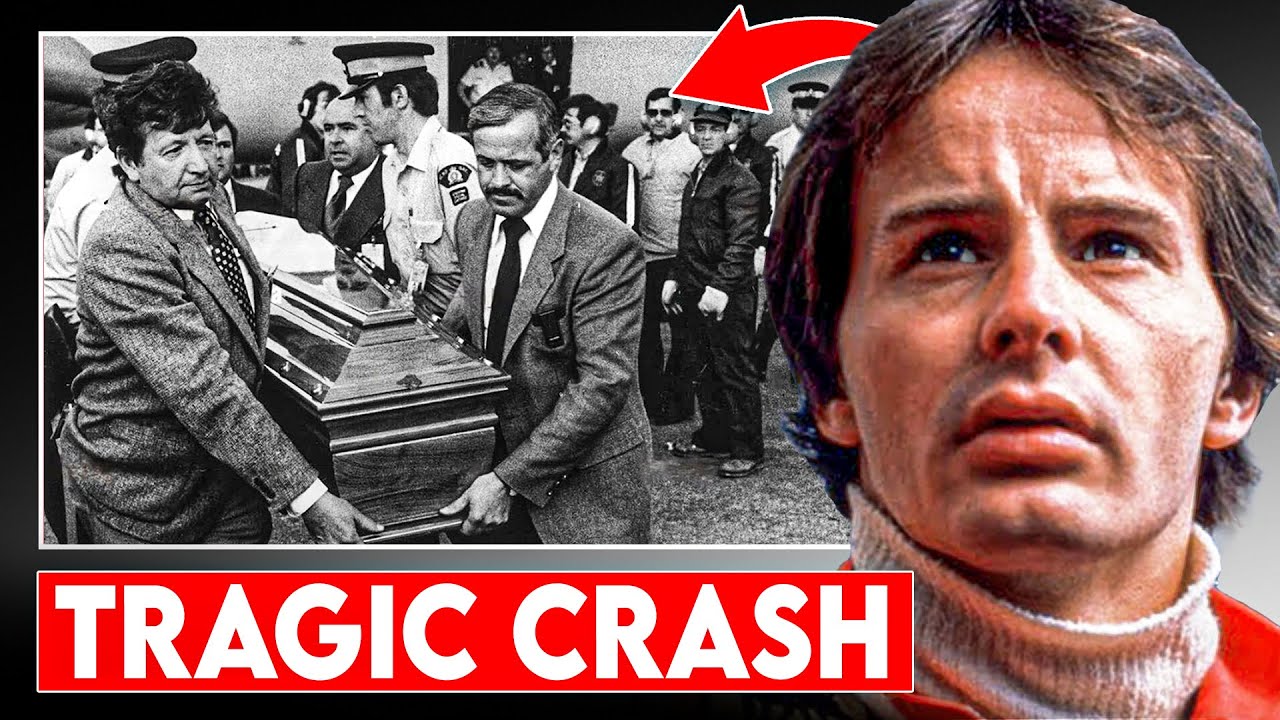
The funeral was a national day of mourning in Canada. Hundreds of thousands of people lined the streets of Montreal to pay their respects. His body was flown back to his hometown, where he was laid to rest.
The Formula 1 community was in shock. Jody Scheckter, his former teammate, said, “He was the most genuine man I ever knew and the fastest driver in history.” Niki Lauda, a man not known for sentimentality, called him “the craziest devil I ever met,” but added, “He was a sensitive, lovable guy.”
Villeneuve’s legacy extends far beyond his six Grand Prix victories and 13 podium finishes. He redefined what was possible in a racing car. He showed that a driver could push a machine to the absolute brink of destruction and still bring it home.
His 1981 drive at Monaco, where he hustled a ill-handling Ferrari to a podium finish, is still studied by engineers and drivers today. He was a man who extracted performance from sheer willpower.
 In the years since his death, his memory has been enshrined in the sport. The Circuit Gilles Villeneuve in Montreal, the venue for the Canadian Grand Prix, bears his name. A bronze bust of him stands at the Ferrari test track at Fiorano, a permanent reminder of his contribution to the Scuderia.
At Zolder, a chicane was named in his honor, a bittersweet tribute to the site of his final, fatal lap. The Canadian flag is still painted on his old starting grid spot at Monza.
His son, Jacques Villeneuve, would go on to win the Formula 1 World Championship in 1997, carrying on the family name and cementing the Villeneuve dynasty in motorsport history. But for those who witnessed Gilles drive, there will never be another like him. He was a man who lived on the edge, a daredevil who turned racing into an art form.
His death was a tragedy, but his life was a masterpiece of speed, courage, and unyielding passion.
The investigation into the accident was brief, concluding that it was a racing incident, a tragic confluence of events. There was no blame assigned, only sorrow. The sport, however, was forever changed.
The safety reforms that followed in the subsequent decades, including the introduction of the HANS device and improved crash structures, were a direct response to the deaths of Villeneuve and other drivers of that era. His death, while devastating, spurred a revolution in safety that has saved countless lives.
Today, when drivers take to the track, they do so in cars that are safer, stronger, and more reliable than anything Villeneuve ever drove. But they also drive with the ghost of Gilles Villeneuve looking over them. His spirit of unbridled aggression and his refusal to back down from a challenge remain the gold standard for racing excellence.
He was a man who gave everything to the sport, and the sport gave him immortality in return.
The world lost a legend on that cold, gray day in Belgium, but the legend of Gilles Villeneuve will never die. He was the man who flew too close to the sun, and like Icarus, he paid the ultimate price. But in his brief, blazing career, he showed us what it means to live without fear, to chase perfection with reckless abandon.
He was a poet of speed, a warrior of the asphalt, and his name will echo through the halls of motorsport history forever. The checkered flag may have fallen for him, but his race will never truly be over.