The German Army of World War II remains the most studied and feared military force in modern history, a machine of conquest that shattered nations in weeks and held half of Europe in a death grip for years. But a machine is only as effective as its components, and for every celebrated Panzer commander or decorated general, there were millions of men who lived and died in the dirt, their experiences defined not by grand strategy, but by the specific rank stitched to their collar.
The hierarchy that bound these men together was a rigid steel frame, yet it was built on a foundation of radical tactical freedom that baffled its enemies. From the nameless rifleman in the mud to the field marshal with a jeweled baton, the difference between one step on the ladder and the next was often the difference between life and a frozen grave, between obedience and the power to command the fate of thousands.
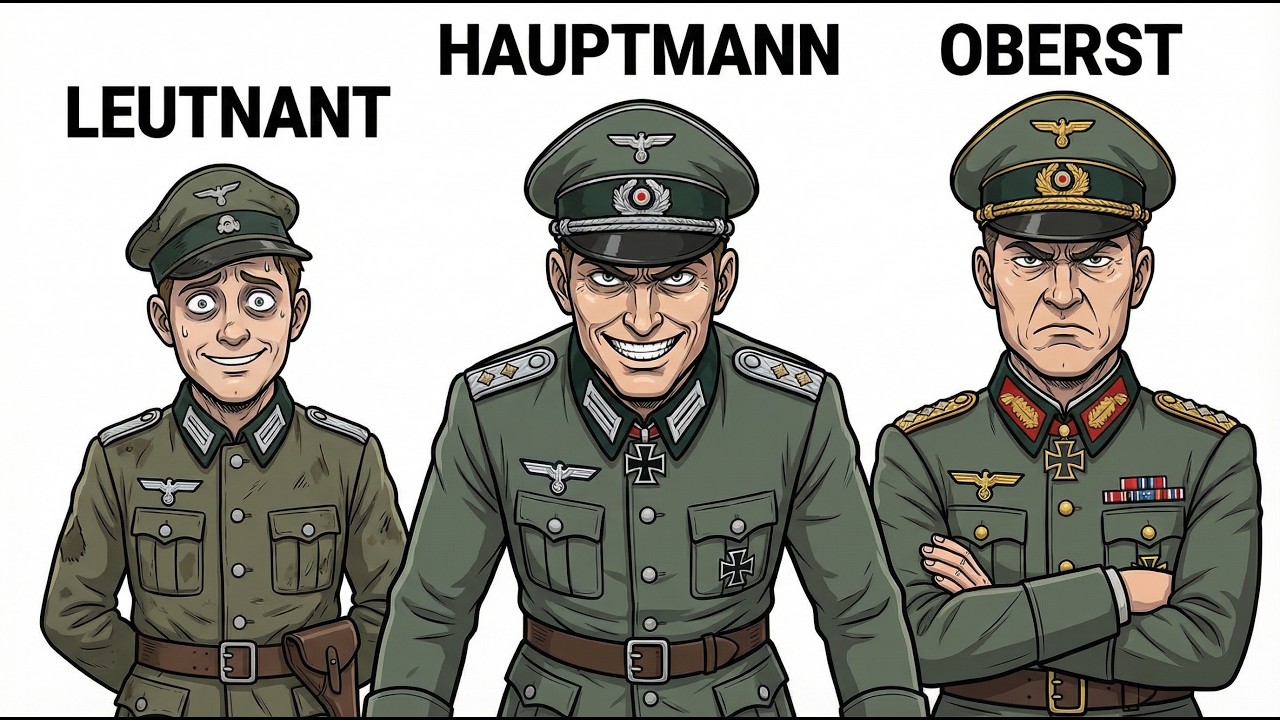 To understand the Second World War is to understand this ladder, and the brutal, unforgiving reality that came with each rung. The journey begins at the absolute bottom, in the mud and smoke of the front line, where a man was not a person, but a component.
As a Schütze, a private, in 1939, you were the foundational unit of the Wehrmacht, and your identity was deliberately stripped away. In the eyes of the army, your name mattered less than the serial number in your Soldbuch, the paybook that contained your blood type, your next of kin, and your unit designation. You were not an individual; you were a rifleman, a bearer of the Karabiner 98k bolt-action rifle and a steel helmet, designed to blend into the landscape in your field-gray uniform rather than stand out.
Your transformation was conducted in the Wehrkreis training depots, where eight weeks of relentless drill turned civilians into soldiers. You learned to strip and reassemble your weapon blindfolded, to respond to commands without thought, and to endure gas mask drills and bayonet training until your body moved on instinct. The rifle ceased to be a tool and became an extension of your limbs, and the army made sure you understood that you were expendable.
In October 1942, Hitler would rename the infantry private to “Grenadier,” a calculated echo of Frederick the Great’s elite troops, but for the men of 1939, they were simply the anonymous base, the unnamed foundation upon which the entire edifice of German military power rested.
Promotion to Gefreiter, or Lance Corporal, came after about six months, a small step that carried immense weight. The rank, with roots in 16th-century Landsknecht infantry, signified that you were “freed” from the most menial duties, trusted with more responsibility than the man beside you. It is a historical irony that Adolf Hitler himself wore this rank during the First World War, and he never rose above it, carrying a strange pride in that fact for the rest of his life.
The generals who later served under the “Gefreiter” were acutely aware of this irony, even as they were forced to obey his every command.
In the spring of 1940, as a Gefreiter, you were likely the gunner for your squad’s MG 34, the world’s first true general-purpose machine gun, capable of a terrifying 900 rounds per minute. Your squad was built around this weapon, and everyone else existed to feed it and protect it. You moved through France in six weeks, a campaign that shocked the world, where speed, coordination, and infiltration tactics overwhelmed the larger French and British forces before they could even form a cohesive defense.
You marched through the Ardennes, a terrain deemed impassable by the French High Command, and the entire strategic balance of Western Europe collapsed in a fortnight. You were one step removed from the absolute bottom, yet you had already witnessed the peak of German military success, eating your rations as columns of refugees streamed past you in the opposite direction.
 The true engine of the German army, however, was the Unteroffizier, the Corporal. The moment you pinned the silver-gray NCO braid onto your collar, your world changed. You were now the Gruppenführer, commanding ten men, responsible for their equipment, their discipline, and their lives.
You knew which of your men got letters from home, and which ones had stopped receiving them, and that knowledge told you who would steady under fire and who would freeze for three fatal seconds in the heat of battle.
The German tactical doctrine, Auftragstaktik, or mission-type tactics, was your greatest weapon. You were given an objective and the means to achieve it, but the “how” was left entirely to your judgment. This was a deliberate philosophy rooted in Prussian military tradition, and it produced an NCO corps that could think independently and adapt instantly on the battlefield.
Allied commanders were repeatedly baffled by how German units continued to fight with terrifying coherence even when their officers were dead and their command structures shattered. The answer was that the Unteroffizier was the brain of the squad, and he was expected to lead without waiting for permission.
This leadership was put to its ultimate test on June 22nd, 1941, when Operation Barbarossa began, the largest land invasion in human history. You crossed into the Soviet Union along a front nearly 3,000 kilometers wide, moving east without pause. By December, you had advanced 20 kilometers from Moscow, but the temperature had plummeted to minus 35 degrees Celsius, and your boots were disintegrating.
The army had planned for a short campaign; no one had planned for winter. You kept your squad moving because stopping was an option you could not afford. That braid on your collar was a contract you had accepted, a promise that you would be the one who knew what to do when the situation outran everyone’s training, that you would make the call and own whatever came after it.
The next step up was Feldwebel, Sergeant, a rank that made a serious claim on your soul. By now, you were commanding a platoon of 30 to 40 men, often stepping in for dead or wounded lieutenants, who suffered catastrophic casualty rates on the Eastern Front. You carried the portepee, a decorative sword knot, marking you as a senior NCO, a tradition dating back to the 16th century.
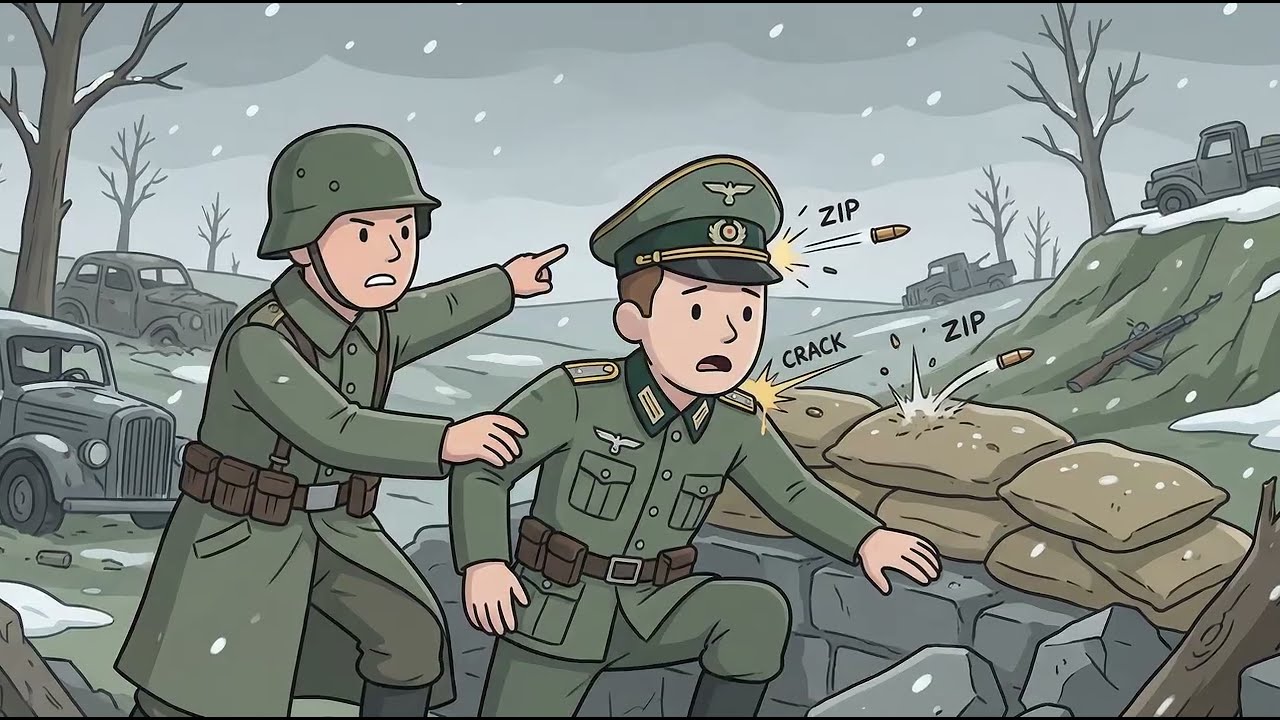 The winter of 1942 to 1943 was the turning point of the war, though you did not know it while living through it. You knew the rations had been cut again, you knew the names of the men who had died that week, but you could not know that Germany had lost the initiative forever.
Your squad’s MG 34 was replaced by the MG 42, a weapon that fired an astonishing 1,200 rounds per minute, earning the nickname “Hitler’s Buzzsaw” from Allied soldiers. Your entire defensive position was built around this lethal instrument. Your job was not strategy; it was maintaining the effectiveness of your platoon in the face of attrition, cold, and a Soviet enemy that grew stronger every month while your own replacements arrived younger and more terrified than the men they were meant to replace.
You corrected mistakes, you pulled broken men back from the edge, and you pushed your soldiers harder than they thought they could go, standing beside them when the pushing was over. A Feldwebel who survived 1943 had accomplished something no medal could adequately describe.
Achieving a commission as a Leutnant, Second Lieutenant, changed everything, not the authority, but the weight. You commanded a platoon, but you were the most junior officer in the regiment, and the army expected you to lead from the absolute front. First through the breach, first over the ridge, showing your men a face of certainty when the situation was at its worst.
This policy produced extraordinary officer casualties, but it also created an NCO corps that was highly trained to function without them. By 1944, the Red Army was a vastly different force than the shattered one of 1941. It was experienced, well-supplied, and it deliberately targeted officers because it had learned the devastating effect that losing the Leutnant at the front of an advance had on the men behind him.
The Hauptmann, Captain, commanded a company of 150 to 200 men, though by mid-war, 80 men was more common. You were the interface between strategic intention and tactical reality, translating orders from above into actions on the ground and sending carefully worded reports upward. Replacement integration fell on you, young men who had never seen combat, thrust into situations that no training could have prepared them for.
In Normandy, in the summer of 1944, you faced an enemy with overwhelming air superiority and unlimited resources. Daylight movement was suicide, so you moved and counterattacked at night. You were tired in a way that sleep could not fix, a tiredness you had carried for two years, learning to function inside it, to make decisions through it, and to never let it show in front of the men who needed to believe you had something left.
 At the rank of Oberst, Colonel, you commanded a regiment. You had served in the Reichswehr during the Weimar years, when the Treaty of Versailles limited Germany to 100,000 soldiers. You had watched the Wehrmacht grow from nothing into the most effective land force in the world.
You had felt what it meant to have everything working. But by 1944, you were navigating a contradiction. The tactical freedom that had made the Wehrmacht exceptional was being demolished by Hitler’s direct interference from his headquarters.
The Führer issued tactical orders down to regimental level, and the principle of Auftragstaktik was being inverted by a command culture that demanded compliance over competence. You watched senior commanders removed for executing tactically sound retreats that Hitler had forbidden, and you said nothing to endanger your own position.
The rank of General der Infanterie placed you in command of an army, hundreds of thousands of men spread across a front measured in hundreds of kilometers. This brought you directly into the central contradiction of senior command: Hitler’s command style was the opposite of the Army’s doctrine of trust. He refused to authorize retreats, dismissed generals who told him the truth, and retained those who told him what he wanted to believe.
Operation Bagration, the Soviet offensive that began in June 1944, destroyed Army Group Center in less than two months, killing or capturing over 300,000 German soldiers. Your training told you one thing, the orders from the Führerhauptquartier told you another, and the men dying at the front paid the price for the gap between them. You kept meticulous records, understanding that there would be a reckoning eventually, and that the records would matter.
The pinnacle, Generalfeldmarschall, Field Marshal, came with a ceremonial baton, covered in red velvet and gold fittings, presented personally by Hitler. He promoted 25 officers to this rank during the war, a tool of political management as much as a military honor. On January 30th, 1943, with the Sixth Army encircled and starving at Stalingrad, Hitler promoted Friedrich Paulus to Field Marshal.
The implicit message was clear: no German field marshal had ever been captured alive. Paulus surrendered the following day. Erich von Manstein, whose genius had delivered the fall of France and who conducted a brilliant fighting withdrawal in the East, was dismissed in March 1944 for retreating against Hitler’s orders.
Gerd von Rundstedt was dismissed and recalled three times. The last Field Marshal, Robert Ritter von Greim, was promoted in the ruins of Berlin on April 25th, 1945, five days before Hitler’s suicide. The baton meant everything and nothing, a symbol of a military tradition that had made Germany formidable, handed out by a madman who had made it impossible to exercise the very judgment that earned it.
There was nothing left to command.


