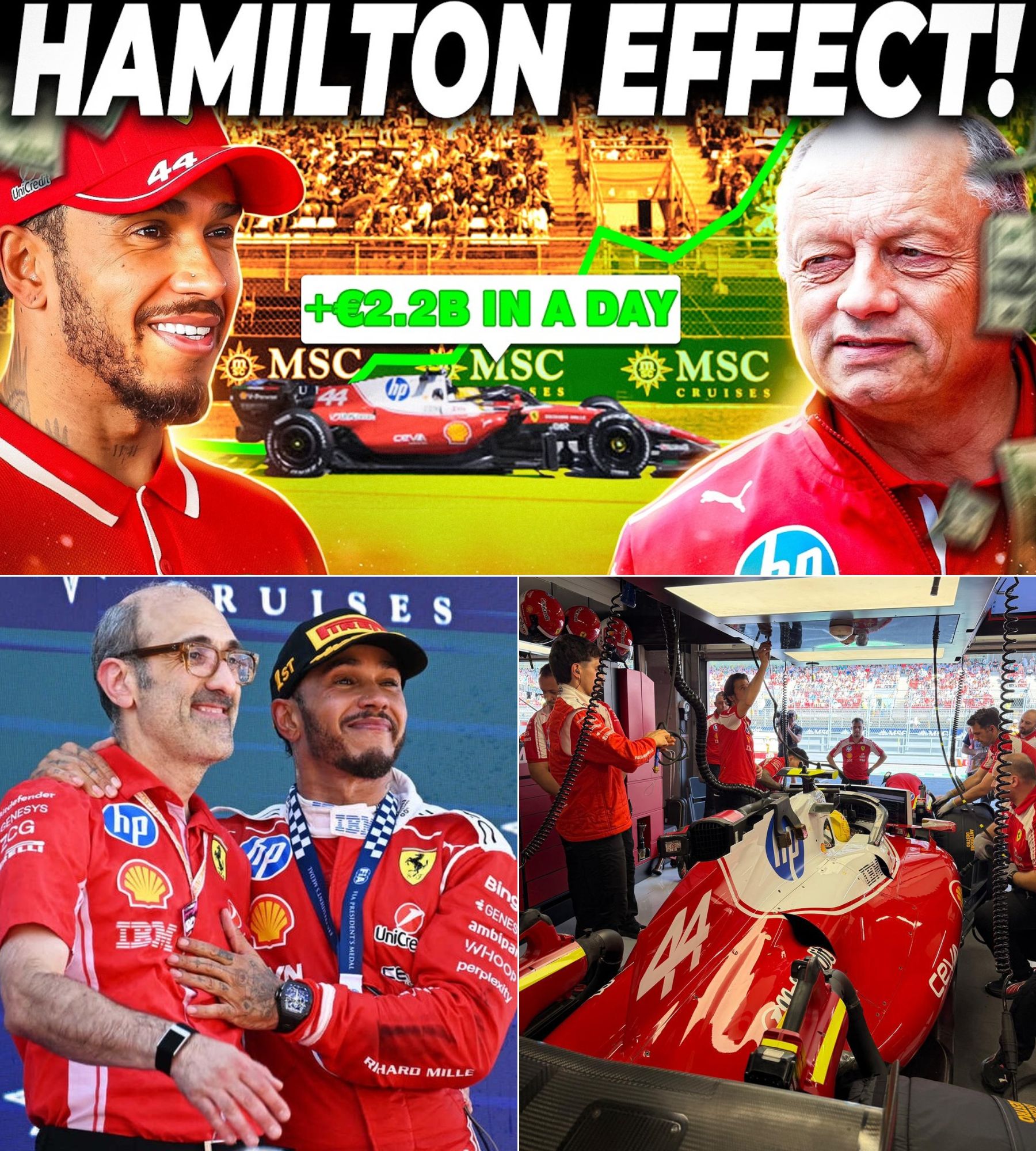
Ferrari’s recent surge in market value, reportedly soaring by €2.2 billion, has left fans and analysts buzzing. This dramatic financial leap came just a day after Lewis Hamilton celebrated his first victory with the iconic team, marking a pivotal moment in both racing and corporate realms.
Hamilton’s win at the Circuit de Barcelona-Catalunya was historic. Not only did he claim his 106th career victory, but he also became the oldest Grand Prix winner since 1970, finishing a staggering 19.561 seconds ahead of his competitors. The race was a triumphant turnaround for Hamilton, who had struggled throughout his first year with Ferrari, failing to secure a podium until now.
While fans reveled in Hamilton’s success, investors were closely monitoring something else entirely. In the wake of the race, Ferrari’s stock jumped approximately 4.4% when markets reopened, a move that added billions to the company’s worth. This financial boost was not merely a reaction to a single race; it stemmed from a deeper analysis of Ferrari’s performance and potential.

The key to Hamilton’s victory lay not in his driving alone, but in significant upgrades made to the car. Ferrari introduced a major set of enhancements in Barcelona, including a revamped front wing, redesigned side pods, and innovative wheel rims. These modifications collectively transformed the car’s aerodynamics and tire management, allowing Hamilton to push harder without sacrificing performance.
Analysts noted that the upgrades addressed longstanding issues with tire wear, enabling Hamilton to execute a three-stop strategy effectively. The race showcased how the car’s new setup allowed for consistent performance across different tire compounds, a breakthrough that had eluded Ferrari for much of the season.

However, the financial implications of Hamilton’s win were amplified by a report from Morgan Stanley, which upgraded Ferrari’s stock from “equal weight” to “overweight,” raising its price target significantly. This shift in perspective was based on the belief that the market had undervalued Ferrari, considering its luxury brand appeal and the growing demand among affluent buyers.

While Hamilton’s victory captured headlines, the financial community was reacting to broader trends. The timing of the stock surge and Hamilton’s win created a perfect storm of optimism for Ferrari. Yet, the real question remains: Is this a sign of a genuine turnaround for the team, or merely a one-off success?
As Ferrari prepares for the upcoming race in Austria, where further engine upgrades are expected, both fans and investors will be watching closely. The stakes are high, and the next race will reveal whether this newfound momentum is sustainable. Can Ferrari build on this success, or will it be just another fleeting moment in a tumultuous season?