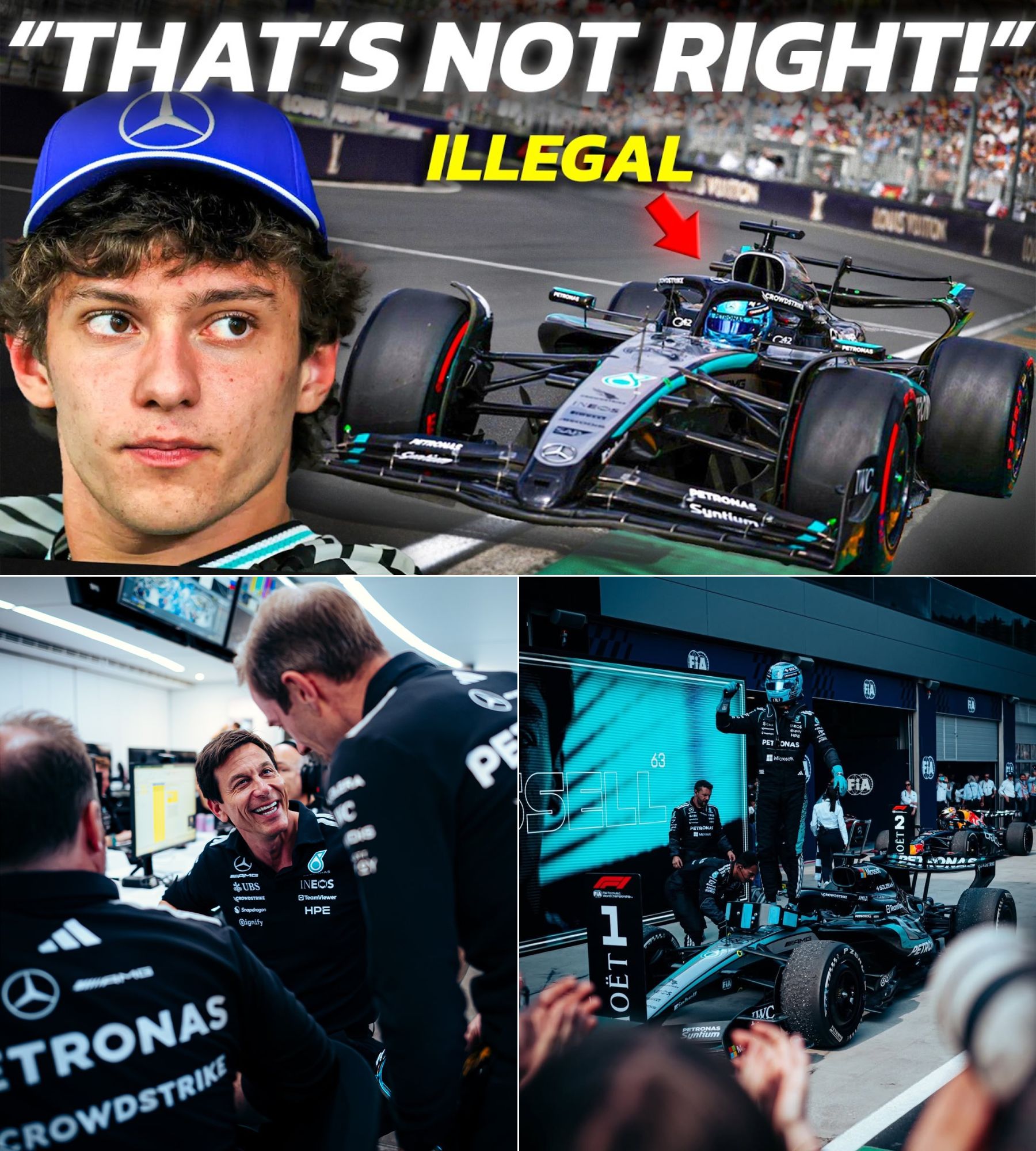
In a stunning twist of fate, Mercedes has been compelled to modify their car after Ferrari raised concerns about the legality of their innovative diffuser design. This unexpected turn of events has sent shockwaves through the paddock as the 2026 Formula 1 season heats up, with implications that could reshape the championship landscape.

The 𝒹𝓇𝒶𝓂𝒶 unfolded just before the Austrian Grand Prix, where Mercedes, leading the championship, was ordered to alter the aggressive diffuser that had contributed to their early-season dominance. Ferrari, having identified the clever design, took the bold step of formally questioning the FIA about its legality. This strategic move not only triggered a clarification but also forced Mercedes to remove key elements of their design starting from Austria.
As the teams prepared for the race weekend, Mercedes was seen with a modified diffuser, noticeably lacking the distinctive spike-like profiles that had characterized their previous setup. However, the intrigue doesn’t stop there. While Mercedes is busy adjusting their car, reports suggest that Ferrari is poised to unveil an even bolder aerodynamic concept of their own.
To understand the significance of this diffuser saga, let’s break down the technical aspects. The diffuser is crucial for managing airflow beneath the car, impacting downforce—a vital factor in performance. Since the beginning of the season, teams have been on the lookout for innovative ways to enhance their diffusers, with Mercedes making headlines at the Canadian Grand Prix for their unique design featuring serrated profiles and bulges aimed at creating powerful vortices of air.

Interestingly, the FIA initially deemed Mercedes’ upgrade legal, but the backstory reveals a deeper conflict. Ferrari had previously submitted a similar design concept to the FIA, only to have it rejected as illegal. When Mercedes introduced their version, it raised eyebrows and sparked Ferrari’s inquiry, leading to a regulatory showdown.
Ferrari’s approach was not merely a complaint; they strategically provided the FIA with the blueprints of the Mercedes design while questioning its legality. This classic Formula 1 tactic allowed them to either gain approval for their own version or force Mercedes to backtrack. Their thorough presentation highlighted potential abuses of the rules, influencing the FIA’s decision to issue a clarification that effectively closed the door on extreme diffuser designs.

As a result, Mercedes acknowledged the need for adjustments, with changes visible during media day in Austria. While they are not being penalized for any wrongdoing, the FIA’s intervention has forced them to tone down a design that was deemed too aggressive.
This situation has placed Mercedes in a defensive position at a critical time, especially as they face mounting pressure from Ferrari, who recently celebrated a victory in Barcelona. The championship is becoming increasingly competitive, with Mercedes’ lead narrowing and reliability issues cropping up.

Now, the stakes are even higher as Ferrari reportedly prepares to roll out their own extreme aerodynamic solution, potentially capitalizing on the FIA’s ruling to secure an advantage. If they succeed, it could be a game-changer in the championship race.
As the Austrian Grand Prix approaches, fans are left wondering: will the changes to Mercedes’ diffuser impact their performance, and can Ferrari’s new concept deliver the edge they need? The answers could redefine the battle for the championship. What do you think? Is this clever maneuvering by Ferrari a legitimate strategy, or does it raise questions about the fairness of using regulations as a weapon against rivals?