For more than a century, history books told the same story: the first people entered North America by crossing the Bering Land Bridge from Asia and moving south through an ice-free corridor around 13,000 years ago. Then archaeologists began excavating a quiet site along Idaho’s Salmon River—and everything changed.
In 2009, archaeologist Loren Davis and his team from Oregon State University started excavating Cooper’s Ferry, a site known to the Nez Perce people as Nipéhe, a place preserved in their oral traditions for generations. The upper layers produced exactly what researchers expected: Clovis spear points dating to roughly 13,000 years ago, perfectly matching the traditional timeline.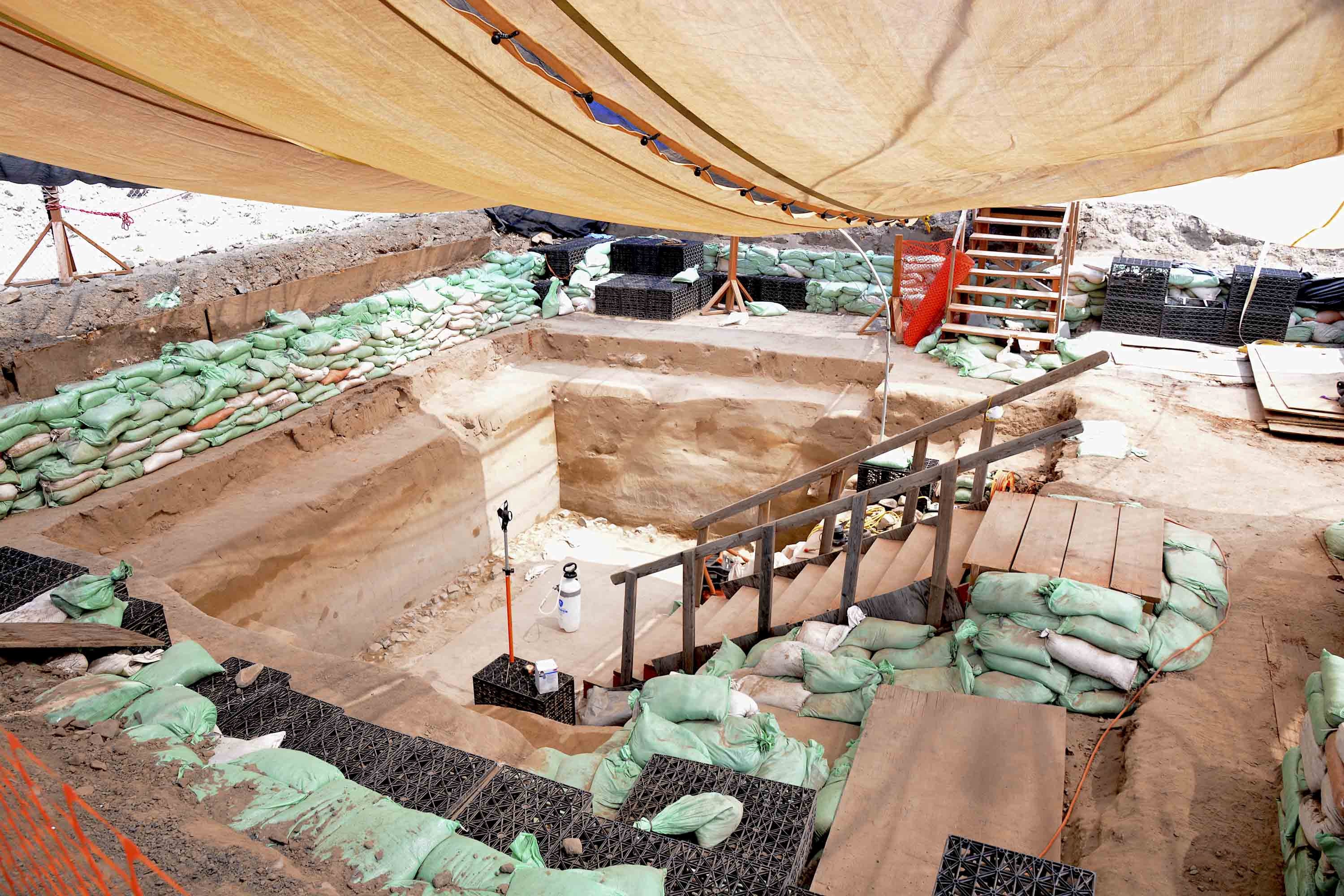
But when the excavation continued deeper, the story took a dramatic turn.
Beneath the Clovis layer, archaeologists uncovered ancient hearths, charcoal, stone tools, bone fragments from Ice Age animals, and a completely different style of projectile points known as the Western Stemmed Tradition. These weren’t scattered artifacts left by passing hunters. They were part of a well-organized campsite, complete with fire pits, tool-making debris, and carefully buried caches of valuable implements—clear evidence that people repeatedly returned to this location.
Then came the radiocarbon dates.
The charcoal from the deepest hearths was dated to approximately 15,000–16,000 years ago, thousands of years earlier than the Clovis culture. At that time, the massive Cordilleran and Laurentide ice sheets still blocked the inland corridor traditionally believed to be the first migration route into the Americas.
If people were already living in western Idaho, they could not have reached the region through the ice-free corridor because it simply did not exist yet.
Instead, the discovery strengthened an alternative theory that had long remained controversial: the first Americans may have traveled along the Pacific coastline by boat, following marine resources south before moving inland via river systems like the Columbia and Snake Rivers.
The stone tools provided another crucial clue. Rather than resembling Clovis technology, many closely matched stemmed projectile points found around the Pacific Rim, suggesting a technological tradition distinct from the classic Clovis culture.
Cooper’s Ferry doesn’t necessarily rewrite every chapter of American prehistory, but it forces archaeologists to rethink one of its most important assumptions. Instead of a single migration through an inland corridor, the earliest settlement of the Americas may have begun thousands of years earlier through a coastal migration that left only scattered traces now being uncovered.
Sometimes the biggest revolutions in history don’t begin with a spectacular discovery.
They begin when archaeologists simply decide to keep digging.


