More than 113 years after the Titanic disappeared beneath the North Atlantic, scientists have produced the most complete digital reconstruction of the legendary ship ever created. Resting nearly 3,800 meters (12,500 feet) below the surface, the wreck has now been captured using fleets of remotely operated vehicles (ROVs), laser scanners, high-resolution cameras, sonar, and advanced photogrammetry, creating a millimeter-accurate 3D model that allows researchers to study the entire ship without returning to the fragile wreck itself.
Unlike previous expeditions that could only document isolated sections, the new survey digitally reconstructed both the Titanic and the vast debris field surrounding it. Millions of photographs and laser measurements were combined into a seamless virtual model, revealing everything from tiny hull deformations and individual rivets to the exact locations of thousands of scattered artifacts. Areas once hidden by darkness, sediment, or dangerous access are now visible for the first time, allowing investigators to examine the ship almost as though it had been raised from the ocean floor.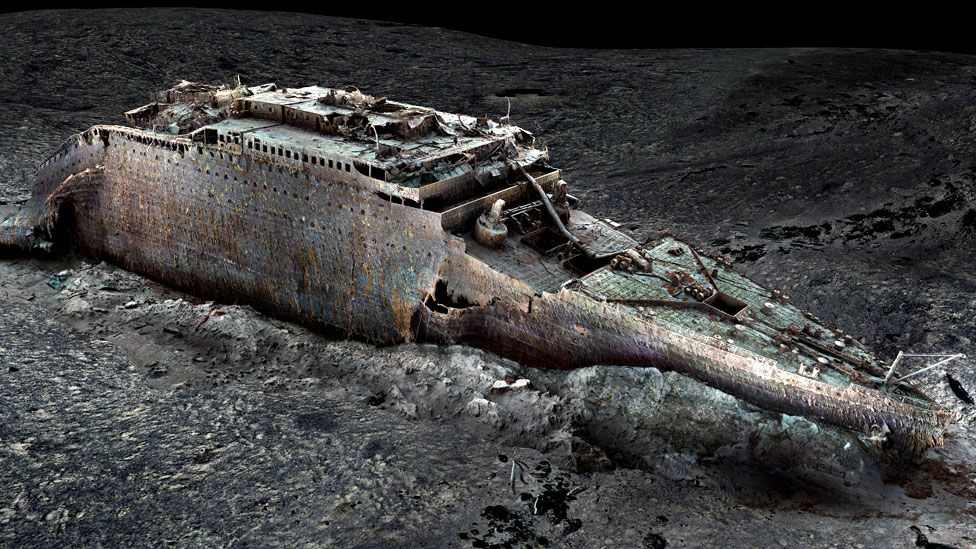
The digital reconstruction is also providing new insight into Titanic’s final moments. One of the most significant findings comes from the engine room, where the model reveals deformation patterns, open steam valves, electrical burn marks, and structural damage consistent with engineers and stokers continuing to operate the boilers and electrical systems even as seawater flooded the compartments. These discoveries support long-standing survivor accounts that the ship’s lights remained on until shortly before the final plunge, buying precious time for lifeboats to be launched and helping maintain order during the evacuation.
Researchers believe that dozens of engineers, electricians, and firemen remained at their posts until the very end, sacrificing their own chances of survival to keep steam pressure flowing and electrical power operating throughout much of the disaster. The newly documented damage inside the machinery spaces provides some of the strongest physical evidence yet that these crew members continued working under impossible conditions as the flooding rapidly intensified.
Perhaps the greatest achievement of the 2025 expedition is not the discovery of a single dramatic artifact, but the creation of a scientifically accurate digital twin of the Titanic. This permanent virtual archive allows experts to analyze structural failures, corrosion, and the sequence of the sinking with unprecedented precision while reducing the need for future dives that could further disturb the rapidly deteriorating wreck. More than a century after the tragedy, the Titanic is still revealing new evidence—not through legend, but through technology capable of preserving one of history’s most important archaeological sites before time and the ocean erase it forever.


