
Mercedes is reportedly in a state of heightened alert following revelations about George Russell’s remarkable tire performance during the recent race in Austria. The data suggests that Russell’s tires lasted significantly longer than expected, raising eyebrows and prompting questions about whether this advantage was a stroke of legal genius or something more controversial.
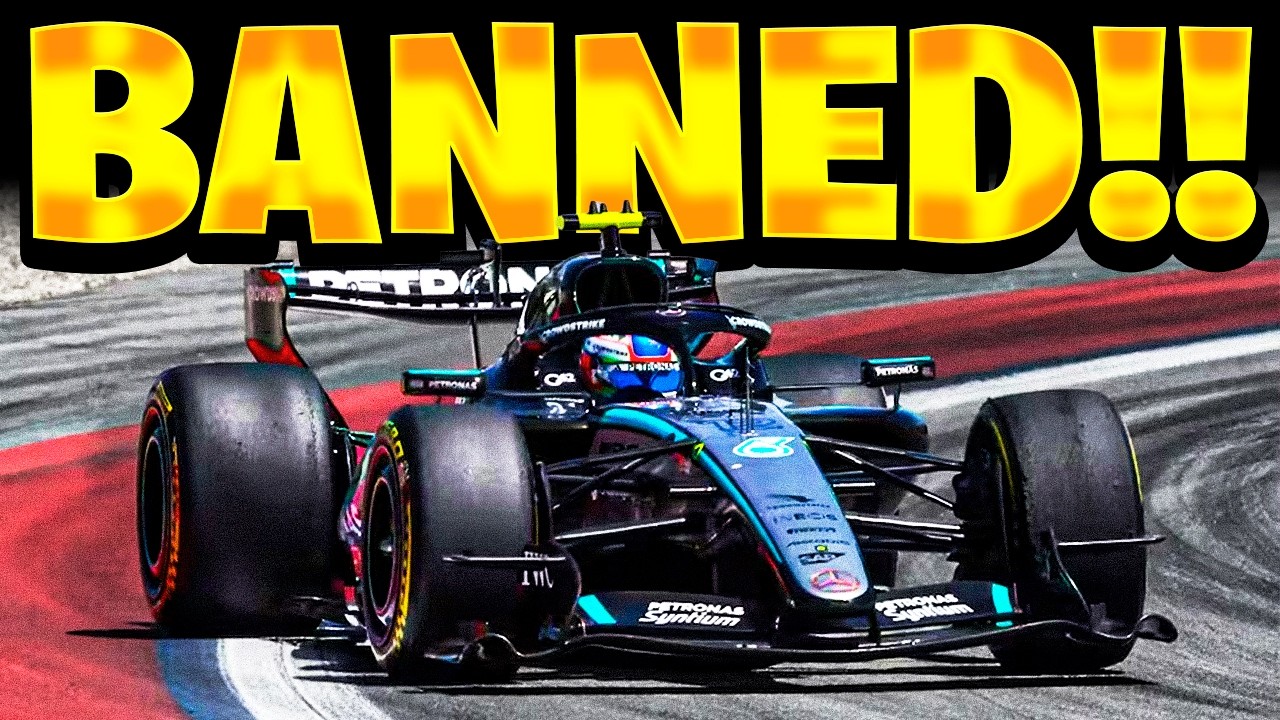
In the high-stakes world of Formula 1, tire degradation is a crucial factor that can make or break a race. It’s more than just a detail; it’s the underlying truth that influences every aspect of a car’s performance. When a vehicle appears to maintain tire life while still achieving race-winning speeds, it sends shockwaves through the paddock. The question on everyone’s lips is whether Mercedes has found a clever method that stays within the rules or if they’ve crossed a line.
Initially, Mercedes could attribute Russell’s tire longevity to factors like effective driving and smart car setup. This narrative is what every team hopes for after a race where tire performance seems unusually strong. If the explanation rests on driver skill, it feels manageable. If it’s about setup, it may be temporary. But the unsettling truth is that Russell not only preserved his tires but did so while keeping pace with the leaders—a detail that Red Bull is unlikely to overlook.

In Formula 1, there’s always a trade-off between speed and tire wear. A driver who conserves tires typically sacrifices lap times, while a car that pushes hard usually faces degradation later. However, if Russell’s Mercedes can maintain speed without the expected compromises, it poses a significant challenge to rivals. Red Bull will undoubtedly scrutinize whether Russell was adjusting his driving style or if the car itself was enabling this exceptional performance.
The implications of a car that can maintain speed while being gentle on tires are profound. Such a vehicle can dictate race strategy, extend stints, and force competitors into difficult decisions. This subtlety in tire management is one of the most powerful tools in the sport, often revealing true control only when the race is underway.

As the FIA examines the data, the stakes grow higher. If the findings indicate a breach of regulations, Mercedes could face serious repercussions. However, if the data merely highlights an effective tire management strategy, the pressure shifts to Red Bull and the rest of the grid, who will need to find a way to counter this newfound advantage.
The potential for a legal tire management technique to shift the balance of power in Formula 1 is enormous. If Mercedes has indeed discovered a way to enhance tire performance within the rules, it could dramatically alter the competitive landscape. Conversely, if the FIA uncovers any illegal tactics, it could lead to a 𝒔𝒄𝒂𝓃𝒹𝒶𝓁 that tarnishes the team’s reputation.
Russell’s win in Austria could be more than just a victory; it may signal a new chapter for Mercedes. The implications of this tire performance extend beyond a single race, potentially reshaping how future races are approached. As the team works to clarify their methods, the paddock watches closely, knowing that the next developments could change everything. What will the FIA’s investigation reveal, and how will it impact the championship race?

