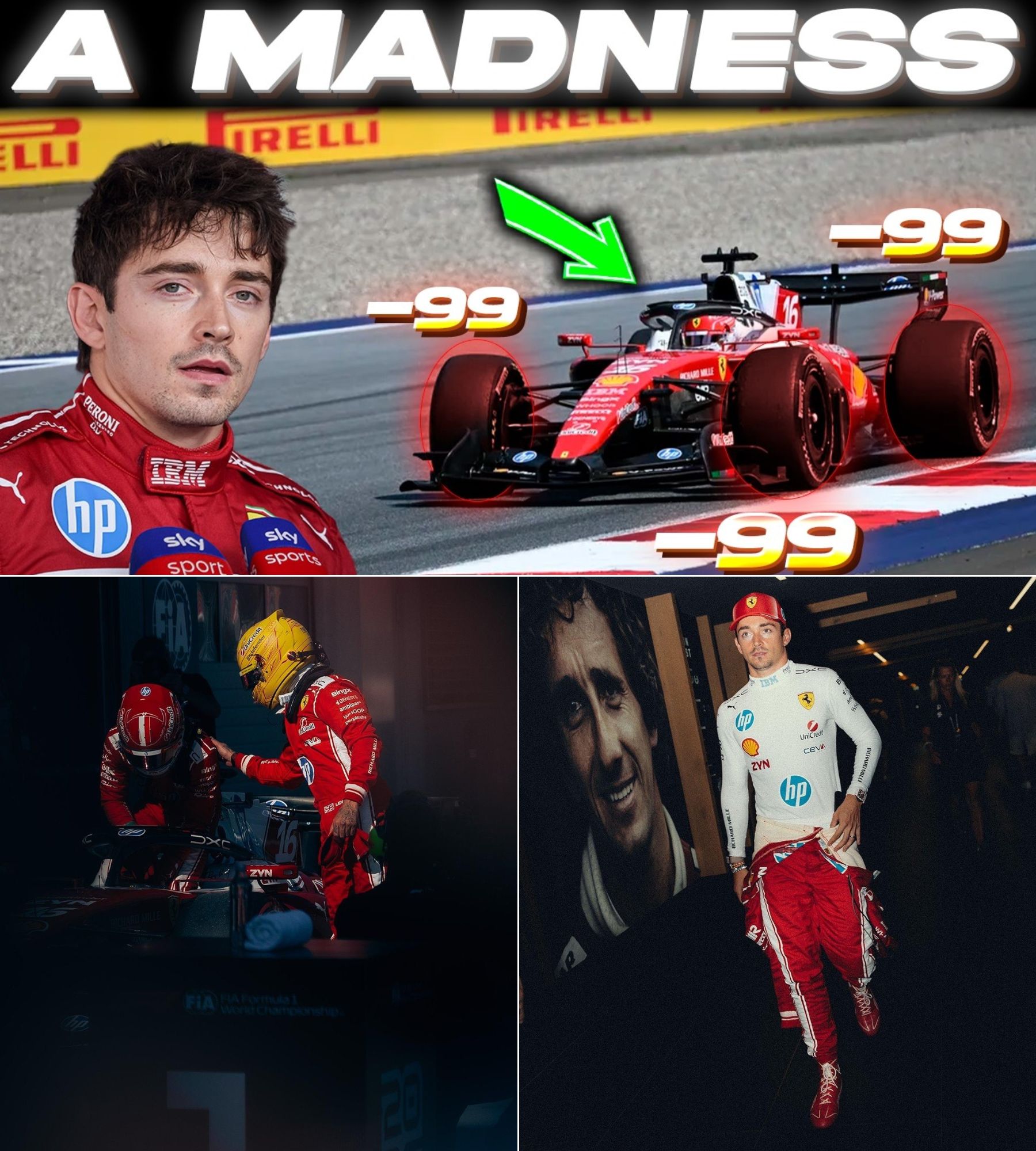
In a stunning turn of events at the Austrian Grand Prix, Charles Leclerc’s promising second-place start quickly spiraled into a frustrating eighth-place finish, leaving fans and analysts alike questioning Ferrari’s tire strategy. Despite Leclerc’s impressive qualifying performance, the race revealed a troubling reality for the Scuderia team.

Leclerc’s front-row position was a beacon of hope for Ferrari, especially with Lewis Hamilton lurking just behind him in third. This was a prime opportunity for the team to capitalize on their strong qualifying and put pressure on their rivals. However, as the race unfolded, it became clear that the tires were not up to the task.
The dreaded tire wear issues that had plagued Ferrari during practice resurfaced during the race, leading to a dramatic decline in performance. Leclerc’s dreams of a podium finish were dashed as the car struggled to maintain pace, leaving him vulnerable to competitors. The Red Bull Ring, known for its demanding layout, proved to be a harsh judge of Ferrari’s capabilities.
Leclerc had already sensed trouble on Friday, expressing concerns about the car’s competitiveness and cornering performance. Yet, he managed to secure a front-row start, which initially seemed to signal a turnaround for the team. The optimism of Saturday, however, quickly faded under the harsh realities of race day.

As the laps progressed, Leclerc found himself caught in a relentless cycle of tire degradation. Each push for speed risked further damaging the tires, forcing him into a defensive mode rather than allowing him to attack. The gradual loss of grip was not an instant collapse but a slow erosion of hope, lap by lap.
This race was not merely a setback; it raised deeper questions about Ferrari’s ability to convert potential into results. Leclerc’s frustration was palpable as he had done everything asked of him, only to watch the car falter when it mattered most. The team’s inability to address known issues from practice added to the weight of disappointment.

For Leclerc, the stakes are high. A driver of his caliber thrives on opportunities, and when those chances slip away due to tire problems, it creates a heavy emotional burden. He needs a car that can not only qualify well but also deliver consistent performance throughout the race.
The implications of this race extend beyond just one weekend. If Ferrari cannot solve these tire issues, every future qualifying success could be overshadowed by doubt. Rivals will sense the vulnerability, and the pressure will mount.

As the team reflects on the Austrian GP, they must confront the uncomfortable truth: raw speed is meaningless if it cannot be translated into race performance. Leclerc’s talent is evident, but without a reliable car to support him, the path to victory remains fraught with challenges.
Will Ferrari be able to turn this situation around, or will the tire troubles continue to haunt them in future races?