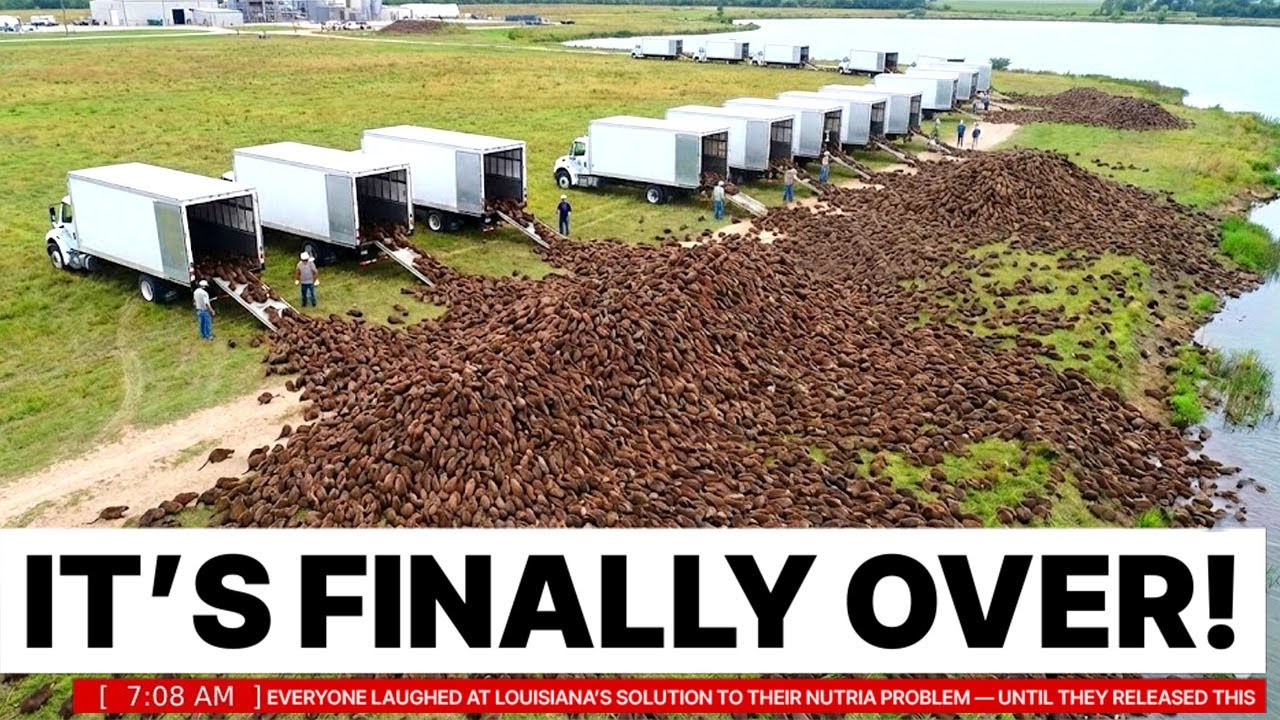
Louisiana’s wetlands faced catastrophic destruction from invasive nutria rats devouring marsh roots, dissolving vast coastlines into open water. In a bold, unprecedented move, the state slapped a bounty on nutria tails, turning hunters into a frontline defense. This radical plan reversed decades of damage and reshaped environmental strategy nationwide.
Nutria, voracious rodents from South America, multiply with alarming speed, wreaking havoc across Louisiana’s fragile marshlands. Feeding aggressively on root systems, they cause “eat outs”—dead patches where marshes collapse into the Gulf. With no natural predators and rapid breeding, nutria drove coastline loss faster than any other factor after levies and oil canals.
The state’s initial response was traditional: fur trading encouraged trapping since the 1900s. But as the fur market collapsed, trappers abandoned nutria, igniting an ecological nightmare. Without control, nutria populations exploded unchecked, destroying over 100,000 acres of vital wetlands annually—an area the size of a major city simply vanished each year.
In desperation, Louisiana launched the “Save Our Wetlands” campaign, a government program that shocked the nation by assigning a monetary bounty per nutria tail. Starting modestly at $4 or $5, then raised to $6, the bounty transformed nutria hunting from a niche trade into a profitable, large-scale operation embraced by locals from teenagers to retirees.
Hunters flooded the swamps armed with boats and traps, mobilizing an army of everyday citizens. Thousands of tails piled up at collection stations along the coast, and satellite images soon revealed something astounding: marsh grass began returning, and deadly eat outs shrank. The state’s gamble was paying off, saving swaths of coastline previously thought lost.
This bounty-driven approach rapidly gained credibility. Despite early ridicule from the media and jokes about a “rat patrol,” science told a different story. The Coastwide Nutria Control Program became one of America’s most successful invasive species management efforts, setting a new precedent for environmental protection grounded in economic incentives.
The origins of the nutria crisis trace back to a single introduction in the 1930s by EA McIlhenny of the famous Tabasco family. Hoping to capitalize on the fur trade, he imported nutria to Avery Island. When the animals escaped—likely due to hurricane damage—the invasion began, unleashed on Louisiana’s vulnerable wetland ecosystems.
Since then, nutria have spread rapidly, thriving without predators and consuming root systems vital to marsh stability. Their destructive habits accelerate coastal erosion, undermining a natural barrier against hurricanes. The stakes could not be higher: every mile of healthy marsh reduces storm surge by a foot, integral to protecting cities like New Orleans.
Louisiana’s innovative program not only curbed nutria populations but also economically empowered local communities. Hunters earned significant income, swapping muddy swamp labor for life-changing cash. Efforts even extended to promoting nutria meat, though cultural resistance hindered its popularity. Still, the bounty ensured consistent management funded by the state’s millions of dollars in allocations.
But challenges remain. The hunter population ages, younger generations show less interest, and inflation squeezes profits. Rising costs threaten sustainability, risking a resurgence of nutria if participation wanes. The program continually adapts, using drones and technology for better tracking, but success hinges on human persistence over biological resilience.
The story of Louisiana’s nutria bounty program is a rare blend of desperation, ingenuity, and human grit. It demonstrates a new model for battling invasive species—one that harnesses economic motivation to safeguard the environment. Other states now study Louisiana’s approach, seeking lessons to avert similar ecological crises.
As the battle against nutria wages on, the marshlands of Louisiana stand as a testament to this unconventional war. Every severed tail is a victory in a fight to hold back erosion and protect a vital American landscape. It is proof that sometimes, the only way to save nature is to literally pay for its survival.
The question now looms: could this bounty model apply to other invasive species 𝓉𝒽𝓇𝑒𝒶𝓉𝑒𝓃𝒾𝓃𝑔 ecosystems worldwide? Louisiana shows that while nature’s balance is delicate, human ingenuity—even in the form of a “nutria tax”—can turn the tide against relentless destruction. The swamp’s survival depends on it.