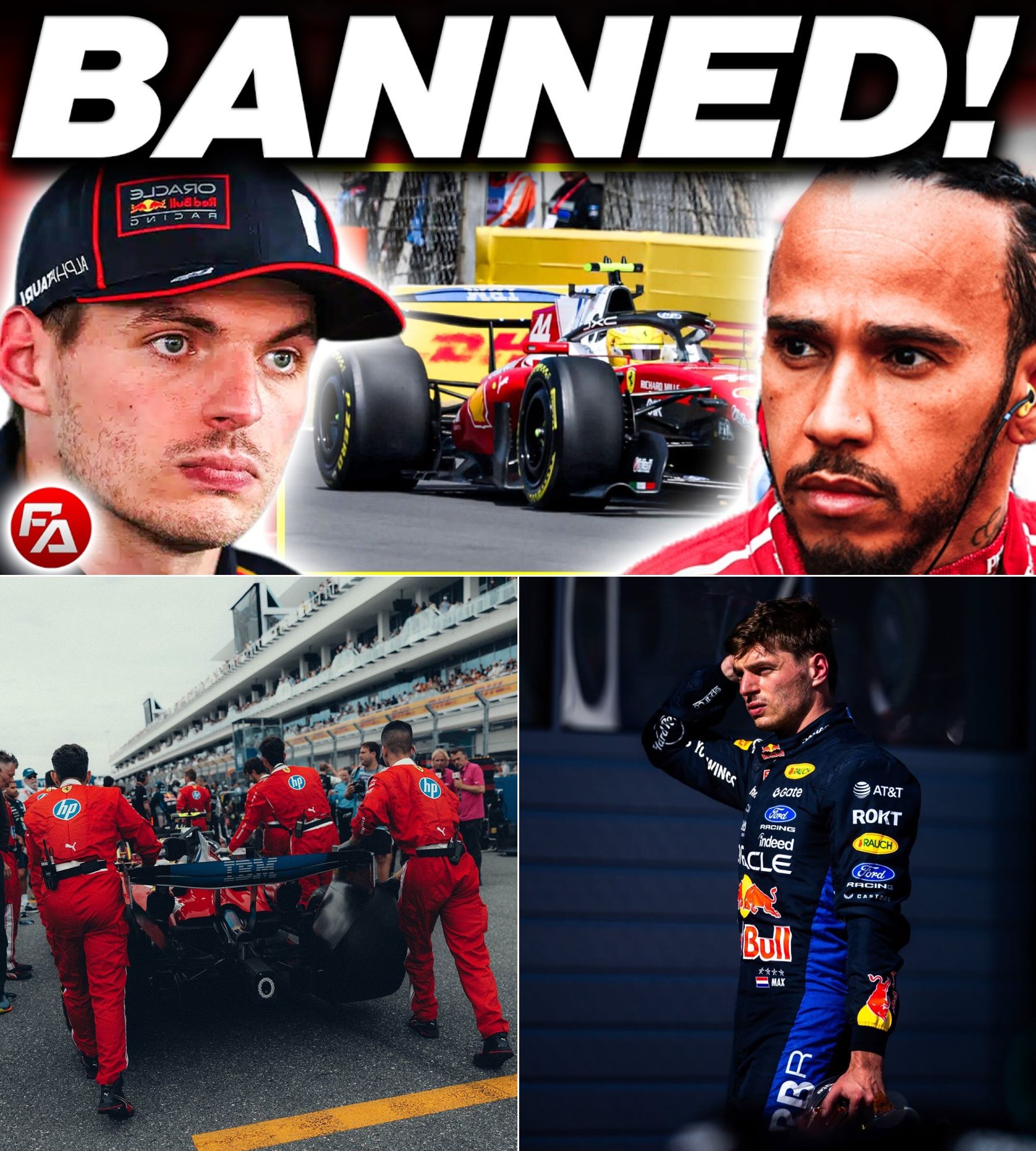
In a 𝓈𝒽𝓸𝒸𝓀𝒾𝓃𝑔 turn of events, the FIA has launched an investigation into the innovative rear wing designs of Ferrari and Red Bull, raising serious concerns about driver safety in Formula 1. After two alarming incidents involving Max Verstappen, the future of these groundbreaking upgrades hangs in the balance.

What was once hailed as a revolutionary leap in F1 technology is now under scrutiny. Following Verstappen’s harrowing spins at both the British Grand Prix and the Austrian Grand Prix, the FIA is questioning whether these radical wing designs pose too great a risk for the sport. The governing body is now faced with a critical decision that could alter the course of the season.
Verstappen’s recent experiences have sparked a wave of concern. After narrowly avoiding serious accidents, he expressed his frustration over team radio, stating, “Well, at that point, it’s super dangerous because you can really hurt yourself.” His candid remarks have caught the attention of the FIA, emphasizing the paramount importance of driver safety.
Both teams are now under pressure to clarify the reliability of their designs. Red Bull team principal Laurent Mekies has assured fans that they are investigating the issues thoroughly. He noted, “We are going to leave no stone unturned,” indicating that all options, including reverting to older wing designs, are on the table.

The wings in question, dubbed the “Macarena wings” due to their unique rotation mechanism, were designed to optimize aerodynamics by significantly reducing drag. Ferrari’s version reportedly rotates nearly 225 degrees, enhancing speed on straightaways. However, the recent failures have raised questions about their reliability and safety.
While Red Bull grapples with these challenges, Ferrari has managed to avoid similar issues, having taken a more cautious approach with its design. Their decision to delay racing the wing until they were confident in its performance appears to have paid off, as they have not encountered major reliability problems.

The FIA’s investigation is focused on how these wings transition between their high-speed and cornering modes, with strict regulations in place regarding their operation. If the governing body determines that these designs are unsafe, they could impose stricter regulations or even ban them outright.
As the paddock holds its breath, the implications of this investigation could extend beyond just these two teams. Other teams, including McLaren, are reportedly exploring similar aerodynamic concepts, and a ruling against the current designs could stifle innovation across the grid.

The stakes are high, and the tension is palpable as the FIA continues its discussions with Ferrari and Red Bull. Every lap completed with these wings is now under intense scrutiny, and the outcome of this investigation could redefine the future of Formula 1 technology.
With driver safety at the forefront, the question remains: will these ambitious wing designs survive the FIA’s investigation, or are we witnessing the potential end of a daring engineering concept? The racing world is watching closely, and the next chapter promises to be a thrilling one.