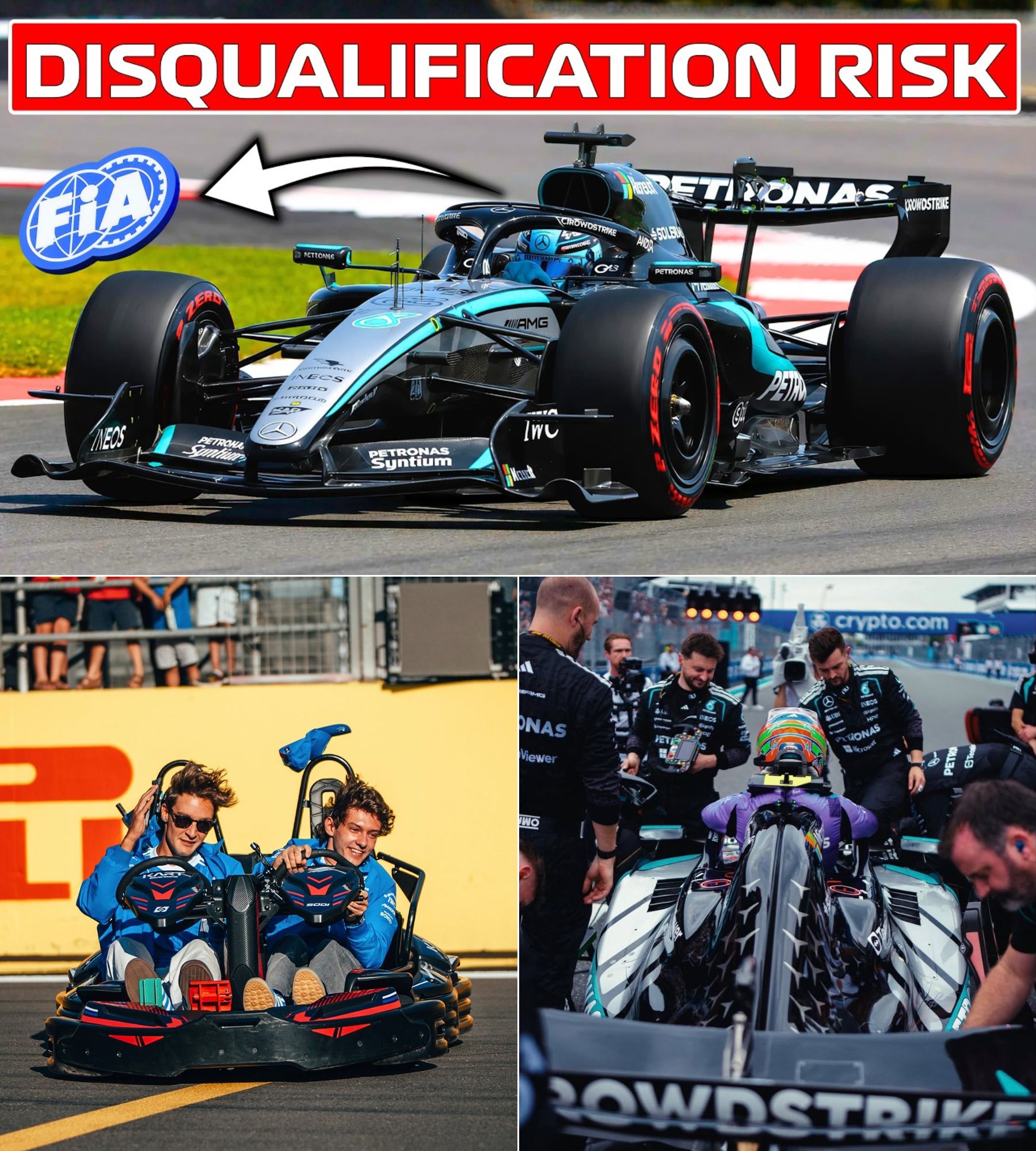
In a stunning twist at Silverstone, Mercedes drivers George Russell and Kimi Antonelli executed a controversial maneuver that could potentially lead to disqualification. As they fought for every millisecond during qualifying, both drivers lifted off the throttle just before crossing the timing line, a move that has raised eyebrows and ignited debate within the F1 community.
This was no mere accident or miscalculation. It was a carefully orchestrated strategy that the Mercedes team had meticulously practiced in their simulator for days prior to the British Grand Prix. The telemetry data revealed a striking advantage for Antonelli as he exited Club Corner, boasting a speed of 7 to 8 km/h more than rival Lewis Hamilton. Yet, in a surprising twist, Antonelli lifted off the throttle, dropping to 40% just before the timing line. Meanwhile, Hamilton, who was fully committed at 94%, surged ahead, crossing the line 5 km/h faster. The result? Hamilton secured pole position by a razor-thin margin of just 11 thousandths of a second.
What makes this situation even more intriguing is that this tactic mirrors a trick the FIA had banned just three months prior. Mercedes seems to have found a loophole, employing a different technical route to achieve the same performance gains. The origins of this maneuver trace back to the 2026 season, when new power unit regulations introduced a ramp-down rate for battery power, designed for safety. This rule mandates that power must decrease gradually, preventing dangerous speed differentials on the track.
Earlier this season, Mercedes and Red Bull discovered a way to exploit a regulatory exemption related to MGU-K emergency shutdowns. By intentionally triggering this shutdown during cool-down laps, they could manipulate the battery’s charge for subsequent flying laps. However, after the FIA observed teams using this tactic in Japan, they swiftly closed the loophole, limiting its use to genuine emergencies.
Undeterred, Mercedes returned to the drawing board and, just three months later, unveiled their Silverstone strategy. This new approach cleverly sidesteps the previous ban by utilizing different allowances within the regulations. By lifting off the throttle before the timing line, both drivers can meet specific criteria that allow them to drop power from 350 kW to zero instantly, bypassing the gradual ramp-down rule.
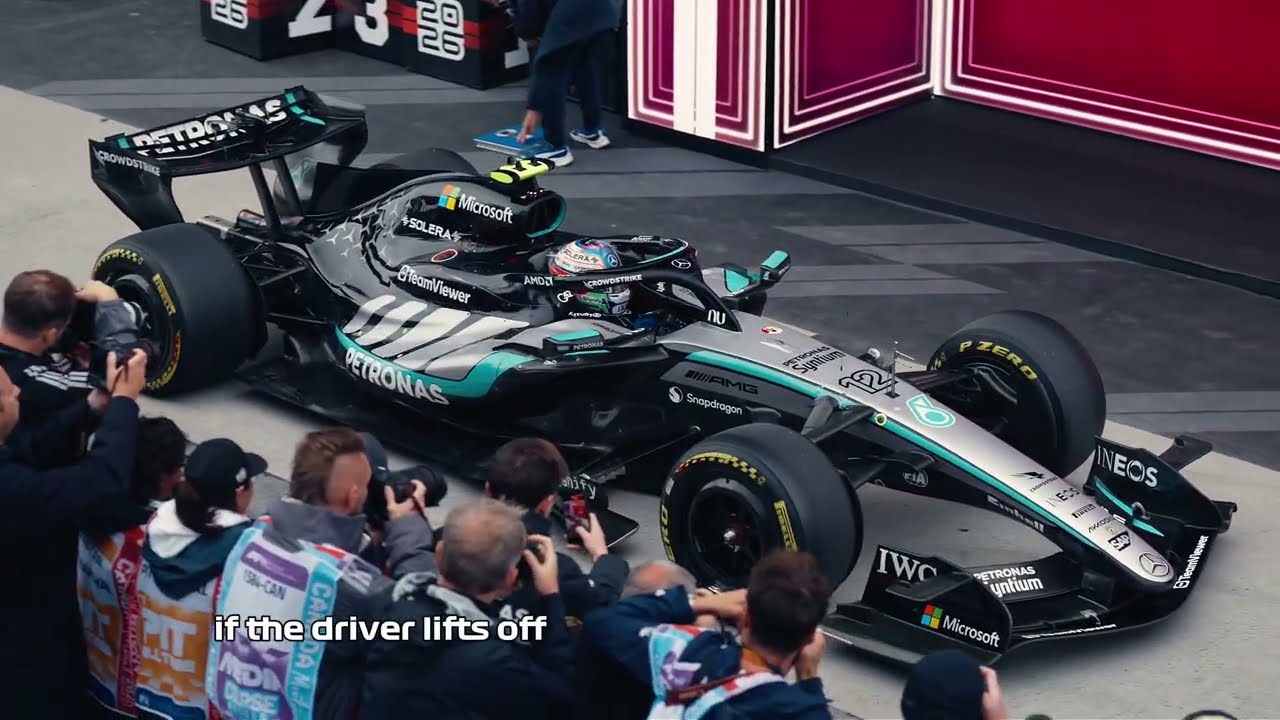
In practical terms, this means that Mercedes can maintain maximum power longer as they approach the timing line, gaining a critical edge over competitors. While a 0.05-second advantage might seem minor, in the high-stakes world of Formula 1 qualifying, it can be the difference between starting at the front or the back of the grid.
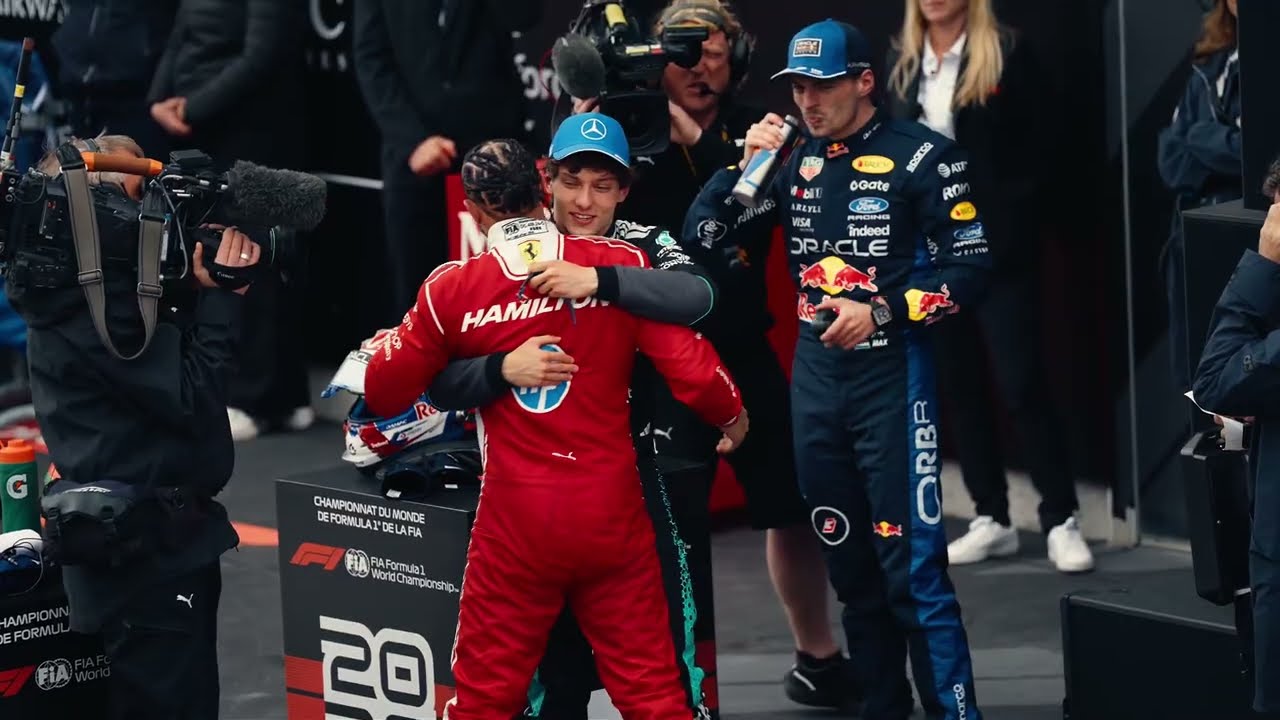
However, executing this maneuver is fraught with risk. If the driver lifts off too early, they lose speed; if they hold the throttle too long, they face an instant power cut-off, violating the regulations and risking disqualification. To mitigate this, Mercedes has implemented an audible tone system to cue drivers when to lift, ensuring they comply with the rules without sacrificing speed.
Andrea Stella, McLaren’s team principal, expressed surprise at Mercedes’ tactics, highlighting how transparent the technique was to those analyzing the telemetry. As other teams consider adopting this approach for the upcoming race in Hungary, they are acutely aware of the risks involved.
What transpired at Silverstone was not just a qualifying session; it marked a pivotal moment in the ongoing energy management battle of the 2026 season. As teams prepare for Hungary, the question remains: will they dare to replicate Mercedes’ bold strategy, or will they play it safe?