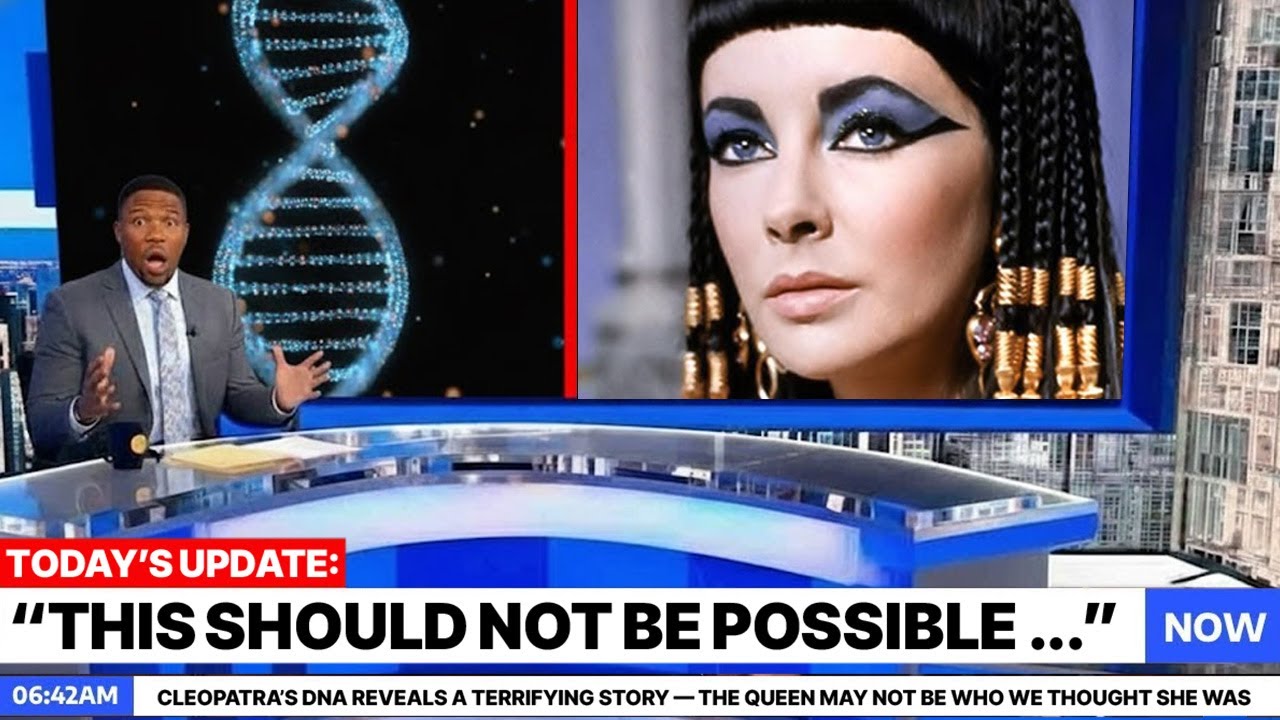
A groundbreaking DNA analysis has shattered centuries-old perceptions of Cleopatra’s identity, revealing the last pharaoh as a tragic figure shaped by severe genetic disorders and an insular royal lineage. This scientific revelation overturns the legend of beauty, exposing a painful truth hidden for over 2,000 years beneath Egypt’s sands.
For centuries, Cleopatra has stood as an icon of power and beauty, steeped in legend as Egypt’s brilliant final ruler. Yet recent forensic breakthroughs expose a starkly different reality, rooted in the dark complexities of inbreeding and genetic affliction within the Ptolemaic dynasty.
Archaeological investigations at the ancient temple of Taposiris Magna unearthed a mile-long tunnel carved beneath layers of limestone, an engineering marvel hinting at Cleopatra’s secret burial site. Kathleen Martinez, a Dominican criminal lawyer-turned-archaeologist, spearheaded this daring expedition, treating Cleopatra’s disappearance like a cold case.
The tunnel leads to a submerged path aimed directly at the Mediterranean, suggesting a desperate escape or burial plan designed to protect Cleopatra from Roman humiliation and ensure her immortality alongside Mark Antony. This discovery rewrites the narrative on the queen’s final days and resting place.
Inside this temple complex, archaeologists uncovered mummies with golden tongues, amulets intended to grant the dead powerful speech before Osiris, the lord of the underworld. These finds suggest a royal circle preparing for Cleopatra’s arrival in the afterlife, enhancing the site’s significance as a hub of ancient Egyptian mysticism.
Despite inching closer to Cleopatra’s remains, researchers turned to her supposed genetic mirror: the skeleton believed to be her sister Arsinoe IV, unearthed in Ephesus. This relic, long considered key to unlocking Cleopatra’s biology, has been subjected to cutting-edge DNA analysis with 𝓈𝒽𝓸𝒸𝓀𝒾𝓃𝑔 results.
Published in 2025, the analysis revealed the skeleton was not Arsinoe IV but a boy aged 11 to 14 with severe developmental deformities and a Y chromosome—completely rewriting historical assumptions. His genetic markers trace back to Italy or Sardinia, deepening the mystery behind his prestigious burial far from home.
This discovery dismantles the once-accepted family narrative and reignites questions about Cleopatra’s lineage. The Ptolemaic dynasty was not a diverse genetic line but a closed loop of incestuous relationships, with inbreeding levels estimated at over 45%, nearly double that of known genetic tragedies.
Clinical evidence points to Cleopatra inheriting a host of debilitating autoimmune disorders, perhaps manifesting as bulging eyes and swollen necks seen in her ancestors. Far from radiant health, the queen likely endured chronic pain, masked by cosmetics and elaborate jewelry, effectively pioneering ancient camouflage and biomedical enhancement.
Cleopatra’s famed intelligence and charisma may have been fueled by episodes of hyperthyroidism—rapid speech and manic energy masking her genetic scars. Her extensive use of opium and blue lotus suggests a life punctuated by pharmaceutical self-treatment to suppress continuous physical and neurological torment.
The implications of this revelation are profound: Cleopatra was no mythic beauty but a fragile figure whose survival through relentless adversity redefines historical understanding. Her legacy, now seen through the prism of human struggle and scientific scrutiny, challenges the traditional glorified image of the ancient queen.
Archaeologists continue to probe the tunnel and its adjacent ruins in hopes of locating Cleopatra’s tomb, anticipated to reveal a vital medical archive alongside historical artifacts. Such a find would be unparalleled, providing unprecedented insight into hereditary disease and royal life in Ancient Egypt.
As the search presses on, we must rethink the queen’s story—not as a flawless goddess but as a symbol of resilience amid genetic despair. The future discovery of her tomb could finalize this paradigm shift, deepening our grasp of history’s most enigmatic rulers and their hidden battles.
Cleopatra’s tale has forever changed. Emerging evidence compels us to abandon the fairy tale and confront a harsher truth—one of genetic tragedy, dynastic cruelty, and survival against staggering biological odds. This is history rewritten, with science illuminating shadows long thought impenetrable.
The queen’s enduring allure lies no longer in mythic beauty alone but in the complexity of a broken family tree and a life defined by secret suffering. Cleopatra’s real crown was not just power but the extraordinary will to endure against a legacy of familial decay and physical affliction.
As new findings unfold, the world awaits the opening of the sealed tomb and the final portrait of a pharaoh who challenged Rome and fate alike. This story is far more than archaeology; it is a stark reminder of how history can hide the painful truths beneath legend and gold.