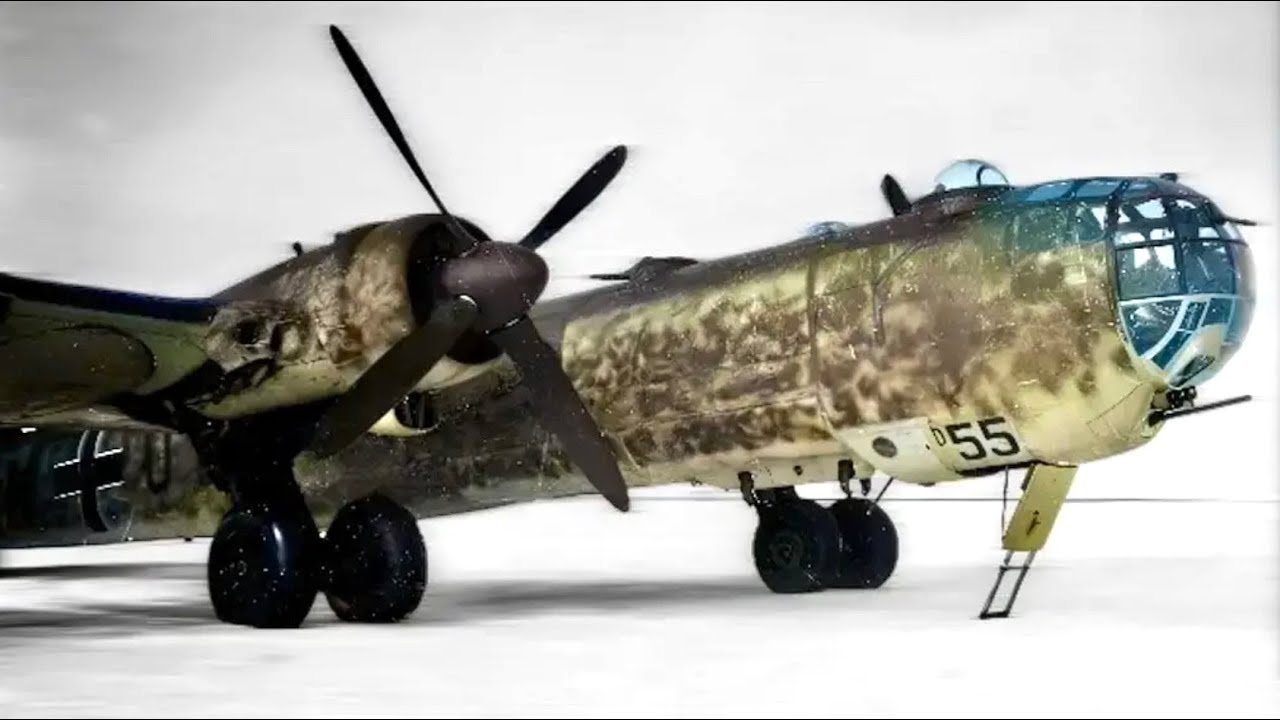
In a startling revelation, fresh evidence has emerged detailing a secret World War II Luftwaffe plan to bomb Manhattan using the massive Heinkel He 177 bomber, potentially refueling covertly on Greenland’s icy expanse. This unprecedented operation, aimed at striking New York City, exposes daring German ambitions reaching across the Atlantic with high-stakes, one-way raids.
The German high command, desperate to breach U.S. defenses, conceived multiple extraordinary schemes to reach American soil. Foremost among these was the deployment of the Heinkel He 177, an advanced heavy bomber, enhanced for extended range. Historians now suggest a sophisticated plan utilizing Arctic outposts for refueling, effectively stretching the bomber’s reach directly to New York.
Originally designed for European theaters, the He 177 faced technical setbacks, including frequent engine fires. Yet, upgrades—particularly the massive A7 variant—remained central to Nazi aspirations for transatlantic strikes. The aircraft’s 36-meter wingspan and potent Daimler-Benz engines hinted at a terrifying capability: flying from northern Norway to Manhattan on a one-way bombing mission.
Key to this plot was Greenland, under fierce “Weather War” contention, where German forces operated secret stations for meteorological data vital to military operations. The discovery of a remarkable 1944 event, where a large German Junkers Ju 290 successfully landed and took off from frozen sea ice, confirmed that such refueling operations on Greenland were feasible.
The operational concept involved using seaborne U-boats and remote weather bases to support bombing runs. Refueling from these hidden Arctic stations would enable the heavily laden He 177s to deliver significant bomb loads over New York City before crews abandoned the planes, hoping for submarine rescue. This grim element underscored the mission’s perilous, near-suicidal nature.
Flight paths for the planned sorties stretched from the Luftwaffe base near Trondheim, Norway, covering roughly 3,590 miles to Manhattan. Modified Heinkel bombers, carrying nearly a ton or more of bombs, could venture within striking distance but lacked return capability. Fuel caches hidden on Greenland allowed for critical staging, tipping the balance between possibility and logistical nightmare.
The Luftwaffe’s decision to embed large, joined bomb bays in modified aircraft suggests preparations for unprecedented payloads. Speculation about using atomic armaments has been refuted, but the substantial conventional explosives alone threatened New York’s skyline. The mission’s objective was symbolic devastation—terror wrought from the skies thousands of miles away.
However, the proposed rendezvous with U-boats post-attack 𝓮𝔁𝓹𝓸𝓼𝓮𝓭 fatal vulnerabilities. Allied naval patrols dominated Eastern waters by 1944, making surface meetups hostile and improbable. Records indicate the Luftwaffe likely knew this but proceeded out of desperation—or potentially as a psychological gambit to intimidate the United States.
Historical analysis points to the capsizing of more pragmatic plans once the extreme risks emerged. One-way bombing missions offered limited strategic impact and sacrificed valuable crews and aircraft for minimal physical damage. Yet the very conception of such operations reveals the radical lengths Nazi Germany pursued to project war into the American homeland.
While no confirmed attacks ever reached U.S. soil, the unveiling of pilot Peter Brill’s firsthand accounts and archival material challenges previous assumptions. His detailed descriptions of intensive He 177 training and Arctic staging invigorate debate over Luftwaffe capabilities and wartime intentions previously dismissed as folklore.
This revelation invites urgent re-examination of wartime intelligence and record-keeping on transatlantic bombing attempts. The Luftwaffe’s Greenland staging hypothesis reshapes understanding of the European theater’s global reach and technological innovations under extreme constraints. It also spotlights the North Atlantic’s frozen frontlines as pivotal wartime battlegrounds.
Despite the mission’s ultimate cancellation as the war drew to a close, the audacity of this plan underscores a chilling “what if” scenario. Had the Germans succeeded in these high-risk Arctic refueling operations, New York City might have witnessed an unprecedented air raid decades before jet age threats emerged in Cold War tensions.
This groundbreaking disclosure reshapes historical narratives, illuminating overlooked strategies and perilous gambles within the Luftwaffe’s final desperate efforts. It challenges historians to integrate these revelations into broader analyses of World War II’s global theater and technological warfare evolution.
Contemporary scrutiny of German aircraft design and Arctic logistical feats also reflects exceptional engineering under wartime duress. The operation required coordination spanning continents and climate extremes, linking secret weather stations, aircraft modification programs, and naval support in a complex war machine’s crescendo of ambition.
While the tragic loss of life was narrowly averted and the mission remained “on paper,” the strategic value of studying it today is profound. As historians and aviation experts delve deeper, this story enriches the understanding of WWII’s underexplored dimensions and the lengths of human ingenuity in total war.
The unfolding debate energized by Peter Brill’s testimony and recovered documents promises to ignite further research. These insights compel recognition of the Arctic’s crucial role in wartime logistics and foreshadow later Cold War military strategies that leveraged polar geography for strategic advantage.
Ultimately, the “Luftwaffe Over Manhattan” project epitomizes the extremes of wartime innovation shadowed by looming defeat. It stands as a stark reminder of the relentless, near-mythic ambitions fought in the shadows, the fragile line between innovation and desperation, and the tremendous stakes of global conflict.
Further investigation remains essential to fully authenticate the extent of these plans and the technological limits faced. The integration of newly surfaced data into mainstream World War II historiography marks a turning point, shedding light on potentially transformative but forgotten chapters of air power history.
As the world absorbs these revelations, attention now turns to archival exploration and the meticulous piecing together of fragmented wartime records. The implications ripple across fields from military aviation to geopolitical strategy, inspiring fresh reflections on the dynamic and deadly chessboard of the Second World War.