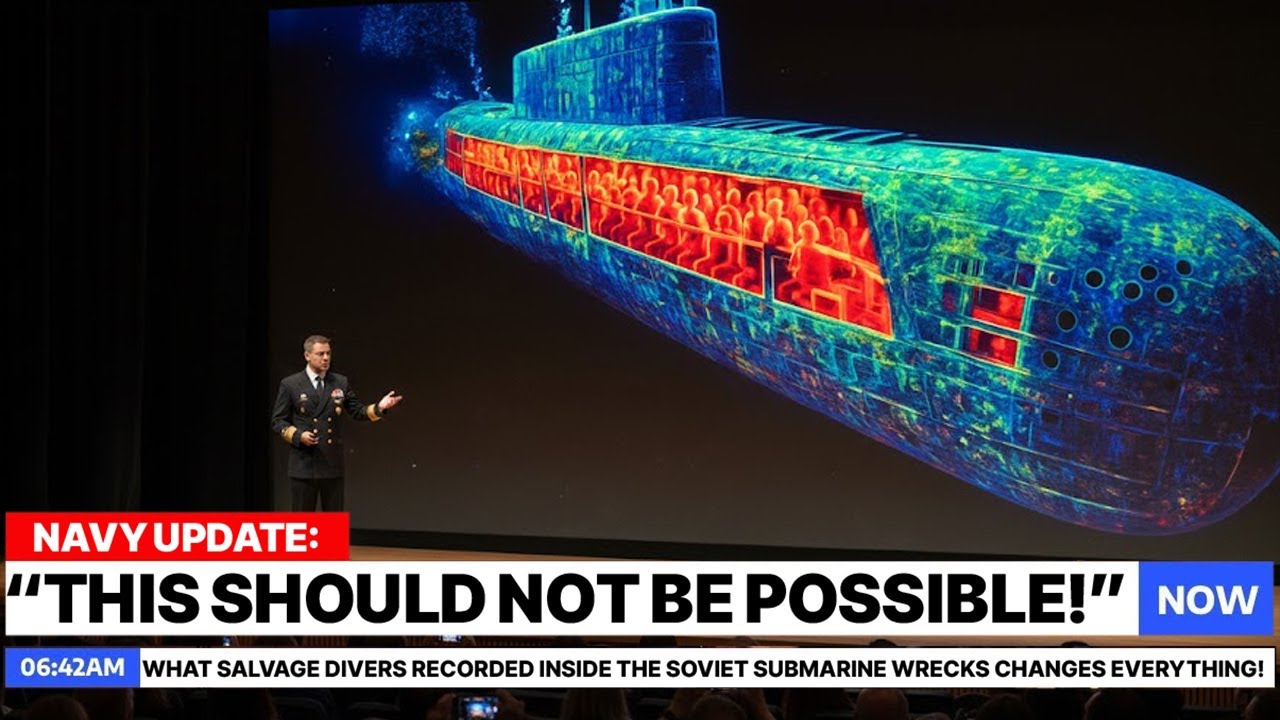
Deep beneath the ocean’s surface, salvage divers have uncovered a horrifying truth: Soviet nuclear submarine wrecks once thought dormant are catastrophically leaking deadly radiation. New footage reveals radioactive plumes far exceeding safe levels, endangering marine ecosystems and global food chains, triggering an urgent environmental crisis of unprecedented scale.
For decades, the dark seabed concealed dozens of abandoned Soviet nuclear submarines—cold war relics presumed to be quietly corroding away. But recent expeditions into the abyss have shattered these assumptions, exposing active radiation leaks that threaten ecosystems and human health alike. The once silent graveyards are now ticking time bombs beneath the waves.
The K-278 Komsomolets, a titanium Soviet super-submarine lost in 1989, sits shattered over 5,500 feet down in the Norwegian Sea. Once a marvel of engineering, boasting the deepest dives and armed with nuclear torpedoes, it was a fortress of secrecy and death. Until now, it was assumed stable and contained, but divers’ footage reveals corrosion and ominous radioactive plumes puffing from its hull.
In 2019, a joint Norwegian-Russian effort deployed a cutting-edge ROV to investigate the wreck. The images were chilling—a vent pipe emitted a cloudy plume, signaling active leakage. Radiation detectors on board registered levels up to one million times background seawater, dominated by cesium-137, the same lethal contaminant from Chernobyl’s shadow.
This discovery forced scientists to reassess risks lurking within the Arctic’s nuclear seabed. The plumes carry cesium-137 into the food web, infiltrating plankton, fish, and ultimately humans who consume seafood from these contaminated waters. Though currently under safety thresholds, radiation is rising as corroded hulls fail, accelerating toxic escape into crucial fishing zones.
Attention then turns to other hotspots in the Arctic’s frigid Barents and Kara Seas, sites of intentional Cold War nuclear dumping. The K-27 reactor, a liquid-metal cooled nuclear nightmare, was scuttled in shallow Kara Sea waters in 1982 with 800 pounds of enriched uranium still inside. Rust and corrosion invade its delicate structure, risking an underwater Chernobyl disaster.
Experts warn that the unstable reactor could release radiation explosively if structural collapse or seawater intrusion triggers a critical event. Storms and shifting sediment increase this risk in shallow seas, undermining earlier judgments that sinking these reactors was a safe disposal method. The environmental threat from such nuclear reactors remains dire and unchecked.
Further complicating the crisis is the tragic sinking of the K-159 in 2003. Meant for dismantling, this rusted Soviet sub carrying nearly a ton of spent fuel capsized during ill-fated towing amid a violent storm. Nine sailors lost their lives, and the wreck now rests at 800 feet depth, its corroding reactor another radiation hazard with no recovery plans in sight.
Many experts consider this a tale of negligence; some suspect darker motives—covering up an unmanageable nuclear disaster to circumvent prohibitive cleanup costs. Salvage divers confirm the wreck’s rapid decay, making it a looming radioactive time bomb submerged in one of the world’s most ecologically sensitive zones, now silently leaking radioactivity into the ocean environment.
The Russian Pacific “submarine cemetery” near Vladivostok reveals a sprawling nuclear nightmare. Over 100 decommissioned nuclear subs rust in shallow bays, many containing untouched reactors and spent fuel rods. With no funds for proper dismantlement after the Soviet collapse, they deteriorate amidst populated areas. Surveillance footage shows these vessels disintegrating, posing environmental and security risks.
This site bears dark historical scars: a 1985 refueling accident triggered a reactor explosion, spreading radioactive contamination. The area remains toxic, with decaying submarines intensifying the threat. Officials and scientists fear that poor security and corrosion could allow rogue access to nuclear materials or cause catastrophic marine radiological events near a city of 600,000 residents.
The conclusive recording from salvage missions unequivocally demonstrates that dumping nuclear material into oceans is neither safe nor sustainable. The Soviet practice of oceanic disposal shrouded in secrecy has birthed an ongoing environmental crisis, one whose radiation leaks increasingly penetrate marine food webs, 𝓉𝒽𝓇𝑒𝒶𝓉𝑒𝓃𝒾𝓃𝑔 global fisheries, ecosystems, and human populations alike.
Cesium-137’s mimicry of potassium ensures it bioaccumulates progressively, ascending the food chain from plankton to fish to humans. Norwegian fish studies confirm low-level contamination is already present in commercial catches, underlining the urgent need to address these underwater hazards before contamination levels escalate beyond control.
Plutonium’s staggering 24,000-year half-life guarantees this nuclear poison will jeopardize ecosystems and food sources across millennia. Unlike other nuclear wastes managed in fortified land repositories, these rusting Cold War relics remain 𝓮𝔁𝓹𝓸𝓼𝓮𝓭 to seawater corrosion, steadily releasing radioactive poison that science has documented but humanity has yet to halt.
The revelations from salvage divers’ 2019 expeditions mark the beginning of a nuclear crisis beneath the waves, not its conclusion. Scientists now face a race against time to devise containment or cleanup strategies, including radical proposals like billion-dollar salvage lifts or massive underwater sarcophagi modeled after Chernobyl’s concrete tomb.
With the Komsomolets, K-27, and K-159 alone housing more long-lived nuclear materials than all other ocean-dumped radioactive waste combined, the scale of this unfolding disaster demands immediate international attention and action. Ignoring these submerged hazards risks irreversible contamination of global oceans and DNA of future generations.
This emergency is a damning indictment of Cold War nuclear arrogance and recklessness. These steel graves no longer conceal their malign secrets; they leak life-𝓉𝒽𝓇𝑒𝒶𝓉𝑒𝓃𝒾𝓃𝑔 radiation into the environment relentlessly. The divers’ footage transcends history, sounding an urgent alarm about the catastrophic nuclear legacy that endangers us all.
The underwater images and measurements captured expose the catastrophic failure of ocean disposal as a nuclear waste solution. As corrosion deepens and radiation escapes, we confront a grave environmental emergency spiraling beneath some of the planet’s most productive seas—an invisible disaster with profound global ramifications.
Scientists and governments must urgently coordinate remediation efforts and enhance monitoring to mitigate the spreading contamination. Failure to act decisively now risks the permanent poisoning of marine ecosystems vital for global food security and climate resilience. The silent nuclear leaks from these Cold War relics are an existential threat demanding swift intervention.
In this race against time, every year lost worsens the damage to ocean health and amplifies risks to human populations dependent on seafood. What once was hidden in cold, dark depths now emerges as a catastrophic crisis above all oceans, demanding transparency, funding, and innovation to preserve the planet’s future.
The sobering truth gleaned from salvage divers is clear: these underwater nuclear wrecks are no longer mere historical footnotes but active, intensifying dangers to life on Earth. The oceans will not contain this radioactive poison indefinitely. Humanity must respond immediately to prevent ecological catastrophe on an unprecedented scale.
Our planet faces a critical crossroads forged in the depths where steel meets saltwater. The time to ignore these submerged nuclear time bombs is over. Lessons from these Soviet relics expose catastrophic waste management failures that threaten all life, forcing global leaders to prioritize containment, cleanup, and accountability without delay.
We now know the Cold War’s legacy lives on under the waves, with radiation leaking into fisheries, economies, and ecosystems worldwide. Every documented plume, every corroding hull, challenges the notion that “out of sight” means “out of mind.” The world must wake up to this urgent radioactive threat beneath the ocean’s surface.
This breaking revelation compels a new understanding of nuclear pollution: it is a transboundary, persistent menace embedded in Earth’s waters—leaking lethal radiation silently yet relentlessly. Action must be swift, science-driven, and cooperative across nations to stem this invisible tide before it irrevocably contaminates oceans and human health.
The salvage divers’ harrowing footage is not just a call to action; it is a siren blast warning humanity of an underwater meltdown unfolding beneath our feet. The Soviet nuclear submarines’ rusting hulks reveal environmental collapse in real time—a disaster begging for immediate scientific and diplomatic intervention to protect the seas.
As the world grapples with climate and biodiversity crises, the emerging Arctic nuclear scourge poses a silent but devastating equal threat. These deteriorating wrecks demand international emergency response akin to the greatest environmental disasters of our era to prevent irreversible contamination and ecological collapse in fragile ocean systems.
In conclusion, the salvage divers who dared to explore these ghostly nuclear wrecks have 𝓮𝔁𝓹𝓸𝓼𝓮𝓭 a deadly secret 𝓉𝒽𝓇𝑒𝒶𝓉𝑒𝓃𝒾𝓃𝑔 us all. The nuclear arms race’s fallout is no longer confined to history books. It is leaking unseen and uncontrolled into our oceans, requiring urgent global efforts to contain an environmental nightmare centuries in the making.