For more than seven decades, Clint Eastwood has cultivated one of Hollywood’s most controlled public images.
He rarely raises his voice in interviews. He does not usually engage in public feuds, and even when he dislikes a film, a performance, or a political argument, his criticism tends to arrive in a few dry words rather than an emotional outburst.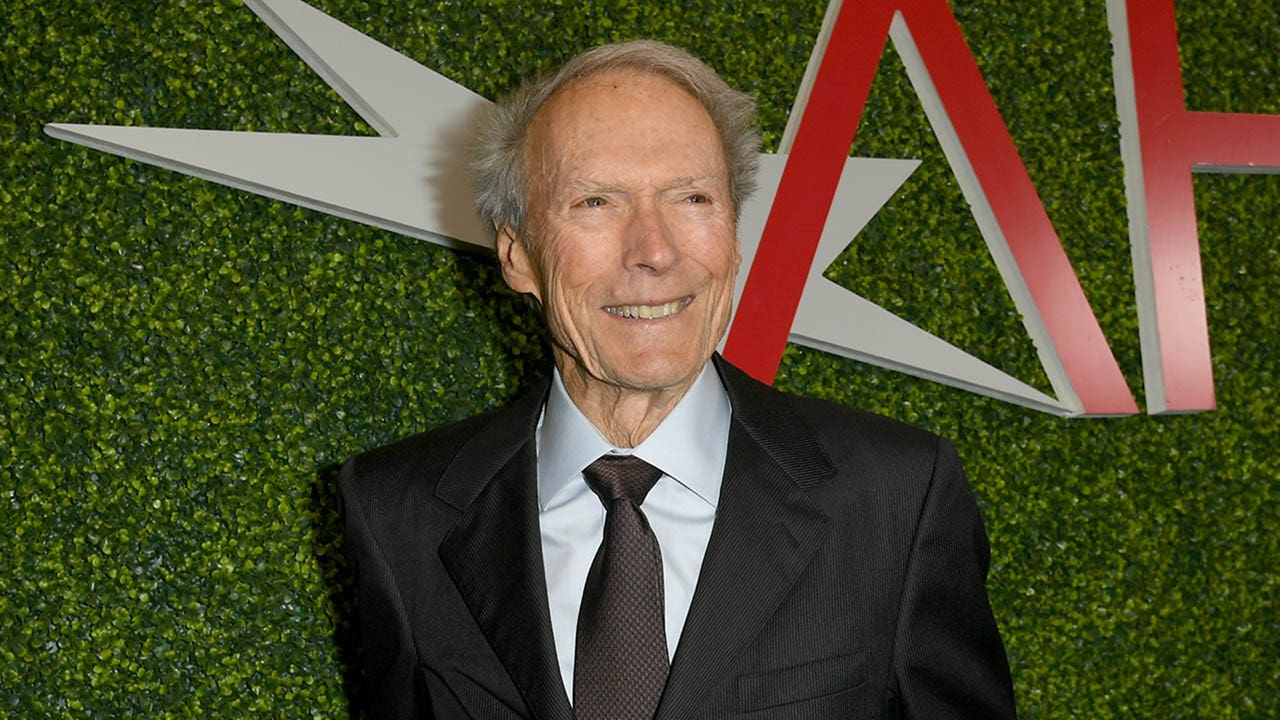
That reserve makes headlines claiming Eastwood has finally “exposed the six celebrities he hated most” especially tempting.
There is just one problem: no verified interview, memoir, or public statement shows Eastwood presenting such a list.
Several people mentioned in these stories did have creative or political differences with him. Others appear to have been included because their working methods contrasted with his. But disagreement is not the same thing as hatred, and many of the dramatic quotations attributed to Eastwood cannot be traced to reliable sources.
Leonardo DiCaprio: Different Methods, Not a Secret Feud
Eastwood directed Leonardo DiCaprio in the 2011 biographical drama J. Edgar.
The two men were known for very different approaches. Eastwood generally works quickly, limits rehearsals, and often prefers early takes because he believes spontaneity can disappear when a scene is repeated too many times. DiCaprio is associated with extensive research and a willingness to explore multiple versions of a performance.
Those differences make a plausible foundation for a dramatic story about conflict.
The available record, however, shows mutual professional respect rather than a permanent falling-out. During publicity for J. Edgar, DiCaprio spoke positively about Eastwood’s quiet, efficient sets, while Eastwood praised his leading actor’s commitment to portraying the controversial FBI director. The film was completed in only thirty-nine shooting days and remained under its reported budget.
There is no credible confirmation that Eastwood abandoned the camera while DiCaprio demanded six takes, declared that the actor was “still searching for something I already found,” or refused ever to speak to him again.
They have not made another film together, but that alone does not prove hostility. Eastwood has worked with many prominent actors only once.
Michael Moore: A Real Public Confrontation
The strongest documented dispute involved filmmaker Michael Moore.
At a 2005 National Board of Review event, Eastwood warned Moore not to arrive at his home with a camera. Reports differed slightly on his exact wording, but the comment included a threat to shoot or kill Moore and was received as dark humor by the audience. Eastwood also reportedly emphasized that he was joking.
The remark reflected genuine political and stylistic differences.
Moore is known for confrontational documentaries in which he approaches public figures unexpectedly. Eastwood, by contrast, fiercely protects his privacy and has often expressed admiration for military service. Their disagreement later attracted renewed attention during public arguments surrounding Eastwood’s film American Sniper.
Even here, however, the online retelling exaggerates what is known.
There is no verified evidence that Eastwood ordered producers never to mention Moore, froze whenever his name was spoken, or maintained a formal lifelong blacklist. What can reasonably be said is that Eastwood strongly disliked Moore’s ambush-style filmmaking and publicly warned him against using it on him.
Barbra Streisand: Contrasting Directors Without a Proven Feud
Stories about Eastwood and Barbra Streisand usually focus on their radically different reputations as filmmakers.
Eastwood is famous for speed and restraint. Streisand is associated with careful preparation, close attention to detail, and strong artistic control. Those methods represent nearly opposite schools of directing.
That does not establish personal hatred.
The claim that Streisand spent years delaying The Bridges of Madison County before Eastwood took the project from her is misleading. Several filmmakers and performers were considered during the long development process, but the production history does not support the dramatic account of Eastwood rescuing a film that Streisand had paralyzed through indecision.
There is also no dependable source for the supposed remark that she would have made more films had she learned to make decisions faster.
Eastwood ultimately directed the 1995 adaptation and starred opposite Meryl Streep, whose performance received an Academy Award nomination. The film demonstrated that his economical directing style could produce a deeply emotional romantic drama.
It did not prove that Streisand represented everything he despised about Hollywood.
 Tommy Lee Jones: A Conflict That Could Not Have Happened as Described
One of the most obvious problems in the video concerns Tommy Lee Jones and In the Line of Fire.
Eastwood starred in the 1993 thriller, but the film was directed by Wolfgang Petersen, not Eastwood. Tommy Lee Jones did not appear in it at all.
The principal antagonist was played by John Malkovich.
Therefore, the detailed story about Jones challenging Eastwood’s authority on that set, continuing to perform after Eastwood called “cut,” and being permanently banned from future Eastwood productions cannot be accurate. The two men were not acting together in the film described, and Eastwood was not its director.
This kind of easily checked error casts doubt on the broader “six enemies” narrative.
It appears that recognizable traits—Jones’s intensity and Eastwood’s calm working style—were combined into an invented backstage confrontation.
Richard Burton: Difficult Production, but Not Lifelong Hatred
Eastwood did work with Richard Burton in the 1968 action film Where Eagles Dare.
Burton’s drinking was a well-documented problem during parts of his life, and accounts of the production describe delays associated with his behavior. A stunt performer later recalled having to substitute for him during difficult moments, and filming in Austria was already complicated by dangerous weather and demanding action sequences.
Eastwood also disliked the screenplay’s heavy exposition and reportedly asked for some of his dialogue to be transferred to Burton. Yet production accounts indicate that the two leading men generally got along, even jokingly referring to the movie as “Where Doubles Dare” because stunt performers handled so much of the action.
The claim that Eastwood permanently despised Burton therefore simplifies a more complicated working relationship.
He may have been frustrated by delays or excess, especially because discipline and efficiency later became defining features of his own directing style. But there is little reliable evidence that he spent the rest of his life nursing personal hatred toward Burton.
The Meaning of Eastwood’s Silence
Many fabricated celebrity-feud stories follow the same formula.
Two performers work together once.
They possess contrasting personalities.
They never collaborate again.
A narrator then fills the silence with secret arguments, invented quotations, and a permanent grudge.
That structure is particularly effective when applied to Eastwood because his private nature leaves room for speculation. He rarely corrects every rumor, and his reputation for bluntness makes fictional one-line judgments sound believable.
But Eastwood’s actual career tells a different story.
He has certainly criticized people, rejected projects, clashed over politics, and preferred some working styles over others. His sets are known for efficiency, minimal noise, limited takes, and trust in actors and crew members. Filmmakers who favor extensive rehearsal or repeated experimentation may not naturally fit that environment.
Creative incompatibility is not hatred.
Nor does the absence of a second collaboration prove that a relationship ended in betrayal.
At 96, Eastwood’s legacy is far more substantial than an alleged list of enemies. He moved from television Westerns to international stardom, transformed Dirty Harry into a cultural landmark, and later became an Academy Award-winning director through films including Unforgiven and Million Dollar Baby.
His public persona has always depended on economy.
Few words. Little explanation. No visible need to settle every argument.
That silence may invite people to invent grudges on his behalf, but it should not be mistaken for evidence.
The more defensible conclusion is that Clint Eastwood has encountered collaborators whose methods, politics, or personalities he disliked. Michael Moore prompted a genuine public warning. Richard Burton may have tested his patience. Leonardo DiCaprio worked differently from him.
The remaining dramatic confrontations belong more to Hollywood storytelling than established history.