When Married… with Children premiered on Fox in 1987, it looked nothing like the family sitcoms dominating American television.
At a time when shows celebrated idealized suburban households, creators Michael G. Moye and Ron Leavitt introduced the Bundys—a struggling Chicago family whose constant arguments, financial problems, and brutally sarcastic humor challenged nearly every television convention.
Over the years, headlines have suggested that Ed O’Neill has revealed shocking secrets about the series.
In reality, O’Neill’s interviews have offered something even more interesting: an honest look at how one of television’s most influential sitcoms was created, the challenges its cast faced, and the friendships that endured long after the cameras stopped rolling.
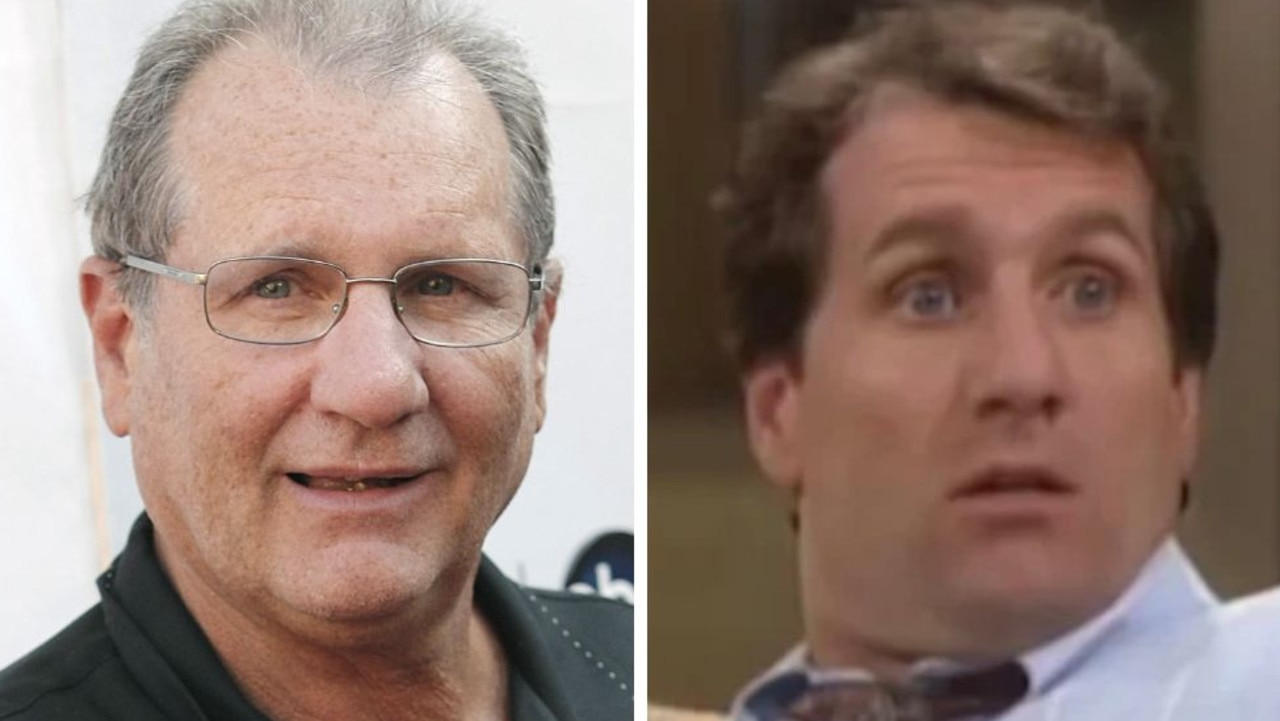
When O’Neill was cast as Al Bundy, he was a relatively unknown actor with a background in theater and television guest appearances. His understated delivery, impeccable comic timing, and ability to make even the most outrageous dialogue feel believable became the foundation of the series.
Alongside him were Katey Sagal as Peggy, Christina Applegate as Kelly, and David Faustino as Bud. Together, they created a family unlike anything audiences had seen before—deeply dysfunctional, endlessly argumentative, yet somehow impossible not to love.
The chemistry between the four actors quickly became the show’s greatest strength.
Despite portraying a family that constantly insulted one another, the cast developed genuine affection off screen. O’Neill has often spoken warmly about his younger co-stars, particularly Christina Applegate, whom he has described as someone he watched grow from a teenager into an accomplished actress. Applegate has likewise credited O’Neill with serving as a steady mentor and father figure throughout the eleven-season run.
That sense of family helped the cast navigate the pressures of a groundbreaking comedy.
The show’s provocative humor soon attracted national attention.
In 1989, an episode titled “Her Cups Runneth Over” became the focus of a highly publicized boycott led by Michigan activist Terry Rakolta, who urged advertisers to withdraw support because she considered the show’s sexual humor inappropriate.
Several companies pulled their commercials.
Ironically, the controversy had the opposite effect.
Public curiosity drove ratings even higher, helping establish Married… with Children as one of Fox’s signature programs. Rather than distancing itself from the criticism, the network embraced the show’s rebellious reputation, marketing it as a sitcom that deliberately challenged traditional television norms.
Looking back, O’Neill has acknowledged that the controversy only strengthened the series’ identity.
Behind the scenes, however, life was not always easy.
Like many long-running productions, the cast experienced moments of disagreement and personal hardship. Reports have described periods of tension between O’Neill and Amanda Bearse, who played Marcy Rhoades (later Marcy D’Arcy), particularly after publicity surrounding a 1989 magazine cover that did not feature the full ensemble. While accounts differ regarding the extent of the disagreement, both actors continued working professionally together throughout the series, and there is no indication that it disrupted production.
Far more significant were the personal challenges faced by the cast.
In 1991, Katey Sagal suffered the heartbreaking stillbirth of her daughter late in pregnancy. Because Sagal had been visibly pregnant during filming, the writers abandoned a planned Bundy pregnancy storyline, choosing instead to explain the episodes as part of one of Al Bundy’s dreams. The cast rallied around Sagal during this devastating period, demonstrating the close relationships that had developed over years of working together.
The production itself was physically demanding.
Filmed before a live studio audience, the cast often performed lengthy scenes with minimal interruption, much like a stage play. O’Neill’s physical comedy, combined with the show’s energetic pacing, required precise timing and considerable stamina, while guest stars regularly embraced the series’ fast-moving, unpredictable style.
Over eleven seasons, Married… with Children repeatedly pushed television boundaries.
Episodes tackled topics involving relationships, consumer culture, gender expectations, and social hypocrisy with a satirical edge that was unusual for network television at the time. Some episodes faced scheduling changes or censorship in certain markets, but the show’s willingness to challenge convention became one of its defining characteristics.
When the series ended in 1997, the conclusion came with surprisingly little fanfare.
Several cast members later recalled learning that the show had been canceled through media reports rather than receiving an official announcement from the network. After more than a decade together, the abrupt ending felt disappointing for many involved.
Each cast member, however, went on to build an impressive career.
Ed O’Neill reinvented himself for a new generation as Jay Pritchett in the Emmy-winning sitcom Modern Family.
Katey Sagal earned widespread acclaim for dramatic roles, including Gemma Teller in Sons of Anarchy.
Christina Applegate received critical praise for projects such as Dead to Me, continuing to work while courageously speaking about her diagnosis with multiple sclerosis.
David Faustino remained active in television, voice acting, and comedy.
Although plans for an animated Married… with Children revival were announced in recent years, the project has not moved forward as originally expected. Nevertheless, the affection among the cast has remained evident through reunions, interviews, and charitable events, reflecting friendships that have endured long after the series concluded.
Today, Married… with Children is widely recognized as one of the most influential sitcoms in television history.
Its irreverent humor helped redefine what network comedy could be, opening the door for later series that embraced flawed, unconventional families and sharper social satire.
Looking back, Ed O’Neill’s reflections reveal that the greatest “secret” behind the show’s success was not controversy or scandal.
It was a cast willing to trust one another, take creative risks, and commit wholeheartedly to characters who were outrageous on the surface but surprisingly relatable underneath.
That combination continues to introduce the Bundys to new generations of viewers—and explains why their legacy remains as enduring as ever.