For decades, Angie Dickinson embodied everything audiences loved about classic Hollywood. She possessed timeless beauty, effortless confidence, and an independent spirit that set her apart from many leading ladies of her era. Whether starring opposite John Wayne in Rio Bravo or breaking new ground as Sergeant Pepper Anderson in Police Woman, Dickinson built a career that earned admiration from critics and moviegoers alike.

But behind the glamorous image was a woman who never forgot the moments when Hollywood crossed the line.
Among the countless directors, producers, and powerful executives she encountered throughout her remarkable career, there was one incident that left such a lasting scar that she never truly forgave the people responsible. While her professional collaborations often flourished, a 𝓈𝒽𝓸𝒸𝓀𝒾𝓃𝑔 television ambush late in her career transformed a respected creative relationship into one of Hollywood’s most talked-about falling-outs.
From Small-Town North Dakota to Hollywood Dreams
Born Angeline Brown in Kulm, North Dakota, Angie Dickinson grew up in a strict Roman Catholic family of German heritage. Her father published the local newspaper while also operating the projector at the town’s only movie theater.
Those evenings spent surrounded by classic films sparked a lifelong fascination with Hollywood.
Life at home, however, was far from ideal. Dickinson later acknowledged that growing up with a father struggling with alcoholism shaped her determination to build a different future. Rather than allowing difficult circumstances to define her, she developed an independence that would become one of her greatest strengths.
After her family relocated to Burbank, California, new opportunities began to emerge. An outstanding student, Dickinson graduated from high school at just fifteen before studying business in college. Although she initially considered following her father’s path into journalism, another dream gradually took hold.
Unlike many young women of her generation, Dickinson wasn’t interested in simply playing glamorous wives on screen. She admired adventurous male characters played by stars like Humphrey Bogart and Gregory Peck, later explaining that while she wanted to look like Hollywood’s leading ladies, she wanted to do what the men did. She wanted excitement, action, and meaningful roles.
A Chance Opportunity Changed Everything
By the early 1950s, Dickinson appeared destined for a quiet life.
She had married football player Gene Dickinson after a whirlwind romance, earned a college degree, and worked as a secretary at a local airport. Yet fate intervened when she entered a preliminary Miss America competition almost on a whim.
Although she didn’t win, her striking appearance attracted the attention of casting agents.
Television appearances quickly followed, including her debut on Death Valley Days in 1954. Soon she was making guest appearances on popular series such as Gunsmoke, General Electric Theater, and The Life and Legend of Wyatt Earp, steadily establishing herself as one of television’s promising new faces.
Around this same period, Dickinson met Frank Sinatra while appearing on The Jimmy Durante Show. Their immediate connection evolved into a close friendship that lasted for years and helped introduce her to Hollywood’s elite social circles.
Refusing to Become Another Hollywood Stereotype
As Dickinson’s film career expanded, she made an important decision that distinguished her from many actresses of the era.
Rather than embracing the platinum-blonde bombshell image popularized by Marilyn Monroe and Jayne Mansfield, she deliberately chose a more natural appearance, believing it would allow her to pursue a wider range of characters.
The strategy proved remarkably successful.
After several supporting roles in westerns and low-budget productions, her breakthrough arrived in Howard Hawks’ 1959 classic Rio Bravo. Playing the confident gambler known as Feathers, Dickinson held her own alongside John Wayne, Dean Martin, and Ricky Nelson.
The performance transformed her into one of Hollywood’s brightest rising stars.
Yet success came with its own frustrations. Dickinson later discovered that director Howard Hawks had quietly sold her personal contract to a major studio without consulting her—a reminder of how little control many actors possessed under Hollywood’s powerful studio system.
Fame, Friendship, and Personal Sacrifice
Throughout the 1960s, Dickinson’s popularity continued to grow.
She appeared alongside Frank Sinatra and Dean Martin in Ocean’s 11, became a regular presence among the Rat Pack, and attracted enormous media attention. Universal Studios valued her so highly that it reportedly insured her famous legs for one million dollars, while she received awards celebrating what many considered Hollywood’s most beautiful legs.
Behind the glamour, however, her personal life was increasingly complicated.
Her first marriage ended, while her relationship with Sinatra became the subject of endless speculation. Rumors also linked her to President John F. Kennedy, though Dickinson consistently avoided confirming or denying the stories publicly, preferring to keep her private life separate from her public image.
Choosing Family Over Career
In 1965, Dickinson married legendary composer Burt Bacharach, creating one of Hollywood’s highest-profile celebrity couples.
Their daughter, Nikki, was born prematurely after a difficult pregnancy that nearly claimed Dickinson’s own life. Nikki would later face significant developmental challenges, requiring constant care throughout her childhood.
Dickinson made a decision few major actresses were willing to make during the height of their careers.
She declined numerous prestigious roles in order to devote herself to raising her daughter.
Although she continued acting, family always came first. Even as Nikki struggled with health complications, Dickinson remained determined to provide the stability and love her daughter needed.
Police Woman Made Television History
Everything changed again in 1974.
Dickinson accepted the role of Sergeant Pepper Anderson in NBC’s groundbreaking crime 𝒹𝓇𝒶𝓂𝒶 Police Woman. Initially uncertain about accepting the project, she sought advice from Burt Bacharach, who encouraged her to take the role.
Neither realized how dramatically it would reshape both her career and her marriage.
Police Woman became an international sensation, earning Dickinson a Golden Globe Award and three consecutive Emmy nominations. More importantly, she became television’s first female lead in a prime-time dramatic police series, inspiring countless women to pursue careers in law enforcement.
The Los Angeles Police Department later honored her contributions, and Dickinson famously joked that people could now call her “Dr. Pepper.”
Ironically, the show’s enormous success also contributed to growing tension at home. According to Dickinson, Bacharach had originally dismissed the series as unlikely to succeed. As her fame soared while his career slowed, professional jealousy reportedly placed increasing strain on their relationship.
The marriage eventually collapsed, ending after years of growing emotional distance.
Success Came at a Cost
Although Police Woman made Dickinson a television icon, she later admitted she had mixed feelings about the experience.
The demanding production schedule left little time for films or other creative opportunities, while she felt the financial compensation failed to match the workload. She also grew frustrated with repetitive scripts that frequently emphasized her appearance over deeper storytelling.
Even so, she remained grateful for the character’s impact, often parodying Pepper Anderson in comedy specials and later appearances, proving she never lost her sense of humor.
The Greatest Tragedy of Her Life
No professional disappointment compared to the heartbreak Dickinson experienced in 2007.
Her only daughter, Nikki Bacharach, died by suicide at the age of forty after a lifetime of severe health struggles.
The loss devastated Dickinson.
She withdrew almost completely from public life, stepping away from Hollywood for nearly two years as she struggled to cope with overwhelming grief.
When she eventually returned to acting in 2009, it was for a single, deeply personal performance in Mending Fences. Rather than portraying another glamorous leading lady, she chose the role of an elderly grandmother, finding comfort in a character far removed from the seductive women she had often played throughout her career.
It became her final screen appearance.
The Hollywood Incident She Never Forgot
Ironically, the person Dickinson ultimately resented most was not someone with whom she had fought during the making of a film.
In 1980, she had worked successfully with acclaimed director Brian De Palma on the psychological thriller Dressed to 𝓀𝒾𝓁𝓁. Their collaboration produced one of the strongest performances of her career, and despite occasional creative disagreements over wardrobe and filming choices, mutual respect appeared to exist between actress and director.
That changed years later.
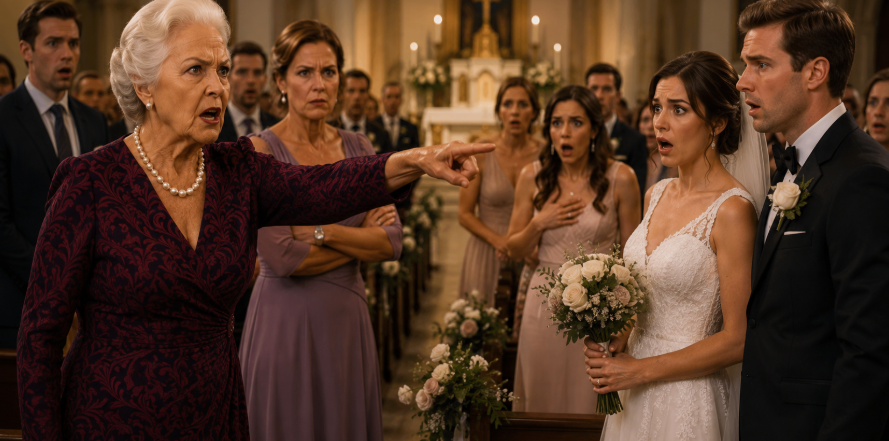
In 1993, television producer Ralph Edwards invited Dickinson to what she believed would be a private retrospective interview with De Palma.
Instead, she walked into the studio only to discover she had been secretly lured onto the television program This Is Your Life.
Rather than the reunion she had expected, she found herself facing a live audience in what she considered a manipulative surprise designed purely for entertainment.
Dickinson was furious.
Feeling deceived and exploited, she refused to participate, walked off the set, and never forgave those responsible for orchestrating the ambush. What had begun as a respected professional relationship became permanently overshadowed by an incident she believed violated her trust and dignity.
A Legacy of Independence
Throughout more than five decades in Hollywood, Angie Dickinson consistently refused to let others define her.
She rejected limiting stereotypes, balanced career and motherhood on her own terms, broke barriers for women in television, and remained fiercely protective of her personal integrity—even when doing so meant walking away from powerful people or high-profile opportunities.
Today, she is remembered not only for unforgettable performances in Rio Bravo, Ocean’s 11, Police Woman, and Dressed to 𝓀𝒾𝓁𝓁, but also for her unwavering determination to maintain control over her own life.
For Dickinson, true success was never simply about fame or beauty. It was about preserving the independence she had dreamed of as a young girl sitting inside her father’s movie theater in North Dakota.