For more than five decades, Diane Lane has been one of Hollywood’s most respected actresses. She has played romantic heroines, complicated women, and characters carrying emotional struggles that feel deeply human. From her early days as a child performer to her award-nominated performances as an adult, Lane built a career based not only on beauty, but on intelligence, vulnerability, and emotional honesty.
Yet behind the elegant image audiences saw on screen was a woman whose personal journey was far more complicated.
Over the years, Diane Lane’s name appeared in countless headlines—not only because of her acting career, but because of public curiosity surrounding her relationships and private life. Rumors, speculation, and media attention followed her through different stages of her life.
But the real story was never about scandal.
It was about a woman who learned very early that protecting herself was necessary.
Diane Lane was born in New York City in 1965 into a family connected to the arts. Her father, Burton Lane, was a drama coach, while her mother, Colleen Leigh Farrington, was a singer and model. Because of her parents’ careers, Diane was introduced to performance from a very young age.
She began acting professionally as a child.
By the time she was only six years old, she was already appearing on stage, gaining experience in an industry that can be both exciting and unforgiving.
But while her professional life was developing, her personal life was far less stable.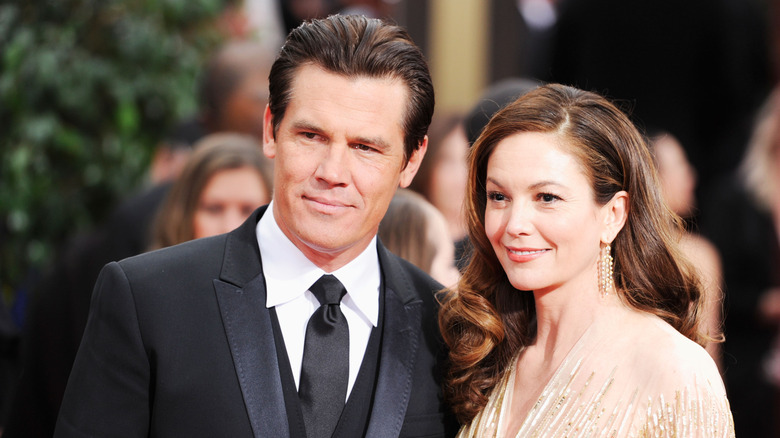
After her parents divorced, Diane experienced major changes during her childhood. She was raised through a complicated family situation, and the uncertainty affected her deeply. As a teenager, she struggled with the instability around her and developed a strong desire for independence.
Those early experiences shaped the person she became.
Diane learned not to depend entirely on others.
She learned how to protect her emotions.
And she developed a private nature that remained with her throughout her career.
Her talent quickly attracted attention.
In 1979, Diane Lane starred in A Little Romance alongside legendary actor Laurence Olivier. Her performance received widespread praise and introduced her as one of Hollywood’s most promising young talents.
Unlike many child actors who struggle to transition into adulthood, Lane continued developing her craft.
She appeared in films such as The Outsiders, Rumble Fish, and Streets of Fire, working with some of the most talented filmmakers and actors of her generation.
However, early success also came with challenges.
Hollywood is known for quickly changing its attention, and Diane experienced periods where her career slowed. Some films did not perform as expected, and she eventually stepped back from the constant pressure of being a young Hollywood star.
For a time, it seemed like the industry had moved on.
But Diane Lane was not finished.
She returned with a new level of maturity and emotional depth, proving that her talent had only grown stronger.
Her performances in films like A Walk on the Moon and especially Unfaithful reminded audiences why she had become respected in the first place.
In Unfaithful (2002), Lane portrayed a woman caught in a complicated emotional situation, delivering a performance that earned her an Academy Award nomination for Best Actress.
The role brought her back into the center of Hollywood attention.
But with renewed attention came renewed scrutiny.
The media often focused not only on her work but also on her relationships.
Diane Lane’s personal life became a frequent subject of public discussion. Her marriage to actor Christopher Lambert attracted attention, and later her relationship and marriage with actor Josh Brolin also became heavily covered by the press.
Like many celebrities, she experienced the difficult balance between having a public career and maintaining personal boundaries.
Rather than constantly responding to rumors, Lane chose a different approach.
Privacy.
She rarely allowed gossip to define her identity, preferring to let her work speak louder than speculation.
Her approach was shaped by everything she had experienced—from childhood instability to decades of living under public attention.
She understood that fame could create an illusion where people believe they know everything about someone they have only seen on screen.
But a person’s real life is always more complicated.
Today, Diane Lane is remembered not because of rumors or headlines, but because of her remarkable longevity.
She successfully moved from child actress to respected adult performer, surviving the challenges that cause many careers to disappear.
Her greatest strength has always been adaptability.
She changed as the industry changed.
She grew as a person.
And she refused to let other people’s expectations define her.
The story of Diane Lane is not a story about scandal.
It is a story about resilience.
A woman who experienced an unstable childhood, entered Hollywood at a young age, faced public judgment, and still managed to create a career built on authenticity.
Behind the glamorous appearances and movie roles is someone who spent decades learning one important lesson: a person’s value is not determined by rumors, relationships, or public opinion.
It is determined by who they choose to become.