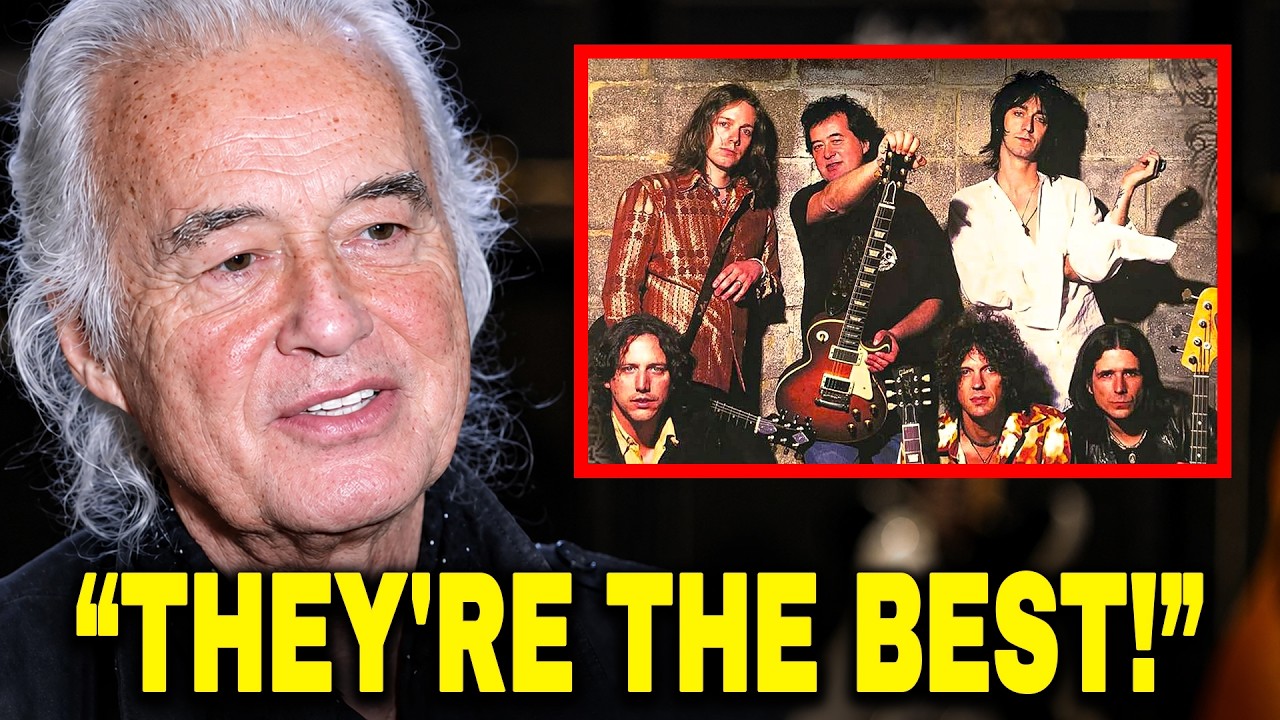
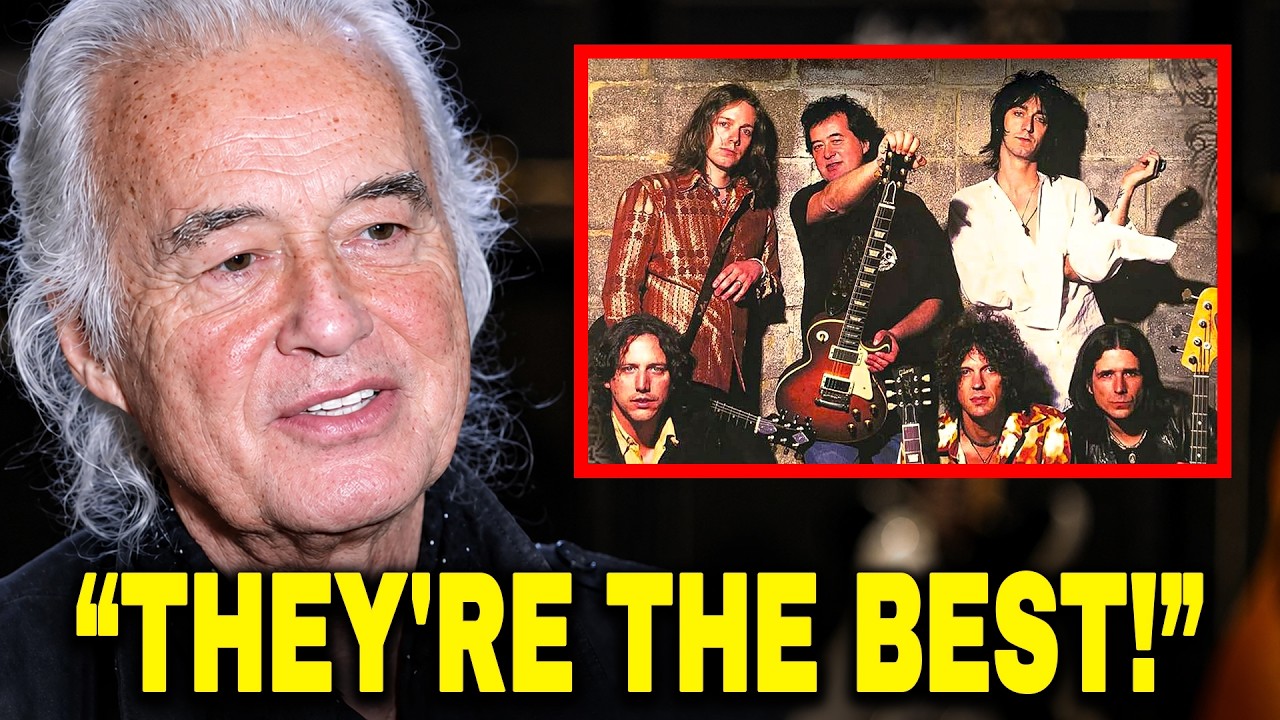
Legendary Led Zeppelin guitarist Jimmy Page has shattered decades of rock mythology by naming the one band he believes stands superior to his own iconic group, a revelation that has sent shockwaves through the music world. In a rare and candid reflection, Page openly identified the only act he considers worthy of surpassing the legacy of Led Zeppelin, a band widely hailed as the architects of hard rock and heavy metal. The admission, buried within a lengthy exploration of his career, emerged from a conversation about musical evolution and authenticity, where Page distinguished between mere imitation and genuine innovation.
Page’s journey began with a forgotten Spanish guitar in a Surrey home, an instrument that sparked an obsession that would redefine rock history. By age 12, he was teaching himself chords, carrying his guitar to school until teachers confiscated it, dismissing his dreams. The deputy head, Miss Nicholson, openly mocked his ambitions, but Page left at 15 to join Neil Christian’s Crusaders, enduring grueling tours that nearly killed him with glandular fever.
 This setback forced him into London’s session scene, where he became “Lil Jim P. ,” playing on countless records, from The Beatles’ “A Hard Day’s Night” to Shirley Bassey’s “Goldfinger,” while burning out from three daily sessions.
The Yardbirds called in 1966, where Page briefly shared the stage with Jeff Beck, a pairing that hinted at the supergroup to come. When the Yardbirds collapsed in 1968, Page assembled a new lineup for Scandinavian dates: John Paul Jones on bass, Robert Plant on vocals, and John Bonham on drums. They called themselves The New Yardbirds, but the chemistry was immediate.
Page paid for their debut album out of pocket, recording it in 36 hours. Atlantic Records signed them sight unseen for a $143,000 advance, a fortune then, giving the band unprecedented creative control.
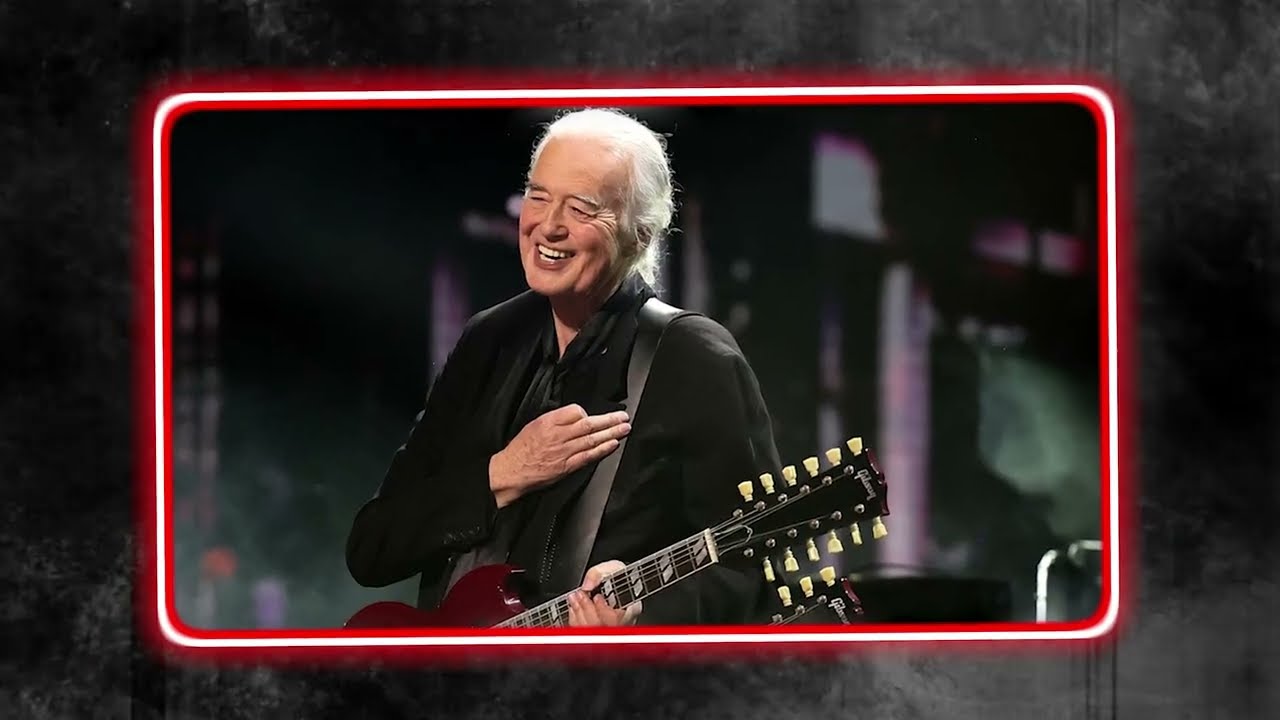
Led Zeppelin’s rise was meteoric, with four UK and four US tours in their first year, alongside two albums. Their concerts stretched to four hours, with “Dazed and Confused” often lasting 43 minutes. Page’s violin bow technique and double-neck guitar became iconic, while the band’s third album shocked fans with its folk turn, a move Page defended against critics.
He controlled every detail, changing recording engineers to ensure the sound was credited to the band alone. But behind the scenes, chaos brewed. Page’s relationship with 14-year-old Lori Maddox in 1972, now viewed as indefensible, was kept hidden, while his heroin addiction from 1975 to 1982 eroded his playing and relationships.
John Bonham’s death on September 24, 1980, from choking on his vomit after a day of heavy drinking, ended Led Zeppelin. Page fell into deep grief, leaving his guitar untouched for two years. He later formed The Firm with Paul Rodgers, rebuilding his confidence, but a disastrous 1985 Live Aid reunion with Phil Collins on drums was so poor the band refused to include it in the official DVD.
 A 1994 MTV Unplugged reunion with Plant, titled “Unledded,” was a success, but John Paul Jones was not invited, leading to his bitter Hall of Fame speech thanking his friends for finally remembering his phone number.
Page’s 1999 collaboration with The Black Crowes was meant to reignite his spark, but it ended when his offer to write new music was rejected. The band’s drummer, Steve Gorman, later admitted fury at the sudden departure. Yet, it was this band that Page would ultimately elevate.
The Black Crowes, he said, understood the essence of blues-based rock without mere imitation. Their performances of Led Zeppelin classics like “In My Time of Dying” and “10 Years Gone” captured the spirit while forging their own identity. Page saw in them a parallel journey, a celebration of legacy without a desperate attempt to recreate it.
The band that Page revealed as superior is indeed The Black Crowes. His reasoning is rooted in their ability to honor tradition while pushing forward, a quality he believes led Zeppelin’s contemporaries often lacked. “They were more than ready for the challenge,” Page said, noting how they brought timeless songs alive for a new generation.
He emphasized that his choice was not about nostalgia but about authenticity, a rare commodity in an industry often built on recycling. The Crowes, with their rich guitar arrangements and respect for the past, became the only band he felt surpassed his own, a testament to their unique blend of influence and originality.
 Page’s revelation also reflects his broader philosophy: great bands must evolve. Led Zeppelin never played it safe, blending blues, folk, hard rock, and world music into something unprecedented. The bands that followed, from Aerosmith to Judas Priest, succeeded by adding their own voice.
The Black Crowes, emerging in the 1990s, eschewed trendiness for timelessness, and Page’s respect for them was sealed when they performed his catalog with genuine understanding. For Page, hearing “10 Years Gone” live again with them was not about reliving history but celebrating it in a way that honored its power.
The admission comes as Page continues to reflect on his legacy. The 2007 O2 Arena reunion, with Jason Bonham on drums, sparked talk of a full tour, but Plant declined, and Page and Jones auditioned other singers. The plan faded, deepening fractures among the survivors.
Yet, Page’s focus remains on the music. He has spent decades watching bands try and fail to capture Led Zeppelin’s spark, but The Black Crowes succeeded where others faltered. Their willingness to build on influences rather than copy them made them, in his eyes, the only band better than the one he built.
This is not a casual remark but a calculated assessment from a man who has seen it all. Page’s career is a masterclass in innovation, from his session work to his occult interests, which included owning Aleister Crowley’s Scottish estate. His fascination with the tarot’s Hermit figure, possibly even his own artwork on Led Zeppelin IV, reflects a life devoted to breaking free from limitations.
 The Black Crowes embodied that spirit for him. They took the blues, hard rock, and experimentalism that defined Zeppelin and forged something new, just as Page always believed great art should.
The music world is now grappling with the weight of Page’s words. For decades, Led Zeppelin was considered untouchable, a pinnacle that no band could reach. The thought that its founder would openly rank another group above it is revolutionary.
Critics and fans alike are reexamining The Black Crowes’ catalog, seeing it through Page’s lens. Their early hits, like “Hard to Handle” and “Twice As Hard,” now carry a new significance, as Page’s validation places them in a rare pantheon. The urgency of this moment cannot be overstated; it is a seismic shift in rock’s hierarchy.
Page’s journey from a bored teenager with a mystery guitar to a legend who now names another band as superior is a testament to his unending quest for greatness. He did not stop at building Led Zeppelin; he continued to seek inspiration, finding it in a group that understood the assignment. The Black Crowes did not just replicate the sound; they captured the soul.
For Page, that was everything. The revelation ends years of speculation and begins a new chapter in rock history, one where the architect of the greatest band looks beyond his own creation to honor what came next.