The legendary actor who brought Moses to the screen and commanded the chariot race in Ben-Hur carried a secret animosity so deep that he once declared he would rather have needles stuck in his eyes than work with his leading lady again. The year was 1963, and Charlton Heston had just endured what he described as the most unprofessional experience of his career. The object of his fury was none other than Sophia Loren, the Italian screen goddess whose breath, he claimed, was so offensive that he refused to look at her during filming.
Now, six decades later, the full story of this explosive Hollywood feud has emerged, revealing a clash of egos, cultures, and professional standards that permanently altered the way stars interact on set.
 The conflict began long before cameras rolled on the 1961 epic El Cid. Heston, a man of rigid punctuality and military discipline, arrived in Madrid ready to portray the Spanish hero Rodrigo Diaz de Vivar. He had recently won an Oscar for Ben-Hur and was at the peak of his powers.
The script, however, struck him as barely passable, but he agreed to meet with producer Samuel Bronston, who had assembled a formidable team including director Anthony Mann and screenwriter Philip Yordan. On July 26, 1960, Heston informally signed on, believing that his star power could elevate the material. He did not yet know that the real battle would not be with the script but with his co-star.
Securing Loren for the role of Chimene proved far more difficult than anyone anticipated. The producers initially considered Ava Gardner and Jeanne Moreau, and there was even talk of giving the part to director Anthony Mann’s wife, Sara Montiel. But Bronston and Heston both rejected that idea.
When Loren finally became available, she demanded a million dollars, making her only the second actress after Elizabeth Taylor to command such a fee. She also insisted on a weekly budget of two hundred dollars for her personal hair stylist. Heston found this galling, but it was only the beginning of his grievances.
Two days before filming was scheduled to begin, Loren demanded script changes. The producer hired Ben Barzman, a writer on the blacklist, to translate her lines into Italian and then back into plain English. He also brought in another writer, Basilio Franchina.
Heston and Mann, who were eager to work with the original script, grew increasingly irritated by these delays. The production was already behind schedule before a single scene had been shot.
Loren’s obsession with her appearance created additional chaos. She spent hours on her hair and makeup, delaying filming repeatedly. Her contract allowed for these indulgences, but they slowed everything down.
She once insisted on last-minute wardrobe modifications that caused a crucial battle sequence to be postponed. Heston was incensed over the fifty thousand dollars the production lost due to that single delay. He spent hours waiting in full armor under the blazing Spanish sun, and his anger festered.
On December 3, 1960, Loren arrived nearly four hours late. Heston wrote in his notebook that her tardiness was not only unprofessional but disrespectful to everyone involved in the production. The tension escalated when he complained about her breath during close-ups.
Loren had been eating Italian food heavily seasoned with garlic during breaks, and she insisted on keeping her eating breaks separate from their scenes. This resulted in awkward scheduling adjustments that further frayed Heston’s patience.
The tipping point came during a romantic scene on April 7, 1961. Heston refused to film Loren directly, claiming that their intractable differences made it impossible. The producers brought in a Spanish actor named Rafael Albis to serve as Heston’s body double for Loren’s close-ups.
At first, Loren did not know about the substitution. On May 10, 1961, she walked onto the set and saw Albis dressed as Heston. She was furious and astonished, and a heated dispute erupted with the producer and director.
The situation worsened when an article appeared in the Spanish press under the headline American Star Refuses to Face Italian Beauty. The story spread quickly, and the feud became public. The final death scene, in which El Cid dies in Chimene’s arms, became the height of the tension.
Heston initially refused to film the scene at all. He consented only under severe guidelines, including a limit on the number of takes and a small crew. The negotiations took three days.
After El Cid wrapped, the animosity between Heston and Loren persisted. They hardly spoke at the film’s London premiere on December 6, 1961, and they posed for photographs only because they had to. Heston later declined to work with Loren again.
When offered a role opposite her in Lady L, he refused outright. In a letter to his agent, he wrote the now-infamous line: I would rather stick needles in my eyes than work with Loren again.
In a 1966 interview, Loren responded by saying that although Charlton is a good actor, our methods of operation are totally different. Their careers were impacted by the dispute. Producers never cast them together again, fearful of additional 𝒹𝓇𝒶𝓂𝒶.
Heston wrote about the experience in his autobiography, using it to highlight the value of professionalism. Loren reflected on her earlier mistakes in her memoir, writing that every movie teaches you something. She later gained notoriety for being more professional in her later career.
The feud was remembered even decades later. Heston and Loren were so disturbed by the fighting that they did not attend the El Cid 50th anniversary celebration in 2011. Their conflict remains one of the most famous behind-the-scenes tales in Hollywood history.
But Heston’s troubles with leading ladies did not end with Loren. Just two years later, he found himself locked in another bitter struggle on the set of 55 Days at Peking. This time, his co-star was Ava Gardner, and the chaos was even worse.
 The film was shot in Spain, and it was a disaster from the start. When Heston arrived on May 15, 1962, he discovered that the script was unfinished, containing only 140 pages of a condensed plot. The lack of planning made the 17 weeks of filming extremely challenging.
Gardner threw a cocktail reception for the cast and crew on June 2 at her apartment in Madrid, which initially seemed cordial. But by June 10, Heston noted in his journal that the dialogue was archaic and the characters’ love story felt highly random. Filming conditions were difficult, with summer temperatures in Madrid frequently rising above one hundred degrees.
Everyone became irritated due to the intense action scenes and bulky costumes.
On July 3, filming was delayed by four hours after Gardner and director Nicholas Ray got into a furious fight and Gardner stormed off set. Budgetary issues exacerbated the situation. The film’s initial budget of seven million dollars skyrocketed to over seventeen million by the time production concluded on September 28, 1962.
Everyone was exhausted from the ongoing tension and delays.
Gardner’s drinking became a serious problem. She arrived for the script reading on June 5, 1962, forty-five minutes late and already obviously drunk. She frequently arrived intoxicated, sometimes as early as ten in the morning.
On July 12, filming was delayed for three hours because she was so drunk when she arrived that she could not remember her lines. Her erratic behavior worsened the situation.
The team had to discard an entire day’s work, costing fifty thousand dollars, after she fled the set in the middle of a scene, saying she was too exhausted to continue. She flung a prop vase at a cameraman on August 17 out of rage, just missing him but breaking expensive equipment. Her performance suffered as well.
She frequently required multiple takes for even basic situations because she had trouble remembering her lines. On September 5, it took her twenty-seven tries to finish a simple dialogue scene.
Due to delays, reshoots, and overtime compensation, Gardner’s actions increased the film’s budget by at least two million dollars. Some crew members asked to be moved to different units so they would not have to work with her. Heston, renowned for his professionalism, was deeply irritated.
On July 20, 1962, he wrote in his journal that Gardner arrived three hours late and smelled like gin. Working with her is becoming impossible, he wrote. It is astounding how unprofessional she is.
After the film’s premiere, Heston became more forthcoming about his feelings. He stated that working with Ava Gardner was definitely the most challenging experience of my career in an interview with Photoplay magazine in September 1963. Her actions were detrimental to the entire filmmaking process in addition to being unprofessional.
In his 1995 autobiography, In the Arena, Heston wrote that Gardner was a chaotic force on the set. Every day was a test of patience because of her persistent tardiness, her seeming indifference to her fellow actors, and her frequently drunken state. It was the worst working relationship I have ever had with a co-star, and I do not exaggerate.
He also recounted an event that occurred on August 25, when Gardner angrily abused the director and multiple staff members after arriving intoxicated and stumbling through her lines. She turned on Heston when he attempted to step in. It required all of my professional self-control not to leave the set right away, he said.
In a 1970 film commentary interview, Heston again critiqued her acting, stating that the editor did more to save Ava’s performance in 55 Days than she did. Takes that could be used were surprisingly few. In a 1980 American Film interview, Heston acknowledged her star power despite his difficulties, stating that despite all her flaws, and they were many, Ava had an unquestionable screen presence.
She could be captivating when she was able to gather herself, which was far too seldom.
More than ten years later, Heston and Gardner reunited for the 1974 film Earthquake. Many were shocked when they decided to collaborate once more. Despite his reluctance, Heston took the position because it paid six hundred thousand dollars.
Everything went well at first. On February 10, 1974, Heston wrote in his journal that Gardner seemed different, less erratic, and more focused. Maybe we have both gotten mellower with time, he wrote.
By the third week, however, tensions had returned. Gardner was hungover and two hours late on February 25, which sparked a furious dispute. Heston reportedly yelled that it was like 55 Days all over again.
 They were nonetheless able to complete the film in spite of these obstacles. The two celebrities found that the earthquake scenes, which were captured on camera using innovative sense-around technology, helped them bond.
In her autobiography, Gardner later remarked that Charlton and I may have had our differences, but we were in it together when those tremors started. Nothing helps put old fights into perspective like shared misfortune. Critics complemented their on-screen chemistry when Earthquake was released in November 1974.
Roger Ebert wrote that whatever real-life tension exists between these two stars has been alchemized into a compelling portrayal of a marriage in crisis.
In a 1985 interview, Heston had a more positive view of their partnership, stating that working with Ava on Earthquake was, to put it mildly, a chance for personal development. Perhaps motivated by a shared desire to prove ourselves to one another, we both gave it our all. Their performances were memorable in spite of their disagreements.
Heston’s personal life stood in stark contrast to these professional battles. He married Lydia Clarke in 1944, and the two remained together for 64 years until his passing in 2008. They first connected at Northwestern University in an acting class.
Lydia did not initially like him at all. He was too self-assured and haughty in her opinion. But everything changed on their first date after they spoke.
Lydia fell deeply in love with him and accepted his proposal by telegram, which was sweet at the time but now seems absurd.
Shortly before Heston departed for World War II, they were married in a modest ceremony on March 17, 1944. Lydia wore a violet dress and a matching cap, and Heston bought her a ring for about twelve dollars. Heston claimed later that he would never forget the picture of her.
They had a lavish 50th anniversary celebration decades later, with over two hundred black-tie friends and family members attending. Heston produced books titled Pursuing Lydia as a unique present, and in a considerate and affectionate gesture, he added diamonds to Lydia’s initial engagement ring for this significant occasion.
Heston and Lydia unexpectedly became parents. They adopted their son Fraser in 1955 after years of trying to conceive. Just three months later, Lydia discovered she was expecting a child.
They had no children until 1961, when their daughter Holly was born. Suddenly they had two children. Fraser went on to pursue a career in filmmaking, even collaborating with his father to helm Treasure Island.
Holly briefly pursued a career in acting before deciding to lead a more subdued life.
Heston was a very active father, which was uncommon for well-known people in those days. Holly claimed that anytime they were together, he always gave her his whole attention, which she treasured.
As his career progressed, Heston began playing a variety of roles. He switched from being the protagonist to portraying more nuanced characters in the 1970s and 1980s. His portrayal of Cardinal Richelieu in The Three Musketeers was one of his most well-known roles.
He portrayed a cunning and vicious figure, which contrasted sharply with his typical heroic portrayals. Critics hailed it as one of his best performances.
Heston also starred in disaster films during this period, which were very popular at the time. He appeared in movies such as Earthquake and Airport 1975. Sensor rounds, a special effect employed in cinemas for Earthquake, caused the seats to tremble like an actual earthquake.
In 1982, Heston also made an attempt at directing Mother Lode, a film that his son Fraser scripted. Although it was not very popular, it demonstrated Heston’s willingness to explore new things.
His most well-known parts were in Soylent Green and Planet of the Apes. Heston portrayed an astronaut who crashes on a planet populated by sentient apes in the film Planet of the Apes. One of the most well-known movie endings ever is the unexpected turn of events where he discovers it is indeed Earth.
Heston’s emotional line, You maniacs, you blew it up, is still remembered today. For the sequel, he agreed to appear only if his character was killed off, and he donated his entire salary to charity.
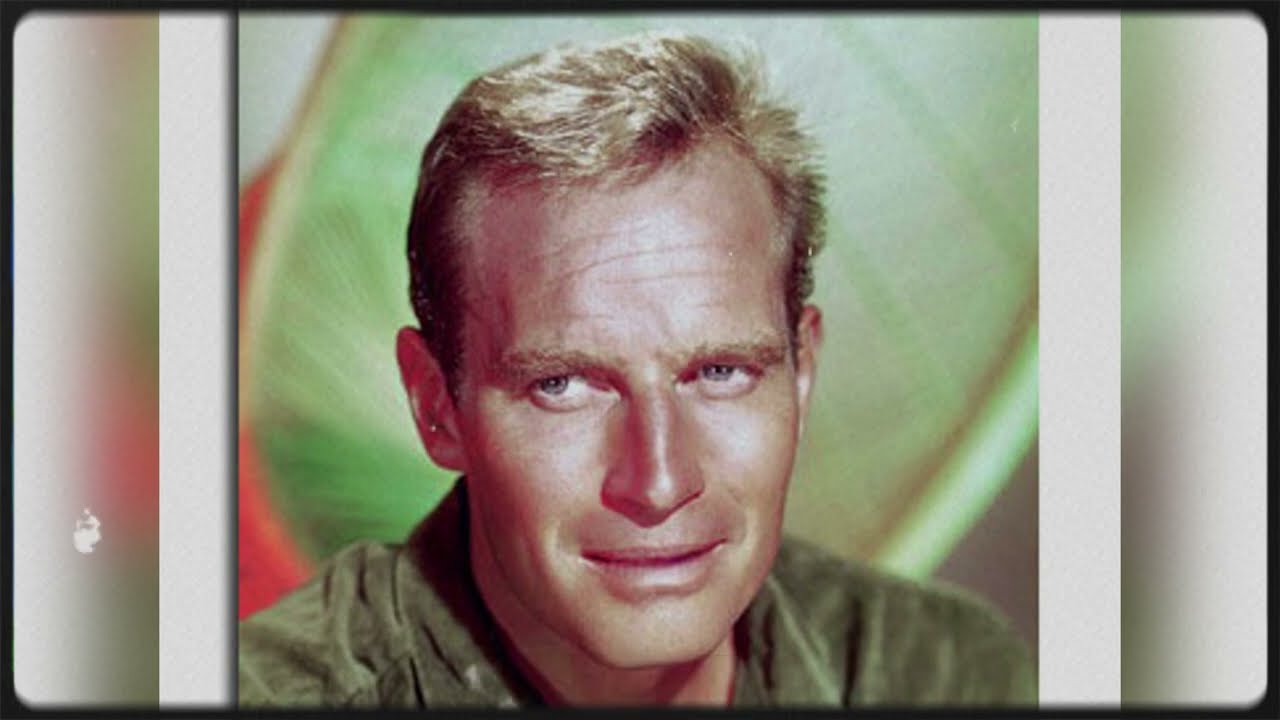 In Soylent Green, he played a detective in a world with severe overpopulation and food shortages. The big twist that Soylent Green is made from human remains became legendary. A touching behind-the-scenes detail is that Edward G.
Robinson, Heston’s co-star, was dying of cancer during filming. His final scene in the movie was also his last ever in real life. Heston later said he was haunted by the thought of Robinson filming his own death scene, knowing it was the end for him.
In 2003, Heston was awarded the Presidential Medal of Freedom by President George W. Bush. This honor came a year after Heston revealed he had symptoms of Alzheimer’s disease.
Even though his health was declining, he attended the ceremony with grace. The award recognized his acting career, including roles like Moses in The Ten Commandments, and his political activism, especially as president of the NRA. His famous phrase, from my cold dead hands, became iconic.
His last public appearance as NRA president, despite his illness, was powerful. He raised a rifle one final time, showing his unshakable spirit.
In August 2002, Charlton Heston shared some difficult news with the world. He was 78 years old and revealed through a recorded video that doctors had told him he might have Alzheimer’s disease. This was a big moment because back then, famous people rarely talked about personal health struggles like this.
In the video, Heston spoke calmly but with emotion. He said he wanted to say these words now because when the time comes, he might not be able to. Fans admired his strength as he added that he was neither giving up nor giving in, showing the same courage he was known for in his movies.
Just two years earlier, he had been in a clinic for alcohol treatment, so this news added to the challenges he had faced recently. Heston’s announcement came eight years after his friend Ronald Reagan had shared his own Alzheimer’s diagnosis. Both were larger-than-life figures, and now they faced a similar struggle.
Heston’s decision to go public was praised by many. People said it was a brave move that could help others feel less afraid to talk about their own health issues.
After this, Heston began stepping away from the spotlight. He had spent over 50 years as one of Hollywood’s biggest stars, so this was not easy for him. He once said that for an actor, there is no greater loss than the loss of his audience.
In 2003, he also left his role as president of the National Rifle Association. His farewell speech at their convention was unforgettable.
Sadly, the illness progressed quickly. By 2005, just three years after his diagnosis, family and friends were shocked at how much he had changed. The man who once played strong heroes on screen was now too weak to get out of bed.
Fans who loved him as Moses in The Ten Commandments and Judah Ben-Hur in Ben-Hur found this especially heartbreaking.
On April 5, 2008, Charlton Heston passed away at his home in Beverly Hills. He was 84 years old, and his wife of 64 years, Lydia, was with him. Later, it was reported that he had died of pneumonia, which is common in Alzheimer’s patients.
News of his death spread quickly, and tributes poured in from around the world. President George W. Bush called him a man of character and integrity with a big heart.
Many remembered his incredible acting career, while others admired his work in the civil rights movement and his later efforts as an advocate for gun rights.
Heston’s funeral was held on April 12, 2008, at his church in Pacific Palisades. About 250 people attended, including big names like Nancy Reagan, Arnold Schwarzenegger, Tom Selleck, and Christian Bale. It was a reminder of how much he had influenced both Hollywood and politics.
The legacy of Charlton Heston is complex. He was a man of towering talent and iron discipline, but also of deep-seated grudges and uncompromising standards. His feuds with Sophia Loren and Ava Gardner remain cautionary tales about the perils of ego and the importance of professionalism.
Yet, his 64-year marriage to Lydia Clarke stands as a testament to his capacity for enduring love. He was a star who demanded the best from everyone around him, and when he did not get it, he did not hesitate to say so. The needles in his eyes comment may have been hyperbolic, but it captured a truth about the man: he would rather suffer physical pain than endure what he considered professional incompetence.
And in that, he was very much like the heroic figures he portrayed on screen.