The utopian vision of the Starship Enterprise, a beacon of diversity and human potential, was shattered by the toxic, ego-driven behavior of its leading man, William Shatner, whose decades-long campaign of manipulation and disrespect left permanent scars on his co-stars and created a legacy of animosity that has outlived the franchise’s original run.
The idyllic image of the bridge crew working in perfect harmony was a carefully constructed illusion. Behind the cameras, the production of the original Star Trek series was a pressure cooker of budget cuts, physical injuries, and personal demons. Yet, the deepest wounds were inflicted not by the grueling schedule or the network’s indifference, but by one of their own.
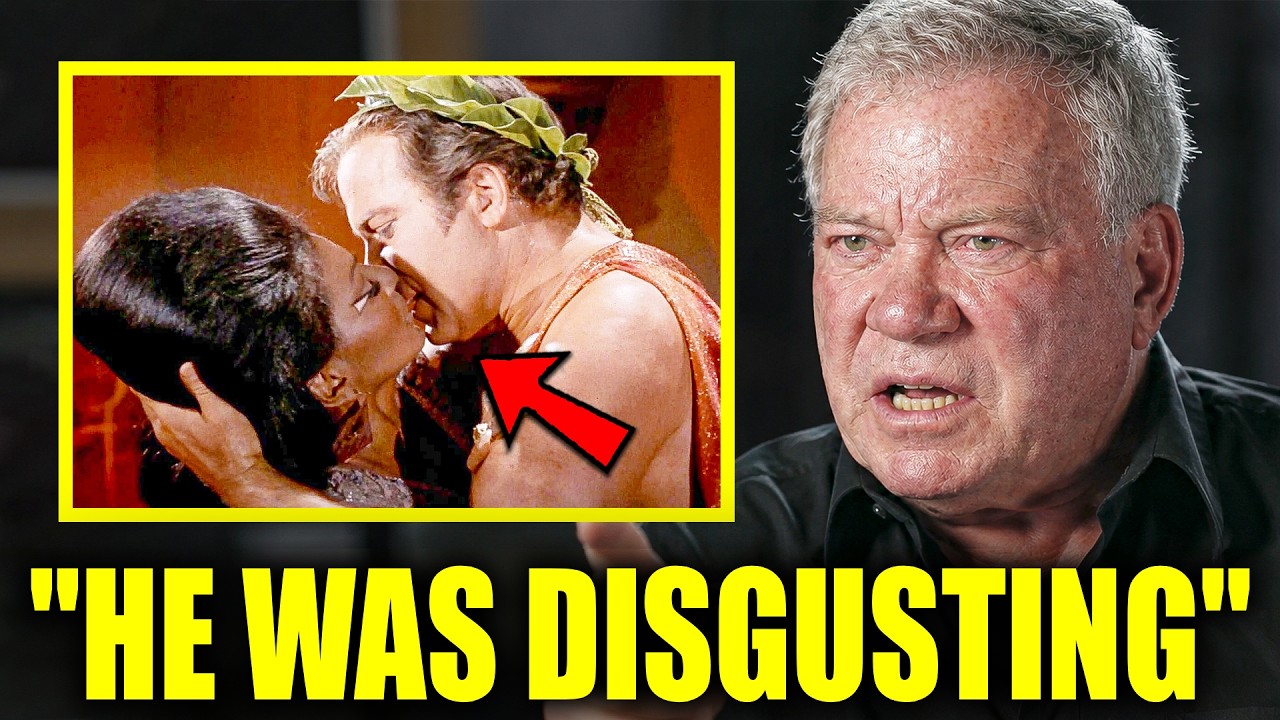 A man whose ego knew no bounds, Shatner’s behavior would systematically tear the cast apart, leaving wounds that festered for decades after the final credits rolled.
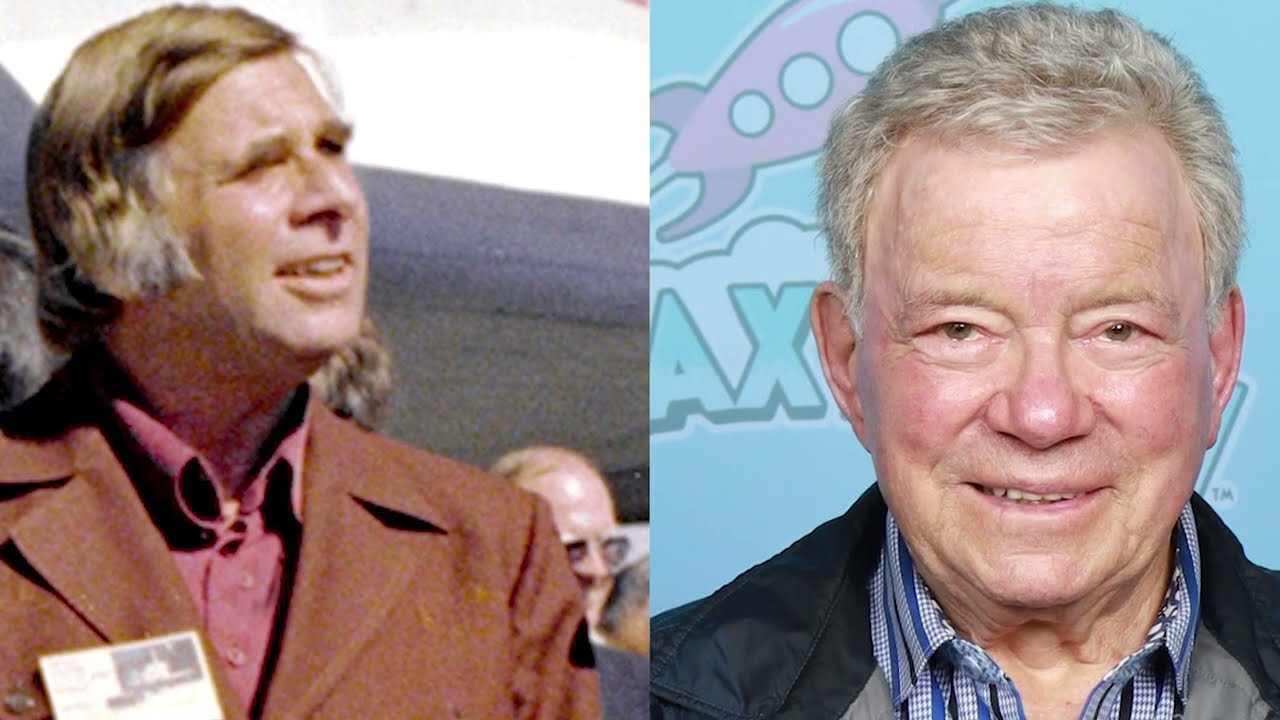
The creation of the galactic phenomenon began in the mid-1960s when Gene Roddenberry, a former police officer and airline pilot, pitched a radical concept to television executives. He envisioned combining the adventure of a Western with the boundless imagination of science fiction, framing it as “a wagon train to the stars.” The premise was deceptively simple: a starship crew exploring strange new worlds, encountering alien civilizations, and confronting moral dilemmas that mirrored the real-world issues of the day.
Roddenberry built the universe around a philosophy he called IDIC—Infinite Diversity in Infinite Combinations—which became the show’s spiritual backbone, representing a future where humanity had overcome racism and prejudice.
The bridge of the Enterprise was to be populated by people from all corners of the globe, a radical idea for the time that faced significant resistance from network executives more concerned with ratings than social commentary. Roddenberry used the science fiction setting as a clever strategy to explore issues that could not be addressed directly on network television, making Star Trek one of the most subversive shows of its era. However, translating that vision to the small screen was fraught with difficulty.
The first pilot, “The Cage,” starring Jeffrey Hunter, was deemed “too intellectual” by NBC executives, who rejected it outright. In an unprecedented move, the network commissioned a second pilot, thanks to the personal intervention of Lucille Ball, who exercised her influence to keep the project alive.
This second chance brought William Shatner into the fold as Captain James T. Kirk, a decision that would forever alter the dynamics of the production. The new pilot, “Where No Man Has Gone Before,” also saw Roddenberry fight to keep Leonard Nimoy’s Spock, a character he recognized as the show’s moral center.
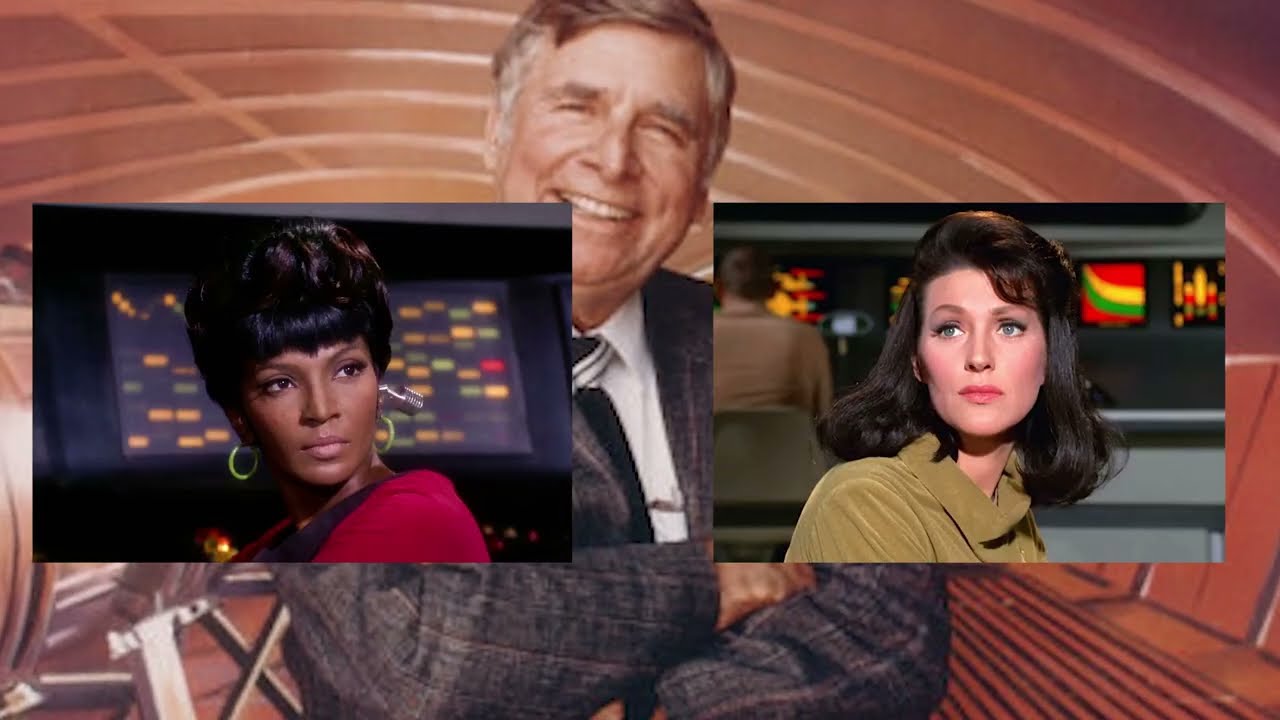
The casting of the rest of the bridge crew was equally groundbreaking, with Nichelle Nichols as Lieutenant Uhura, a landmark decision that placed a Black woman in a high-ranking, non-stereotypical role on primetime television. Together, they symbolized a unified, post-bias Earth, a vision that was both aspirational and controversial.
Star Trek debuted on September 8, 1966, to critical acclaim but disappointing ratings. Production costs hovered around $190,000 per episode, consistently driving Desilu Productions into severe debt. The show never placed in the top 30 of the Nielsen ratings, yet it built a dedicated following.
When NBC threatened cancellation, a massive grassroots letter-writing campaign flooded the network with over 115,000 physical letters, forcing a third season. Despite this passionate fan base, Star Trek was canceled in 1969, only to explode in global popularity through syndication, spawning a multi-billion dollar franchise. However, most fans never realized that behind the scenes, the show was plagued by conflicts that would have broken a lesser production team.
 By the third season, NBC had lost confidence, drastically cutting the per-episode budget by 10% and moving the show to the Friday night “death slot.” Infuriated, Roddenberry stepped back from daily production, leaving the show in the hands of producer Fred Freiberger, who was later accused of degrading the scripts into campy monster-of-the-week stories. The physical demands of the show were equally punishing.
Costume designer William Ware Theiss engineered outfits for guest actresses that relied on painful double-sided adhesives, causing hours of discomfort. During the filming of “The Enemy Within,” an electrical fire broke out on the sound stage, forcing crew members to drag actors off the set while inhaling toxic smoke. A special effects mortar explosion during “Arena” left both Shatner and Nimoy with lifelong tinnitus, a constant ringing in the ears that plagued them for the rest of their lives.
Financial struggles were a constant presence. DeForest Kelley, who played Dr. McCoy, faced immense hardship during the first two seasons, paid as a freelance day player rather than a salaried regular.
James Doohan suffered from severe unaddressed PTSD from World War II, hiding the loss of his right middle finger from cameras. Under the crushing stress of 14-hour days, several cast members turned to alcohol to cope. Nichelle Nichols and Leonard Nimoy later detailed in their autobiographies how the grueling schedules fueled substance issues and contributed to the breakdown of their marriages.
The pressure of fame and the constant scrutiny took a devastating toll on their personal lives.
The chaos, however, was not limited to the production itself. The show’s leading man brought his own brand of turmoil to the set, and his behavior created tensions that would last long after the cameras stopped rolling. For decades, stories have circulated about William Shatner’s ego-driven antics, and the supporting cast members have been remarkably consistent in their accounts.
Shatner routinely walked into the production office to read newly drafted scripts with a stopwatch, counting the exact number of lines allocated to supporting cast members and demanding that their dialogue be cut or reassigned to Captain Kirk. During ensemble bridge scenes, he would systematically alter his physical blocking during live takes, stepping directly in front of George Takei or Walter Koenig to force camera operators to crop them out of the final broadcast frame. The move was subtle enough that audiences might not notice, but his co-stars certainly did.
The manipulation continued into the film era. When director Nicholas Meyer drafted a script for Star Trek II: The Wrath of Khan that featured Sulu getting promoted to captain of his own ship, Shatner personally lobbied studio executives to 𝓀𝒾𝓁𝓁 the plot line. For Takei, this was a particularly bitter pill, a denial of character growth that every other cast member had been afforded.
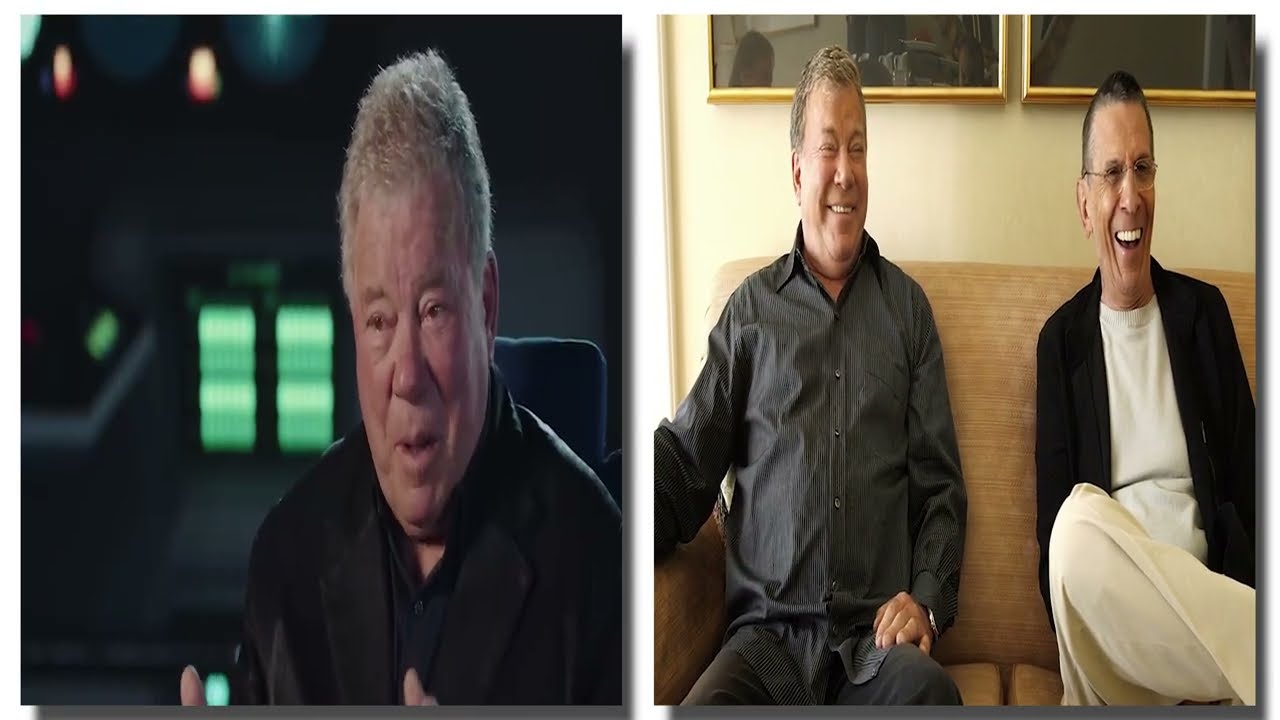 The rivalry between Shatner and Nimoy was equally intense. When Spock proved to be a hit with viewers, a competition began between the two leads, each assuming they were the singular star. The pair’s rivalry became so toxic that Roddenberry wrote an angry letter demanding they both stop the selfishness and egocentricity immediately.
Shatner was so concerned about Spock’s popularity that he infamously stole the CBS lot bicycle that Nimoy had been using to get around the sound stages.
The hostility was not limited to the two leads. James Doohan’s hatred for Shatner was so absolute that he publicly stated he would never forgive Shatner’s ego, and he explicitly barred Shatner from attending his final conventions and his eventual memorial services. Despite their long-standing on-screen partnership, Shatner and Nimoy experienced an intense falling out later in life when Shatner covertly filmed Nimoy at a convention for his documentary, The Captains.
When Nimoy discovered this, it was the final straw. The two men left the convention without speaking again, and Nimoy refused to return Shatner’s calls for the remaining five years of his life. George Takei’s grievances were perhaps the most enduring.
At a massive anniversary convention, Takei revealed that during the entire three-year run, Shatner completely ignored him off camera and genuinely claimed he did not know Takei’s name until they began filming the theatrical movies a decade later.
Following the passing of Nichelle Nichols, Shatner faced widespread public backlash when he opted out of attending her formal memorial service, choosing instead to attend a pre-scheduled horse breeding show. A particularly strange chapter involved Shatner’s non-attendance at Takei’s 2008 wedding, with Shatner claiming he was not invited and reportedly calling the event a publicity stunt. In a 2023 interview, Takei vowed never to mention Shatner’s name again, declaring that the feud had become tiresome.
The animosity that began on the sound stage of a low-budget sci-fi show in the 1960s has persisted for more than half a century, a reminder that even in the utopian future of the Enterprise, ego and rivalry could not be left behind.
The hidden set realities extended beyond Shatner’s antics. Grace Lee Whitney, who played Yeoman Janice Rand, was unexpectedly fired in the middle of season 1. In her 1998 autobiography, Whitney explicitly stated that a high-ranking executive associated with the production cornered her on the studio lot and treated her inappropriately just days before her contract was terminated.
 Following her sudden firing, Leonard Nimoy was the sole member of the production who actively tracked down a traumatized Whitney, using his star power to demand the studio hire her back for background appearances. For decades, the official studio line claimed she was written out solely because her character limited Captain Kirk’s romantic flexibility, a deliberate cover-up designed to obscure the administrative victimization that had occurred behind closed doors.
While Roddenberry publicly weaponized his reputation as a progressive utopian visionary, his private behavior on set was reportedly exploitative of young actresses. He simultaneously maintained active overlapping extramarital affairs with both Nichelle Nichols and Majel Barrett while living with his wife, creating an incredibly hostile competing power dynamic on the production floor. Roddenberry frequently adjusted script requirements to include unnecessary, highly inappropriate costumes for actresses he was personally pursuing.
He also reportedly used studio funds to elevate Barrett’s status on set, creating intense resentment among the rest of the cast who were forced to work under her surveillance. The tensions extended beyond the original series. In 1997, studio executives forced actress Jeri Ryan onto Star Trek Voyager, outfitting her in a restrictive painted-on silver catsuit specifically to boost dwindling male viewership numbers.
Lead actress Kate Mulgrew fiercely resented Ryan’s inclusion, viewing her hyper-romanticized character as the opposite of what she was trying to achieve. Mulgrew reportedly refused to speak to, look at, or acknowledge Ryan when the cameras stopped rolling. Jeri Ryan later confirmed that the daily psychological torment from Mulgrew was so intense that she experienced severe chronic nausea, routinely vomiting in her dressing room every morning out of pure dread before filming scenes.
The final chapter of the saga was marked by a series of failures that brought the franchise to its knees. The 2002 film Star Trek Nemesis was supposed to be a triumphant return for the cast of The Next Generation. Instead, it became a disaster.
A 25-year-old Tom Hardy was cast as the primary villain, but terrified by the scale of the production and battling severe personal substance addiction, he completely isolated himself from the tight-knit cast. Patrick Stewart explicitly detailed that Hardy never engaged in social pleasantries, and on the day Hardy wrapped his final scene, Stewart turned to his co-stars and muttered a prophetic misjudgment, “And there goes someone I think we shall never hear of again.” Years later, it was revealed that Hardy’s bizarre cold behavior was a desperate psychological defense mechanism against the film’s director, Stuart Baird, who treated Hardy with immense cruelty and non-stop public criticism.
Baird openly boasted that he had never watched a single episode of Star Trek and actively refused to research the franchise’s lore)Skip to content


