The woman the world knew as Dale Evans, the smiling cowgirl queen of the West who rode alongside Roy Rogers through a golden era of American entertainment, harbored a secret life so painful and complex that it shattered the wholesome image she projected on screen. In her final years, before her death at 88 in 2001, Evans revealed the truth about her past, a confession that has stunned historians and fans alike: she was a single mother at 15, forced by Hollywood to deny her own son, and she carried that guilt like a wound that never healed.
Born Frances Octavia Smith on October 31, 1912, in a small Texas town, her life was marked by instability from the start. She spent much of her childhood living with her uncle, a doctor in Arkansas, because her home life could not provide the security a young girl needed. Even under his roof, she carried a restlessness that would follow her for decades.
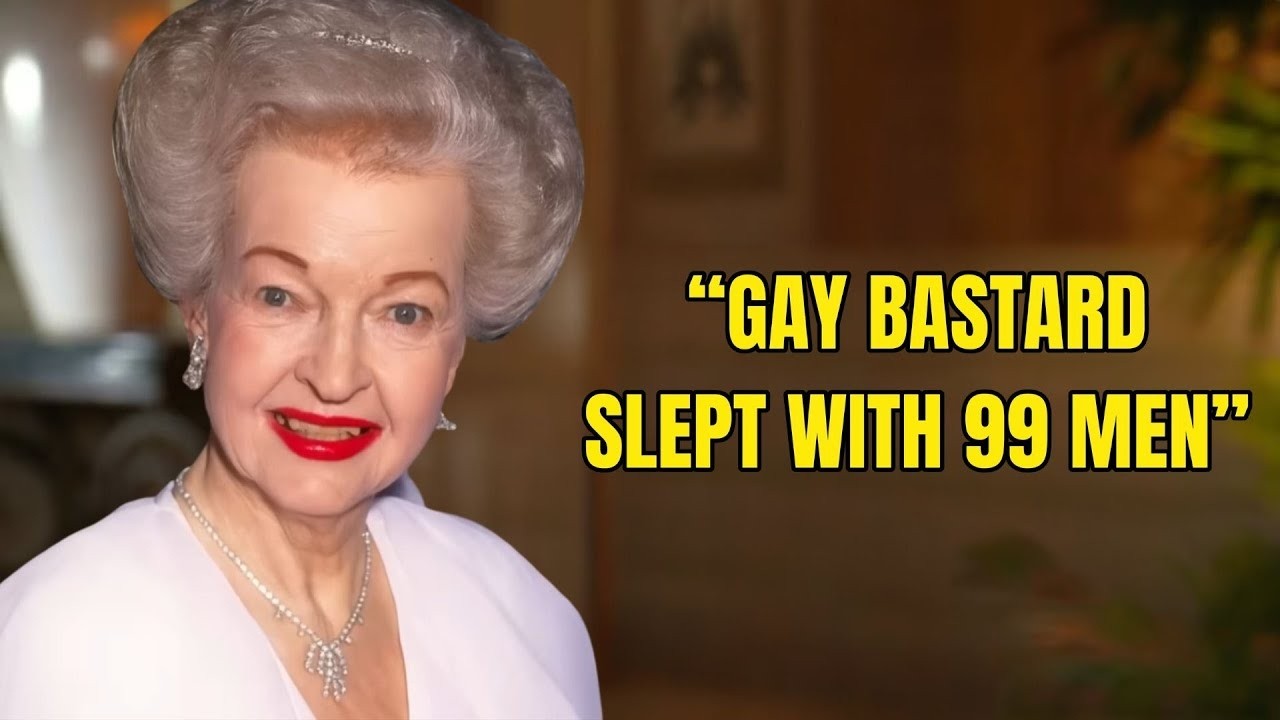 At just 14 years old, Frances made a decision that would alter the course of her life forever. She eloped with a man named Thomas Fox, an impulsive choice born of limited options and desperate hope. Within a year, she gave birth to a son, Thomas Fox Jr.
, but the happiness she imagined evaporated quickly. Her husband abandoned her, leaving her alone in Memphis, Tennessee, with a baby to raise and virtually no support.
She was barely 15 years old, a single mother in an era that offered little sympathy for such circumstances. Rather than surrendering to despair, Frances pushed forward. She found work singing and playing piano with local radio stations in Memphis, slowly building a small audience.
Music became her escape and her ambition, the only path she saw toward a better life.
By 1929, her first marriage was officially over, but her drive to succeed had only intensified. The turning point came while she was working at a radio station in Louisville, Kentucky. The station manager sat her down and delivered a blunt assessment: her name was not going to work in show business.
Frances Octavia Smith was too long, too complicated, and too easy for announcers to stumble over. He suggested something cleaner, more memorable.
That is how Frances Smith became Dale Evans. She took the new name without hesitation, understanding that reinvention was often the only way forward in an unforgiving industry. Under that name, everything began to change.
Her voice was warm, strong, and perfectly suited to the jazz, swing, and big band music that audiences loved during that era.
She performed on radio programs, and her reputation grew steadily. That growing reputation eventually caught the attention of Hollywood, and she was offered a screen test followed by a contract with 20th Century Fox Studios. It seemed like the break she had been working toward her entire life, but there was a condition attached to that opportunity, and it was devastating.
Studio executives were not interested in the real Dale Evans. They wanted a version of her that fit their idea of a clean, marketable image. A single mother with a complicated past did not fit that image, so they created a story.
Dale was to publicly present her teenage son, Tommy, not as her child, but as her younger brother. It was designed to protect the studio’s investment, and Dale had no real choice but to go along with it if she wanted to keep working.
For years, she denied her own child in public. It was a wound that never fully healed, a betrayal of herself that she carried silently while smiling for the cameras. Her personal life during those years was equally complicated.
After Thomas Fox, she married again in 1929, a man named August Wayne Johns. That marriage lasted until 1935 but brought her no real happiness and no children.
In 1937, she married Robert Dale Butts, a musician who worked alongside her professionally. Their relationship was built more on working together than on genuine emotional connection, and by 1944, that marriage had quietly ended as well. Three failed marriages, a hidden son, and a career that demanded she pretend to be someone she was not.
That was the reality behind the glamorous cowgirl image.
 Everything shifted when she was cast opposite Roy Rogers in a 1944 film called The Cowboy and the Senorita. The chemistry between them on screen was obvious, and off screen, something real began to develop. At the time, both were still married to other people.
Roy was married to his second wife, Arlene. Then tragedy struck when Arlene died shortly after giving birth to their son, Roy Jr.
Roy was suddenly a widower with three young children and a career to manage. Dale, who had known loss and hardship herself, became a steady and understanding presence during his grief. Their friendship deepened naturally into love.
Roy proposed to Dale in one of the most dramatic ways imaginable. He asked her to marry him while sitting on his famous horse, Trigger, just moments before he rode into a rodeo arena in Chicago.
She said yes. On the last day of 1947, they were married at a ranch in Oklahoma. It was Dale’s fourth marriage and Roy’s third.
Neither of them had a perfect history, and neither pretended otherwise, but this marriage would prove to be the one that lasted. Together, they built a blended family that was anything but conventional.
Roy brought his three children from previous relationships. Dale brought Tommy, her son who could finally be acknowledged openly as her child now that Hollywood no longer controlled her story. Over the following years, they also adopted four more children, including a girl from Scotland, a Native American girl, and two others.
Their home was busy, diverse, and held together by love and faith.
In 1950, Dale became pregnant with their only biological child together. Their daughter, Robin Elizabeth, was born with Down syndrome and significant medical complications. In that era, families who had children with disabilities were often pressured to keep them out of sight.
Society did not talk about such things openly, and many parents were quietly told to place their children in institutions and move on.
Roy and Dale refused to do any of that. They brought Robin home and loved her openly, without apology or shame. For a Hollywood couple whose image depended on public approval, that was a genuinely brave decision.
Robin lived for less than two years. She passed away in 1952 just weeks before her second birthday from complications related to her condition.
The grief Dale felt was unlike anything she had experienced before. She described it as a darkness that swallowed everything. Faith, which had always been important to her, was tested in ways she had never imagined.
Out of that grief came something unexpected. In 1953, Dale wrote a book called Angel Unaware.
 The book was written from Robin’s perspective, as though the little girl were speaking to her parents from heaven. It was deeply personal, emotionally raw, and unlike anything Hollywood celebrities were doing at that time. The book became a phenomenon.
Letters flooded in from parents across the country who had lost children or were raising children with disabilities. For the first time, many of them felt that someone understood their experience.
Dale had used her pain to give other people a voice, and the response was overwhelming. In Oklahoma, a center for children with mental disabilities was renamed in her honor. Robin’s short life had been turned into a lasting legacy.
The 1950s were also the height of Dale and Roy’s professional success. Their television show ran from 1951 to 1957 and became one of the most watched programs in America.
Every week, families gathered around the television to watch Roy ride Trigger and Dale follow close behind on her horse, Buttermilk. The show delivered adventure, clear moral lessons, and a steady message of decency and hope. Their music added another dimension to that image.
Happy Trails became one of the most recognized songs in American culture, simple and warm and full of the optimism that audiences associated with them.
But then, in 1964, tragedy visited their family again. Their 12-year-old adopted daughter Debbie was killed in a church bus accident. The loss was devastating.
Dale later said it reopened every wound she thought had healed, including the grief over Robin. She described it as one of the darkest periods of her life, full of guilt and unanswerable questions.
Around that same time, Roy and Dale decided to leave their ranch in Chatsworth, California, and move to a new home in Apple Valley, hoping a change of place might help them heal. The move offered some relief, but the pain did not simply disappear. From that point on, Dale began to speak more honestly in public about suffering and doubt.
The polished cowgirl image she had once maintained so carefully started to give way to something more real.
By the 1960s, Dale had become a strong and outspoken voice for Christian values in public life. She appeared at rallies, spoke about the importance of prayer in schools, and actively supported conservative political causes. Faith was not just a personal matter for her.
It was something she believed the whole country needed, and she was not shy about saying so.
Her books, her speeches, and her music all carried that message consistently. But behind the strong public front, her marriage to Roy was more complicated than fans ever imagined. In her later years, Dale opened up about the reality of their life together.
Roy was deeply loved by audiences as a gentle, kind-hearted cowboy. At home, he could be strict and demanding with the children, and that created tension.
 Dale also spoke about the loneliness that came with long periods apart while Roy was filming or touring. Fame could fill a schedule, but it could not fill a house. She admitted that the isolation during those years was harder than she let on at the time.
She also returned repeatedly to the old wound of having denied her son Tommy in public. Even after the truth became known following her marriage to Roy, the years of pretending still haunted her.
She felt that by hiding her motherhood, she had betrayed something essential about herself. No amount of success or public admiration had been able to fully close that wound. As Roy’s health declined through the 1990s, Dale was by his side.
When he passed away on July 6, 1998, the loss was felt not just by Dale, but by millions of people who had grown up watching them together.
The partnership that had defined so much of her life was over. Dale was left to face her final years alone. In those years, freed from the need to maintain any particular image, she became more honest than ever.
She talked openly about loneliness, about the strain in her marriage, about the guilt she carried over Tommy, and about the grief that had visited her so many times throughout her life.
Her daughter Dodi later said that Dale truly believed telling the full truth, including the painful parts, was an act of courage and a gift to other people who were carrying similar burdens. Dale Evans passed away on February 7, 2001, at the age of 88. By all accounts, her final days were peaceful.
Her children said she seemed ready to go, ready to be reunited with Roy and with the children she had loved and lost.
She was buried beside her husband, and with her passing, one of Hollywood’s most iconic chapters came to a close. What she left behind was more than a catalog of films and songs. She left behind a body of writing that helped grieving parents feel less alone.
She left behind a family that she had loved imperfectly and fiercely, and she left behind a kind of honesty that is rare among people who spend their lives in the public eye.
Dale Evans understood that a life fully lived includes darkness as well as light, and that pretending otherwise helps no one. She will always be remembered as the queen of the West, but she deserves to be remembered for more than the sequined costumes and the smiling performances. She deserves to be remembered as a woman who suffered real losses, carried real secrets, and eventually found the courage to tell the truth about all of it.
Her story is a reminder that the people we idolize are often carrying burdens we cannot see. The cowgirl who sang Happy Trails to millions knew that the trail was rarely happy for long. She walked through grief, guilt, and isolation, and she emerged on the other side with a testimony that continues to resonate.
Dale Evans was not just a star. She was a survivor.


