The smiles fade first. That is the detail most audiences have missed for over fifty years, and the detail Dustin Hoffman now insists changes everything about the ending of The Graduate. In the final seconds of the 1967 film, Benjamin Braddock and Elaine Robinson escape a ruined wedding, climb aboard a city bus, and settle into the back seat.
The music swells. The door closes. But then the camera refuses to move.
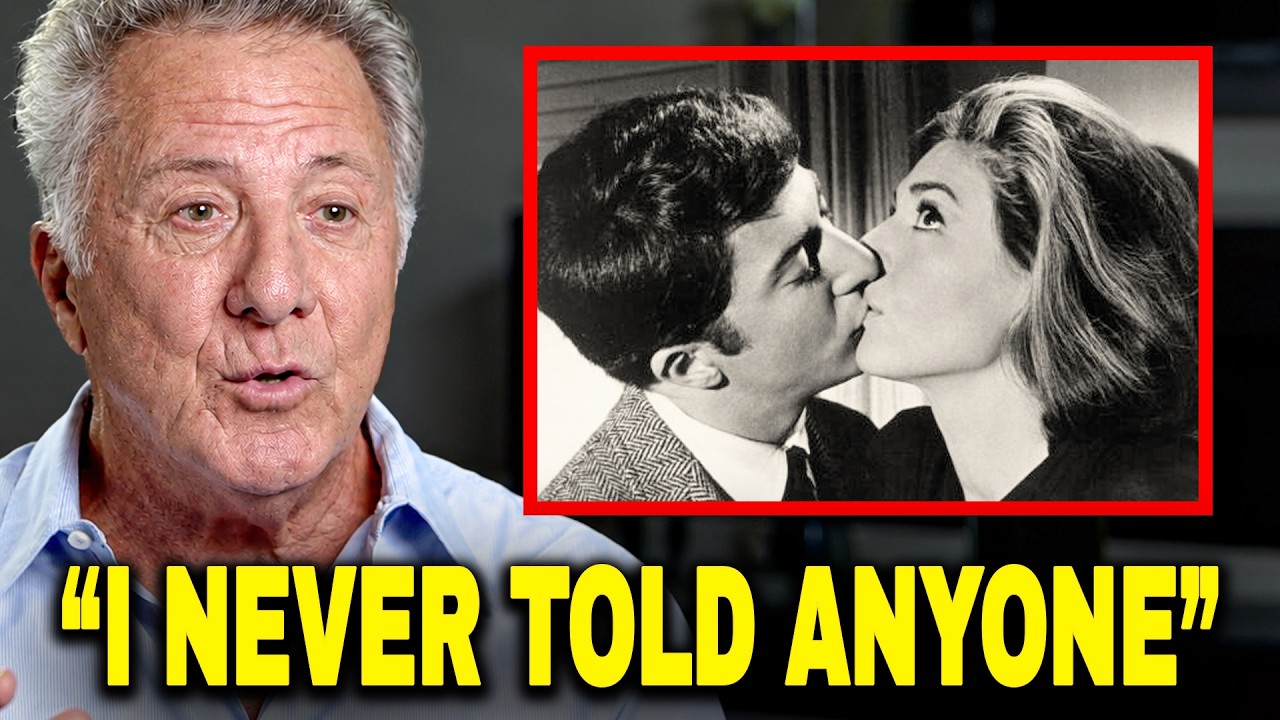 As the opening notes of Simon and Garfunkel’s The Sound of Silence begin to play, a quiet transformation happens that most viewers have never consciously registered. The triumphant grins evaporate. The young couple stares ahead with growing dread.
The romance collapses in real time.
For decades, audiences walked out of theaters believing they had just watched a love story triumph. Benjamin gets the girl. The wedding is destroyed.
The couple escapes into an uncertain but hopeful future. Case closed. That interpretation has become so embedded in popular culture that parody after parody has reinforced it, from The Simpsons to Family Guy to countless romantic comedies that lifted the interrupted wedding trope wholesale.
But Hoffman has now revealed that the ending was never meant to be a victory. It was a warning. The real message of The Graduate, he says, is that Benjamin and Elaine have just made the biggest mistake of their lives.
Hoffman, now in his late eighties, explained that the specific choice made in those final seconds was deliberate and carefully orchestrated by director Mike Nichols. The original script ended with the bus pulling away and the credits rolling. But Nichols wanted more.
He wanted the audience to sit in the discomfort. He insisted the camera linger on the couple long enough for their joy to curdle into fear. Hoffman recalled that Nichols told him to let the audience see the realization dawning on Benjamin’s face, the understanding that he had no idea who this woman was, no plan for what came next, and no safety net to catch him.
The revelation rewrites the entire film. The Graduate is not a romance. It is a tragedy about two people who repeat the very mistakes they tried to escape.
Mrs. Robinson, played by Anne Bancroft, became pregnant before marriage and was forced into a life she never wanted. She spent years trying to protect Elaine from making similar choices.
Yet at the end of the film, Elaine makes an even more impulsive decision. She runs away with the man who slept with her mother. Benjamin, meanwhile, begins the film directionless and dependent on his wealthy parents.
He ends it with no job, no car, no money, and no future.
The deeper tragedy is that the famous cross Benjamin uses to fend off the congregation is not a symbol of salvation. It is a symbol of desperation. He grabs a religious artifact to fight his way toward a woman he barely knows, then abandons it on the floor of the church.
 Hoffman has said that moment was meant to show how far Benjamin had strayed from any moral compass. The cross becomes a weapon, and then it is discarded. The young man who once floated aimlessly in his parents’ pool is now floating aimlessly through life with a woman who looks at him with the same confusion he feels.
The irony of the ending is that it took fifty years for audiences to see what Nichols and Hoffman intended. In the decades since its release, The Graduate has been celebrated as one of the greatest films ever made. It earned seven Academy Award nominations and won Nichols the Oscar for Best Director.
But the ending has been consistently misunderstood. Hoffman now admits that he knew during filming that audiences would miss the point. He worried that the triumphant music and the adrenaline of the wedding scene would overwhelm the quiet devastation that followed.
He was right.
Hoffman’s career was defined by his willingness to play complicated, flawed, and often unlikable characters. Benjamin Braddock was his first major role, but it established a pattern. He did not want to play heroes.
He wanted to play real people, messy people, people who made terrible decisions. The Graduate was the perfect vehicle for that instinct because it allowed him to play a young man who thinks he is the hero but is actually the villain of his own story. The final shot of the bus driving away is not a happy ending.
It is the beginning of a much harder story.
Hoffman’s own life has been marked by similar complexity. Born on August 8, 1937, in Los Angeles, he was named after silent film star Dustin Farnum. His father worked in the props department at Columbia Pictures, giving the family a direct link to Hollywood.
But Hoffman did not initially pursue acting. He enrolled at Santa Monica College to study medicine, intending to become a doctor. That dream faded when he realized his true passion was storytelling.
He shared the news with his aunt Pearl, who told him bluntly that he was not handsome enough to succeed in Hollywood. He took that rejection as fuel.
He threw himself into acting lessons at the Pasadena Playhouse and studied under Lee Strasberg, the pioneer of method acting. He moved to New York City, where he shared an apartment with two other struggling actors, Gene Hackman and Robert Duvall. Money was always tight.
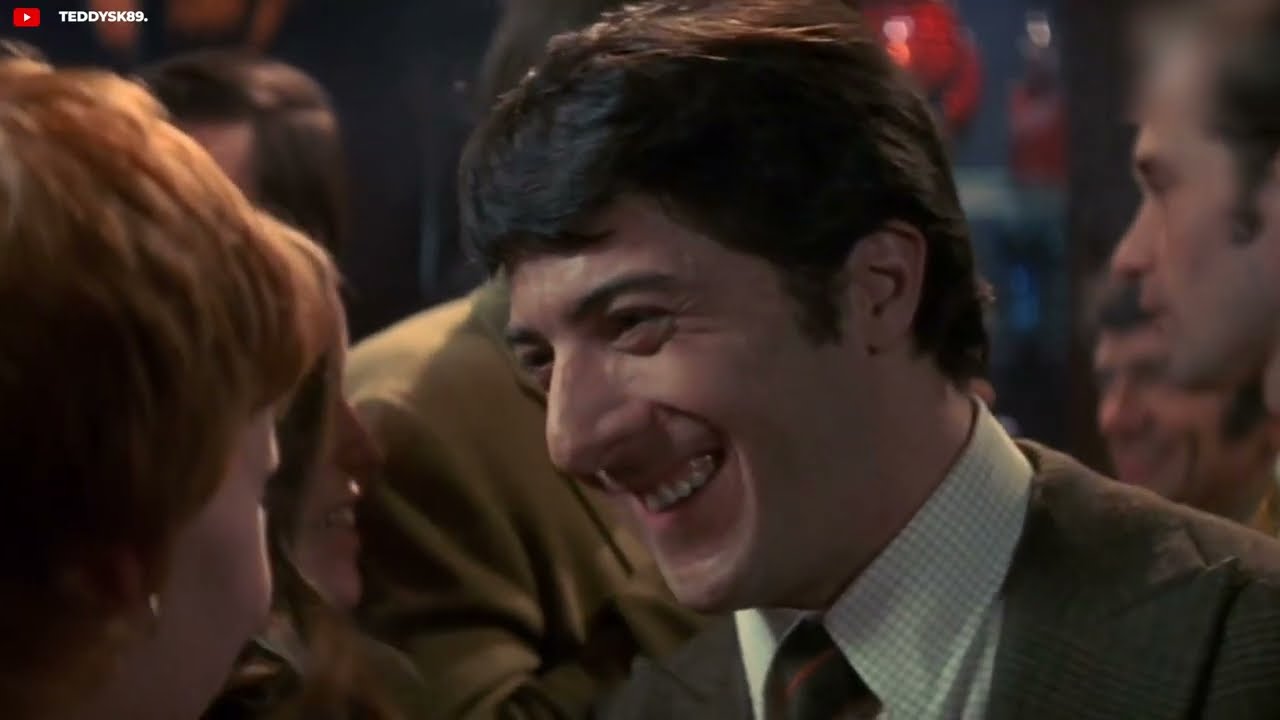 Duvall once joked that Hoffman looked like Barbra Streisand in drag, a remark that stung but did not stop him. He slowly built a reputation on stage, but the breakthrough came when director Mike Nichols offered him the lead in The Graduate. Hoffman was convinced it was a mistake.
The character of Benjamin Braddock was written as a tall, athletic, blonde, blue-eyed WASP from a wealthy Boston family. Hoffman was short, Jewish, and from Los Angeles. He was so certain the offer was a joke that he questioned Nichols about it.
But Nichols wanted him precisely because he did not look like the conventional leading man. The studio had wanted Robert Redford, but Nichols argued that Redford was too handsome to play a socially awkward young man. Audiences would never believe Redford struggled with insecurity.
Hoffman’s ordinary appearance became his greatest asset.
The decision changed Hollywood. Screenwriter Buck Henry later said that after Hoffman, audiences no longer expected leading men to fit a narrow image of conventional good looks. Talent became enough.
The Graduate became one of the biggest box office successes of its time, earning Hoffman his first Academy Award nomination. But the success came with a price. He was paid only seventeen thousand dollars for the entire production.
When the film became a hit, he found himself collecting unemployment benefits while waiting for his next role.
That next role came in Midnight Cowboy, where he played Enrico Ratso Rizzo, a sickly street hustler. The transformation was so complete that he convinced the filmmakers by staging a 𝒻𝒶𝓀𝑒 audition as a homeless man. He wore a custom mouthpiece to make his teeth appear decayed and placed sharp pebbles inside his shoe to force a consistent limp.
The performance earned him another Oscar nomination and proved he was not a one-hit wonder. But the personal toll was heavy. He later admitted that he was battling depression and struggling with his marriage.
His next film, Kramer vs. Kramer, brought him an Academy Award for Best Actor. But the behind-the-scenes tension with co-star Meryl Streep was intense.
Streep later recalled that Hoffman slapped her across the face during a take without warning, and that he smashed a wine glass against a wall during another scene. She said that behavior like that should no longer be accepted in the post-MeToo era. Hoffman acknowledged that his own anger and frustration from his collapsing marriage 𝓵𝓮𝓪𝓴𝓮𝓭 into his interactions with her.
 Despite the conflict, the film became a massive success.
He won a second Oscar for Rain Man, playing Raymond Babbitt, an autistic savant. During early filming, he was so dissatisfied with his performance that he considered quitting and suggested replacing himself with Richard Dreyfuss. No one accepted that idea.
The film became a critical and commercial triumph. But the awards did not bring peace. In 1999, the American Film Institute honored him with a lifetime achievement award.
As clips from his career played on screen, he suffered a severe panic attack. He later admitted that he felt deeply depressed rather than fulfilled.
The darkest chapter came in 2017, when seven women came forward with allegations of inappropriate behavior spanning decades. The accusations ranged from sexually inappropriate comments to exposing himself to a minor and unwanted physical contact. Hoffman issued a statement expressing respect for women and apologizing for any behavior that may have made someone feel uncomfortable, while denying criminal wrongdoing.
Some colleagues defended him, including Tootsie co-star Bill Murray. But Hoffman largely stepped away from the spotlight, though he continued to work, including voicing Master Shifu in the Kung Fu Panda films.
Now, in revealing the truth about The Graduate’s ending, Hoffman is offering a final insight into a film that has been misunderstood for generations. The ending was never a victory. It was a cautionary tale about two young people who thought they were escaping their parents’ mistakes but were doomed to repeat them.
The smiles that fade in those final moments are not the result of bad acting. They are the result of a quiet, devastating realization. Benjamin and Elaine have no idea what happens next.
And neither does anyone else. The bus keeps driving. The music plays.
The silence takes over.


