A 41-year-old rodeo cowboy and self-taught painter from Okmulgee, Oklahoma, who had never acted a single day in his life, walked into a Hollywood casting office with his own paintings to sell in case they didn’t hire him, and walked out with a role in a film that would win every major Academy Award, forever changing the way an entire industry portrayed Native Americans.
William Sampson Jr., a 6-foot-7 Muscogee Creek Indian, was born on September 27, 1933, to Wiley and Mabel Lewis Sampson, both full-blood Muscogee Creek, and given the name KVSKVAG, meaning left-handed, a detail that would define his artistic journey from the very beginning.
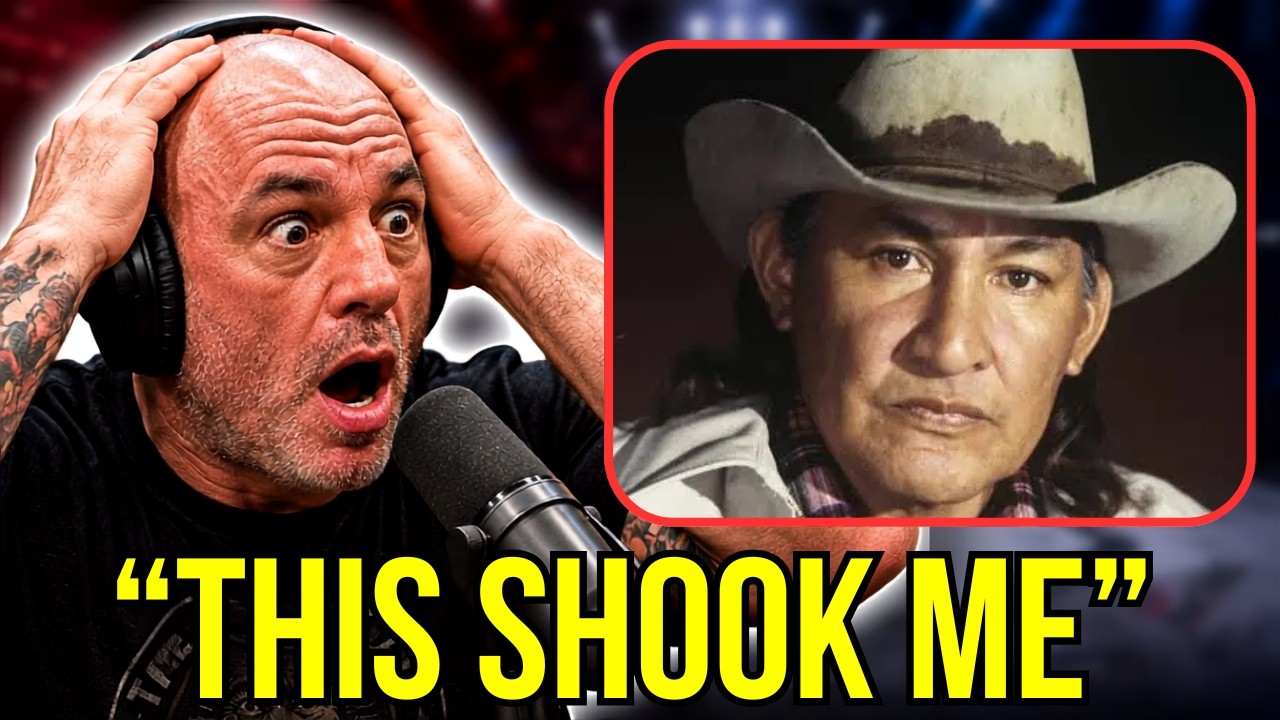 From the moment he could grip a pencil, Sampson drew on every surface he could find, using his sister’s schoolbook covers when paper ran out and scratching images into the dirt with a stick when even those were gone.
His sister Norma later recalled with a laugh that stung like regret that she used to wad up his drawings and throw them in the trash, never dreaming that she would later be unable to afford even one of his paintings.
Sampson likely completed school only through the ninth grade, but his real education came from the back of a bronco, the deck of a Navy ship, and the canvas of a painting that nobody had asked him to create.
At age 14, he entered his first rodeo, and for the next 20 years, he rode the circuit specializing in saddle bronc riding and bull riding, competing across Oklahoma and the West while chasing prize money that came in bursts and disappeared just as fast.
Between rodeos, Sampson served in the United States Navy from 1953 to 1955, learning to pilot a plane during his service, though his sister carefully corrected the record that he was not a Navy pilot, insisting the distinction mattered to her.
After the Navy, Sampson bounced between jobs like a tumbleweed bouncing between fence posts, working as an oil field roughneck, construction worker, and lineman, whatever kept the lights on while the paintings kept coming.
Through every eight-second ride and every 12-hour shift, Sampson never stopped painting Western landscapes, traditional Muscogee scenes, horses, buffalo, and the faces of people who looked like him, developing a style that drew comparisons to Charles M. Russell.
His sister described him as a starving artist, noting that when paintings sold, he would have a high old time, then the money would vanish, and he would be back looking for work.
By adulthood, Sampson stood somewhere between 6-foot-4 and 6-foot-7, with hands like shovels, a voice like distant thunder, and a face that looked like it had been carved from Oklahoma sandstone, and at 41 years old, he had never acted, had no agent, no connections, and no particular interest in Hollywood.
In 1974, producers Saul Zaentz and Michael Douglas were preparing to film One Flew Over the Cuckoo’s Nest, Ken Kesey’s novel about rebellion inside a mental institution, and they had a problem finding the right actor for Chief Bromden, a towering Native American who pretends to be deaf and mute for years inside the asylum.
They needed a real Native American actor who needed to be enormous, and Hollywood’s usual trick of painting a white actor brown was not going to work this time because the character’s physical presence was the entire point.
Michael Douglas met a used car dealer and rodeo announcer named Mel Lambert on an airplane, and six months later, Lambert picked up the phone and called Douglas, reportedly saying the biggest son of a Indian had come into his lot.
That Indian was Will Sampson, and however the meeting happened, what followed became Hollywood legend as Sampson walked into the casting office carrying his own paintings under his arm, figuring that if they didn’t hire him as an actor, maybe they would buy a painting.
They hired him as an actor, and they bought the paintings anyway, and when Sampson boarded the small production plane for the first time, Jack Nicholson reportedly climbed into his lap and kept repeating it was the chief.
One Flew Over the Cuckoo’s Nest was released in 1975 and demolished everything in its path, sweeping all five major Academy Awards, winning Best Picture, Best Director for Milos Forman, Best Actor for Nicholson, Best Actress for Louise Fletcher, and Best Adapted Screenplay.
Only two other films in history had achieved that sweep, and the film grossed over 108 million dollars domestically on a budget of just 3 million dollars, making it the second highest-grossing film of 1975 behind only Jaws.
 In the middle of it all stood Will Sampson, silent for most of the film, enormous, watchful, his face revealing entire conversations his mouth refused to have, delivering a performance that was almost entirely physical.
Chief Bromden spends most of the film pretending he cannot hear or speak, observing the tyranny of Nurse Ratched while every other patient rages or crumbles around him, and when Bromden finally speaks, the moment had to land like a thunderclap.
The word was Juicyfruit, and it became one of the most remembered moments in the film, a scene audiences talked about for decades, with critics noticing that if anyone could steal a scene from Jack Nicholson, Sampson was the man.
Milos Forman had taken a gamble on a complete unknown, and it paid off with one of the most iconic supporting performances of the decade, but Sampson had insisted on one thing during production that Chief Bromden would not be played as a Hollywood stereotype.
No broken English, no Tonto grunting, and in a 1976 New York Times interview, Sampson said he refused to let Bromden become another piece of Hollywood’s long tradition of making Native Americans into what he called livestock.
Hollywood came calling fast after Cuckoo’s Nest, and Sampson answered but always on his own terms, with Robert Altman casting him in Buffalo Bill and the Indians alongside Paul Newman and Burt Lancaster in 1976.
That same year, Clint Eastwood cast him as Ten Bears, the Comanche chief, in The Outlaw Josey Wales, and gave him a scene that would burn itself into Western film history, a negotiation scene across a campfire that was all dialogue, all tension, all performance.
There is iron in your words of life, Ten Bears tells Wales, and the exchange builds through mutual respect between two men who have both lost everything, ending with four words that carry the weight of an entire continent’s history.
Eastwood, a director known for cutting anything that slowed his films down, kept the scene intact, knowing he had two actors, no special effects, no music cues, just two men looking at each other and deciding not to 𝓀𝒾𝓁𝓁 each other.
In 1977 came The White Buffalo with Charles Bronson, where Sampson played Crazy Horse, and that set was where he stopped being just an actor and became something far more dangerous to Hollywood.
Sampson arrived on the set and looked around at the cast, seeing that the film about the American frontier featured multiple Native American characters and the actors playing most of those characters were white.
He shut it down, refusing to say a single line and refusing to step in front of a camera, bringing a major Hollywood film to a grinding halt because one actor said no.
His demand was simple, hire Native actors to play Native roles, stop painting white faces brown and calling it authentic, and when the studio resisted, Sampson did not move.
Eventually, the production made changes and hired Native performers for the remaining roles, marking a pivotal moment in Hollywood history that was not the first time someone had complained about the industry’s treatment of Native Americans.
Marlon Brando had sent Sacheen Littlefeather to refuse his Oscar in 1973, but Brando was a white superstar making a political statement, while Sampson was a Native American actor risking his own career on a film set where he had no leverage except the size of his body and the steel in his convictions.
 The experience changed him, and he realized that individual protests on individual sets would never be enough, that if Native actors were going to get fair roles in Hollywood, they needed infrastructure, a system, someone to build a door that had never existed.
In 1983, Sampson and his assistant Zoe Escobar obtained a 30,000 dollar grant from the Administration for Native Americans and founded the American Indian Registry for the Performing Arts.
The concept was straightforward but revolutionary, create a clearinghouse, a directory of every Native American actor, actress, dancer, musician, stunt performer, and technical crew member available for film and television work.
When a studio needed a native performer, they would no longer have an excuse to cast a white actor because the registry would hand them a book full of qualified native talent ready to work.
In the late 1980s, a production company came to the registry looking for native actors for an upcoming Western, and the company was Tig Productions, the man behind it was Kevin Costner, and the script was called Dances with Wolves.
That film would cast native actors in every native role, win seven Academy Awards including Best Picture, and become the most celebrated depiction of Native Americans in Hollywood history, with its casting pipeline running directly through the organization that a rodeo painter from Okmulgee had built with a 30,000 dollar grant.
Between his activism and advocacy work, Sampson’s acting career never slowed, earning a Canadian Genie Award nomination for Best Foreign Actor for the 1979 film Fishhawk, proving he could carry an entire movie on his own.
He took roles in television series, TV movies, and independent films across three continents, always choosing parts that let native characters be human beings instead of props.
His final major film role in 1986 would add the strangest chapter to an already extraordinary life when he played Taylor, a Native American shaman who helps a suburban family battle supernatural forces in Poltergeist 2 The Other Side.
The film grossed nearly 75 million dollars worldwide on a 19 million dollar budget, but the production carried a shadow as multiple cast members from the original Poltergeist had died in the years since its release, and the so-called Poltergeist curse was already part of Hollywood legend.
Sampson was not just playing a medicine man on screen, he was one in real life, and according to multiple accounts from the cast and crew, he sensed something wrong on the set.
One night, Sampson reportedly performed a traditional cleansing ceremony, an exorcism, on the sound stage, and co-star Craig Nelson later said that after the ceremony, the strange incidents and uneasy feelings that had plagued the production stopped entirely.
Years later, Nelson visited Sampson’s grave in Oklahoma during cicada season, the air thick with the deafening buzz of insects, and when Nelson stood at the headstone and said hey Will it is Craig, the overwhelming cicada noise began to taper off and went completely silent.
The anecdote is not verifiable, but it captures something essential about Sampson, that he occupied a space between the rational and the spiritual, between Hollywood’s manufactured 𝒹𝓇𝒶𝓂𝒶 and something far older and far more real.
Through all the films and the fame, Sampson considered himself first, last, and always a painter, insisting that acting merely supported his painting habit.
 His work depicted western landscapes, Muscogee ceremonial scenes, wild horses, buffalo hunts, and the faces of a people whose stories were rarely told by one of their own, with his large painting titled Ribbon Dance hanging at the Creek Council House Museum in Okmulgee to this day.
His work was exhibited at some of the most prestigious institutions in the country, including the Gilcrease Museum and the Philbrook Museum of Art, and a book published after his death collected more than 50 of his paintings and over 70 sketches.
In early 1987, Sampson was diagnosed with scleroderma, a chronic autoimmune disease that hardens and thickens the skin and can attack internal organs, and in his case, it went after his heart and his lungs.
The disease was merciless, and the man who had once weighed 260 pounds, who had been described as one of the most physically imposing figures in Hollywood, wasted away to 140 pounds.
On April 23, 1987, Sampson underwent a heart-lung transplant at Houston Methodist Hospital, and the transplanted organs functioned well, but his body, ravaged by months of malnutrition and disease, could not hold the line.
His immune system, deliberately suppressed to prevent organ rejection, allowed a dormant fungal infection called valley fever, likely contracted years earlier in California’s dry climate, to reactivate and spread.
On June 3, 1987, 41 days after the transplant, Will Sampson died of post-operative kidney failure at the age of 53.
His body was returned to Okmulgee for a private Muscogee ceremony with an all-night wake, and he was buried the next day at Graves Creek Cemetery in Hitch, Oklahoma, within the boundaries of the Muscogee Creek Nation, the same land where he had been born, where he had drawn in the dirt, where he had first climbed onto a horse.
Jack Nicholson mourned him through his agent, saying he would miss a great friend, but Sampson’s story did not end in that cemetery.
His son Tim reprised the role of Chief Bromden in a 2001 Broadway production of Cuckoo’s Nest starring Gary Sinise, carrying his father’s legacy onto the stage.
His sons Sam and Miko became the Sampson brothers, performing traditional Muscogee hoop dances and fancy dances across the country, keeping their father’s culture alive through movement and music.
On what would have been Sampson’s 85th birthday, they released a musical tribute called I Know This Man with lyrics that said it is through my blood he again walks this earth.
Will Sampson Road runs through Okmulgee County today, named for the man who never left even when Hollywood took him around the world.
On October 14, 2023, 36 years after his death, Will Sampson was inducted into the National Native American Hall of Fame at the First Americans Museum in Oklahoma City.
The barefoot kid who drew in the dirt, the rodeo rider who painted between competitions, the starving artist whose sister threw his drawings in the trash, the man who brought his paintings to his own audition, who shut down a movie set, who built an organization that helped cast Dances with Wolves, who performed an exorcism on a Hollywood sound stage, who told the world he was first, last, and always a painter, was all of those things, but what Will Sampson was above all of them was something Hollywood had never allowed a Native American to be before him, he was the star.


