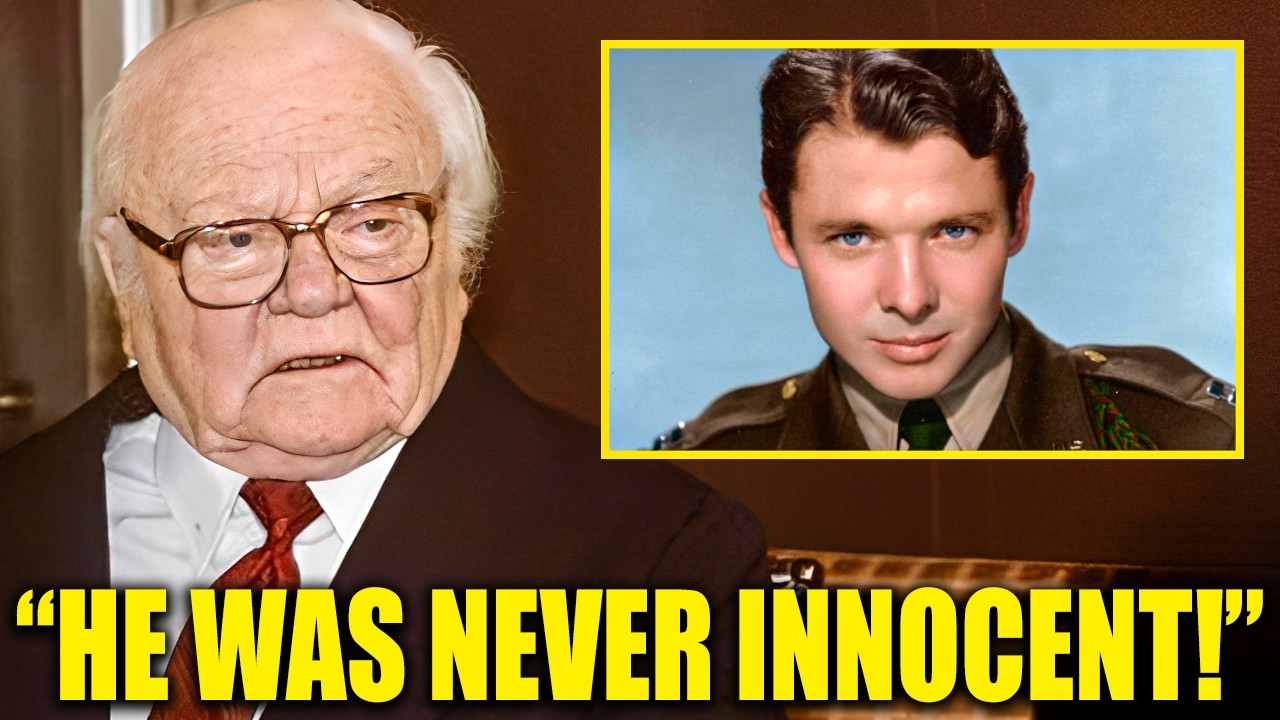
In a captivating final interview, the legendary James Cagney opened up about his life, touching on his connection to war hero Audie Murphy. Cagney, known for his fierce performances and undeniable charisma, revealed that his journey was shaped by struggle, ambition, and a relentless desire to forge his own path in Hollywood.
Born in 1899 in Manhattan’s Lower East Side, Cagney faced a challenging upbringing. His father, James Sr. , worked various jobs, while his mother, Carolyn, hailed from a mixed Irish and Norwegian background.
 As the second of seven children, Cagney experienced loss early on, with two siblings passing away in infancy. His own health struggles as a child further fueled his determination to overcome adversity.
After graduating from Stuyvesant High School in 1918, Cagney initially pursued art at Columbia College but was forced to leave when his father died during the flu pandemic. Taking on various jobs to support his family, he showcased a sense of responsibility that would define him long before fame arrived. It was during this time that he met Florence James, who encouraged him to explore acting—a path he had not initially considered.
Cagney’s breakthrough came after years of hard work and perseverance. In 1925, he landed a significant role in “Outside Looking In,” proving he was more than just a dancer. His career skyrocketed in the early 1930s, with iconic performances in films like “The Public Enemy,” where he solidified his tough-guy image.
 However, his independent spirit often clashed with studio demands, leading to a series of confrontations with Warner Brothers.
Despite the challenges, Cagney’s star continued to rise. He became known not only for his acting prowess but also for his strong political beliefs and support for labor rights. His commitment to the Screen Actors Guild showcased his dedication to improving conditions for fellow actors, a cause he championed throughout his career.
 As Cagney navigated the complexities of Hollywood, he crossed paths with Audie Murphy, a young soldier who would become one of the most decorated war heroes. Cagney recognized Murphy’s potential and took him under his wing, reportedly offering guidance and support as he transitioned into acting. However, their relationship soured due to business disagreements, leaving Cagney feeling disappointed despite his initial belief in Murphy’s talent.
The late 1940s marked a turning point for Cagney, as he faced challenges with his production company. Yet, his performance in “White Heat” revitalized his career, showcasing his ability to portray complex characters. Cagney’s final years were marked by a retreat from public life, where he focused on farming and family, even as health issues began to take their toll.
 Cagney’s legacy endures, celebrated for his contributions to cinema and his role as a mentor to emerging talents like Murphy. As we reflect on his remarkable journey, one question lingers: Did Cagney’s early faith in Murphy remain with him throughout his life, shaping their intertwined stories in Hollywood?