For more than half a century, Andy Griffith represented one of the most comforting images in American television.
The friendly sheriff.
The small-town wisdom.
The gentle humor that made millions of viewers feel like they were part of Mayberry.
To audiences, Andy Griffith was almost a symbol of kindness itself.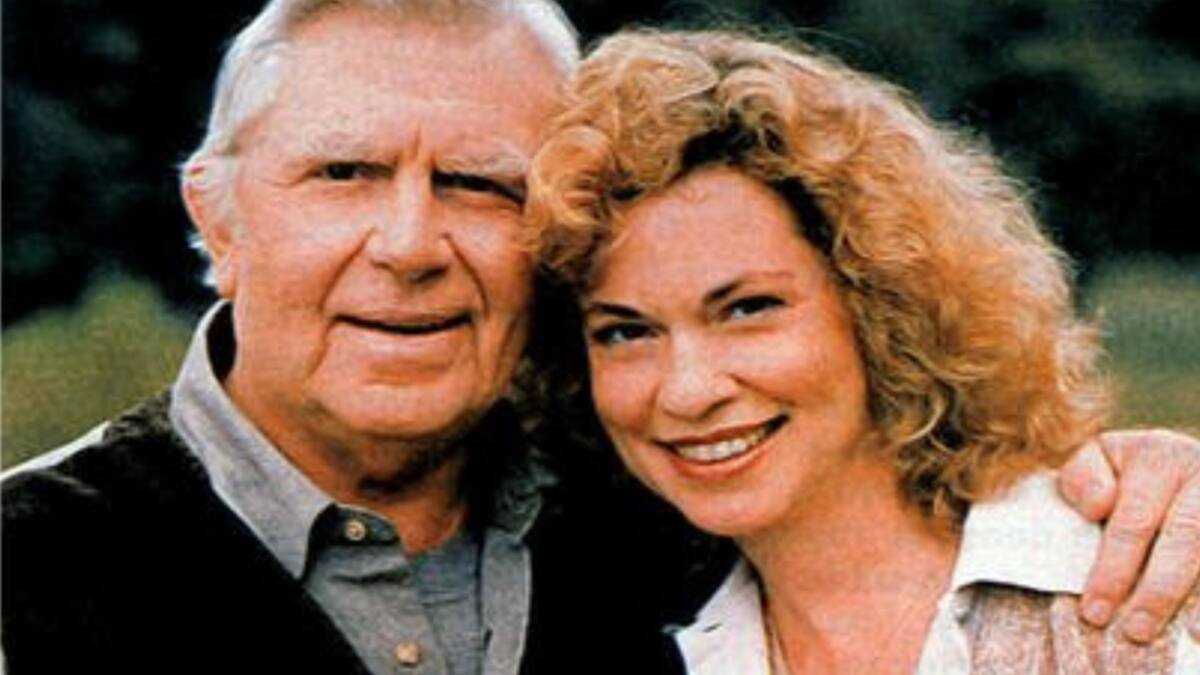
But behind that familiar smile was a man who spent much of his life trying to separate his private world from the character people loved.
And when he passed away in 2012, he made one final decision that surprised many fans.
His funeral arrangements were kept completely private, and he was buried only hours after his death.
For some people, the speed of the burial was shocking.
But those who understood Andy Griffith knew it was not about secrecy.
It was about honoring his final wishes.
Andy Griffith was born in 1926 in Mount Airy, North Carolina.
His early life was far removed from Hollywood.
He grew up during the Great Depression, in a modest home where entertainment became an important escape.
As a young man, Griffith discovered a talent for storytelling and performance.
He originally studied music and became interested in theater, eventually developing a unique style of comedy based on Southern characters and everyday observations.
His breakthrough came through his famous comedy monologue What It Was, Was Football in 1953.
The routine became a major success and introduced audiences to his natural storytelling ability.
Unlike comedians who relied only on jokes, Griffith understood the power of characters.
He could create entire worlds through his voice and imagination.
That talent eventually brought him to Hollywood.
In 1957, he starred in A Face in the Crowd, a dramatic film directed by Elia Kazan.
The role was very different from the friendly personality audiences would later associate with him.
Griffith played Lonesome Rhodes, a charismatic but dangerous television personality whose ambition becomes destructive.
The performance proved that he was capable of serious dramatic acting.
But a few years later, he would create the role that changed his life forever.
Sheriff Andy Taylor.
In 1960, The Andy Griffith Show premiered.
The series introduced viewers to Mayberry, a fictional small town where kindness, patience, and common sense seemed to solve almost every problem.
Andy Taylor became one of television’s most beloved characters.
He was calm.
Fair.
Understanding.
A father figure to millions of viewers.
But the success of the character also created a challenge for Griffith.
People began confusing the actor with the role.
They assumed he was exactly like Sheriff Andy Taylor in real life.
But Andy Griffith was more complicated.
He was a performer who understood the importance of an image.
He was also someone who valued privacy and independence.
The difference between the public Andy Taylor and the private Andy Griffith became something he carried throughout his career.
After The Andy Griffith Show ended, Griffith continued working and eventually found another major success with Matlock.
The legal drama introduced him to a new generation of fans and proved that his career extended far beyond Mayberry.
However, his life was not without challenges.
In 1983, Griffith suffered from Guillain-Barré syndrome, a serious neurological condition that temporarily affected his ability to walk.
The recovery process was difficult, but he eventually regained his strength.
As he grew older, Griffith became increasingly protective of his personal life.
After decades of fame, he no longer wanted every moment surrounded by cameras and public attention.
He wanted peace.
He wanted control over how his final chapter would unfold.
Together with his wife, Cindy Knight, Griffith carefully planned his end-of-life arrangements.
The decision was simple:
No major public event.
No media spectacle.
No elaborate ceremony designed for public viewing.
Instead, he wanted a quiet farewell with the people closest to him.
When Andy Griffith died on July 3, 2012, at the age of 86, his family followed those wishes.
He was buried on his property on Roanoke Island just hours after his passing.
The timing surprised many fans.
Some wondered why there was no large public funeral for someone who had meant so much to millions of people.
But the answer was that Andy Griffith had spent his entire life performing for the public.
His final goodbye was the one moment that belonged only to him.
The private burial was not a rejection of his fans.
It was actually a reflection of the man he had always been.
A person who valued simplicity.
A person who believed that meaning mattered more than attention.
Andy Griffith’s legacy was never about a funeral.
It was about the comfort he gave people through his work.
The lessons hidden inside the stories of Mayberry.
The laughter.
The kindness.
The feeling that somewhere in the world, there was still a place where people treated each other with respect.
His final decision showed something important about fame.
Even the most beloved public figures are still individuals with their own wishes and their own need for peace.
Andy Griffith spent decades welcoming audiences into his fictional hometown.
But when it was time to say goodbye, he chose a place where he could finally be himself.
Not Sheriff Andy Taylor.
Not a television icon.
Just Andy.


