The life of Charlotte of Mecklenburg-Strelitz, the German princess who became Queen of Great Britain and Ireland at just 17, is a story of duty, tragedy, and record-breaking endurance that has been overshadowed by the dramatic portrayal in popular culture. Married to King George III, the monarch who lost the American colonies and suffered from debilitating mental illness, Charlotte was the mother of 15 children and the first Queen of the United Kingdom. Yet, the real woman behind the crown was far more complex than the fictionalized versions seen in shows like Bridgerton, and her legacy deserves a closer examination.
Born on May 19, 1744, in the small German duchy of Mecklenburg-Strelitz, Princess Sophia Charlotte was the fourth of five surviving children. Her father, Duke Charles, died when she was eight, leaving her to be raised by her mother, who ensured she received a solid education in French, Latin, theology, and botany. She was also an excellent sewer and avid reader, qualities that would later serve her well in the British court.
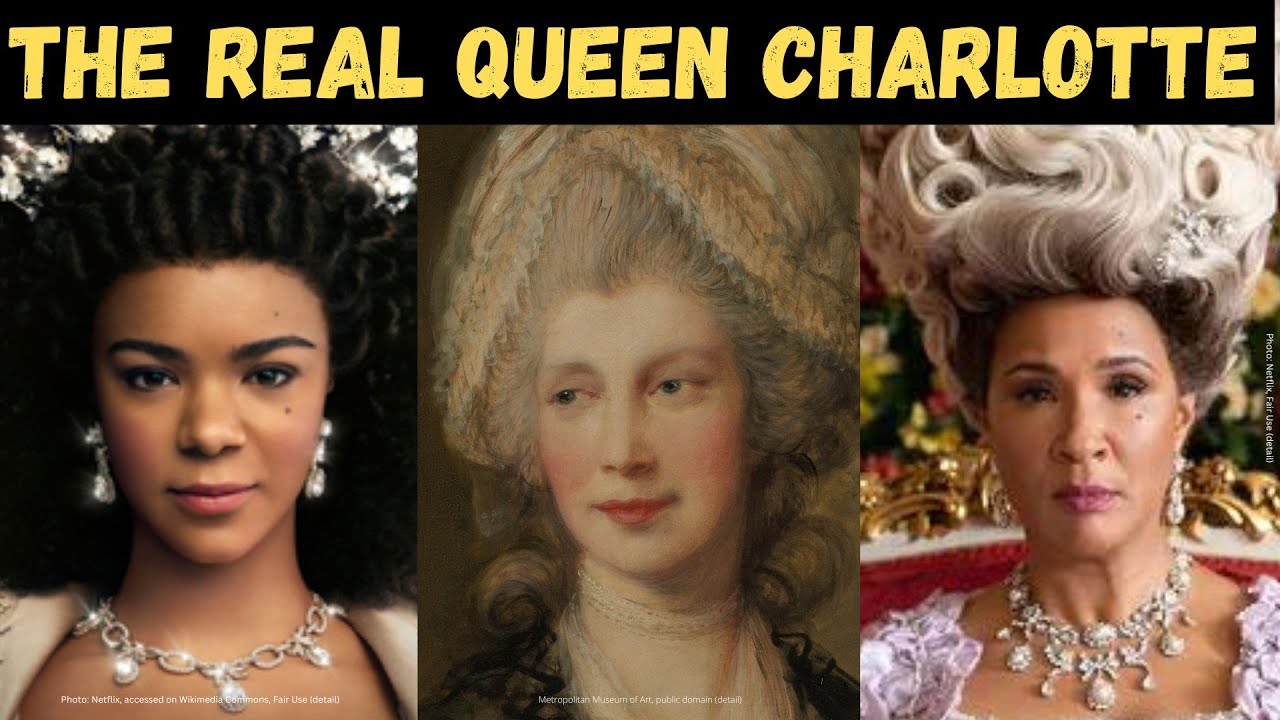 Charlotte’s path to the throne was paved by her Protestant faith, a critical requirement for King George III, who ascended to the throne in 1760 at age 22. George was desperate for a wife who was young, kind, pliable, and uninterested in politics, and Charlotte fit the bill perfectly. Despite concerns from his advisors that her upbringing in a backwater duchy had not prepared her for the role, George was confident she could learn, and he announced their engagement on July 8, 1761.
Charlotte arrived in London on September 8, 1761, and married George at St. James’s Palace that same night. Their joint coronation followed on September 22.
The marriage, initially, was remarkably happy. George had chosen a woman who conformed to his tastes, and Charlotte was described as calm, gracious, and eager to please. She quickly converted from Lutheranism to Anglicanism and learned English without trouble, winning over the court with her lack of artifice and political ambition.
The primary duty of a queen consort was to produce an heir, and Charlotte excelled in this role beyond all expectations. She became the most productive queen in English, Scottish, or British history, giving birth to 15 live children, 13 of whom survived to adulthood. Remarkably, she had no stillbirths and few, if any, miscarriages, and she never died in childbirth.
Her children included the future George IV, William IV, and the father of Queen Victoria, Prince Edward.
The couple’s first child, the future George IV, was born in 1762, just 11 months after the wedding. He was followed by a steady stream of princes and princesses, including Frederick, William, Charlotte the Princess Royal, Edward, Augusta, Elizabeth, Ernst, Augustus, Adolphus, Mary, Sophia, Octavius, Alfred, and Amelia. Both king and queen were attentive parents by the standards of the day, frequently visiting the nursery and doting on their children when they were young.
However, Charlotte was not as relaxed with her offspring as George was. She did not play with them on the floor as the king would, and her duties as queen left her little time to be an ever-present fixture in their lives. Instead, wet nurses, governesses, and tutors cared for the children, while the king and queen dealt with the demands of monarchy.
When the boys were older, George placed them under a strict educational regime, which often led to fraught relationships, especially with his heir.
Charlotte’s days were a mix of social duties, engagements, and time spent with her husband. They attended the theater, visited London’s pleasure gardens, and held weekly concerts at home, where they played instruments. They also shared a love of reading and music, and they even slept together, which was unusual for royalty at the time.
However, Charlotte had few personal friends, and her existence was often lonely.
George did not want his wife to become embroiled with the local aristocracy, fearing that personal attachments would lead to political influence. The English ladies chosen for her household were much older than her, and she relied heavily on a German woman named Juliana Schwellenberg, who stayed with her until her death in 1797. George’s brother later wrote that the king delighted in having an impressionable 17-year-old girl whom he could mold as he liked, determined that she should be wholly devoted to him.
The couple lived first at St. James’s Palace, but in 1762, George purchased Buckingham House, which soon became known as the Queen’s House. It was officially given to Charlotte by Parliament in 1775 and is now Buckingham Palace.
They also took on her mother-in-law’s house at Kew and revamped Windsor Castle. Charlotte admitted she disliked the constant moving between homes, but she endured it to please her husband.
Charlotte was an active philanthropist, supporting numerous hospitals, schools, and almshouses, including the famous Magdalen Hospital in London. However, George’s desire that she not involve herself in politics meant she had little direct influence. Yet, the American Revolution was an issue she could not avoid.
The war, which began in 1775 and ended with the loss of the 13 colonies in 1783, placed immense stress on George, who was heavily identified with the conflict.
 The unhappiness in the royal family was compounded by the deaths of two of Charlotte’s youngest sons. Prince Alfred, who was always sickly, died in 1782 at age two, and Charlotte wept bitterly. Eight months later, in 1783, four-year-old Prince Octavius died suddenly, possibly from a chill caught when his father took him into the gardens.
Both parents were desolate, and Charlotte spoke of her grief for years to come.
The 1780s brought further turmoil. The Prince of Wales was a constant source of embarrassment, having affairs with married women and getting his name in the papers. His relationship with his parents deteriorated, and the king and queen rebuked him for his behavior.
The other boys were scattered around Europe, kept on a tight financial leash, and their letters were sometimes left unanswered.
The princesses were kept at home and frequently bored out of their minds, as their father refused to get husbands for them. George seemed to feel he was protecting them from the world and was loath to be parted from them. Charlotte did nothing to remedy the situation, as she was equally averse to saying anything to upset the king.
The situation dragged on until their lives were upended by the so-called Madness of King George.
In the summer of 1788, George III fell ill with what he called a bilious complaint. After a trip to Cheltenham Spa, he seemed to improve, but in October, his condition rapidly deteriorated. He became mentally agitated, rambling for hours, foaming at the mouth, and bursting into tears.
Charlotte initially tried to maintain calm, but as the situation progressed, she began to crack.
The doctors could not discover the cause of his illness, though gout was unconvincingly suggested. George began seeing a red mist, could not hear music properly, and obsessed over Charlotte’s security. On November 5, the king’s eldest sons were called to assess the situation, but it did not go well.
The king put his eldest son up against a wall in a rage, and Charlotte fled to her rooms, with the king following her.
The Prince of Wales took charge, calling in new doctors without consulting his mother. Charlotte was told to move to another apartment to avoid agitating the king further. She broke down in tears, sobbing, “What will become of me?”
George became more upset and physically violent at being kept away from his wife and daughters. He barely slept and ate irregularly, and it looked as though he would either be permanently insane or die.
One of the most popular explanations for the king’s condition is porphyria, but this diagnosis has been disputed by modern historians. Whatever the illness, it went on for months, deeply distressing for Charlotte. Sometimes the king seemed to improve, but he always fell back into delirium and convulsions.
He was moved from Windsor to Kew, and when he was allowed to see Charlotte, he said he had never loved her and was having an 𝒶𝒻𝒻𝒶𝒾𝓇 with the Countess of Pembroke.
 Charlotte was noted as being increasingly thin and depressed, and her hair went gray. The Prince of Wales contemplated a Regency, but the deal offered by the government caused a major rift with Charlotte, who supported her husband’s rights. However, the king suddenly began to improve at the end of January 1789, and within two weeks, he was deemed well enough that the Regency bill was halted.
Charlotte found it hard to forgive her sons for not better supporting their father during this difficult time. Her personality was forever altered, and she became harder, less cheerful, and more bad-tempered. She was never able to completely forget the humiliation and grief of being rejected by George.
Her irritability meant that relations with her daughters deteriorated, never to fully recover.
Royal life soon got back on track, but new scandals were on the horizon. The Prince of Wales had contracted an illegal union with the Catholic Maria Fitzherbert in 1785, and Prince Augustus made a similar illegal union in 1793. The Prince of Wales then made a legal union with Caroline of Brunswick in 1795, which was a complete disaster.
The couple had only one child, Princess Charlotte, born in 1796, and they separated just days later.
Queen Charlotte could do nothing but observe her son and daughter-in-law’s misery. She also headed her public role more and more, complaining about how poorly the press treated her. She refused to help her daughters escape the purgatory of the royal household.
The Princess Royal finally married in 1797, but Charlotte was sad to see her go, correctly guessing they would never meet again.
The health of the youngest princess, Amelia, was failing due to tuberculosis. But it was Princess Sophia who caused the most immediate concern. In the summer of 1800, she gave birth to an illegitimate son, fathered by one of King George’s equerries.
The baby was placed with a local tailor, but the child’s father soon took the boy into his own household. This was an absolute disgrace, and Charlotte never really acknowledged what had happened.
In 1801, the Act of Union between Great Britain and Ireland came into force, and Charlotte became the first ever Queen of the new United Kingdom. But in February, the king’s mental ailment returned. It was much the same as in 1788, and Charlotte feared being alone with him.
She tried to avoid him wherever possible, and the situation came to a head when he stole up to her room on the night of April 16.
Charlotte requested that he be confined again, an extraordinary step for a woman who had been committed to following his orders. He was confined at Kew for a month until he refused to continue conducting business unless he was released. He blamed Charlotte for his imprisonment, and the family found it a severe strain to be in his presence.
The illness came back again in 1804, lasting for months.
Charlotte’s once close and largely happy marriage was in tatters. The king became suspicious of and cruel towards her, making crude remarks to other women in her presence. He tried to force himself on the Princess of Wales, and his daughters were victims of his unwanted attentions.
 Charlotte refused to continue sleeping with him, and the romantic side of the marriage was over.
In 1808, Charlotte stubbornly refused to support a proposal of marriage for her daughter Elizabeth from the Duke of Orleans. She also refused to countenance a relationship between Princess Amelia and Charles Fitzroy. The king admitted he did not find his daughters husbands because he liked to keep them with him, and Charlotte seemed to be of the same mind.
The denial of happiness to Amelia destroyed her relationship with her mother.
Amelia died in 1810 at age 27, still troubled by tuberculosis. Charlotte had not entered the final decade of her life. The king had been on the throne for 50 years, and they had been married almost as long, but the marriage had broken down.
The King was blind, and her surviving children were frequently miserable and resentful. The next blow was the final disintegration of the king’s mental state.
A Regency bill was passed, and on February 6, 1811, the future George IV officially became the Prince Regent. Charlotte was to have custody of her husband’s person, but she found herself unable to deal with him. He was completely delusional, often speaking to their dead children and imagining himself married to Lady Pembroke.
Charlotte was depressed and visited him less and less.
In an effort to reduce expenditure, the queen was offered 50,000 pounds a year by Parliament, but it was not enough to maintain her establishment. Her daughters were offered 9,000 pounds each, giving them financial independence for the first time. Charlotte reeled against the idea, knowing her control over them would be impeded.
Her relationships with them almost completely broke down.
Her granddaughter, Princess Charlotte, had little time for her either. The young princess married Prince Leopold of Saxe-Coburg in May 1816, but she died in November 1817 after giving birth to a stillborn son. Queen Charlotte was grief-stricken.
Things only seemed worse as she continued to lose her daughters’ company. Princess Mary was finally allowed to marry in 1816, and Princess Elizabeth married in 1818.
Charlotte was now approaching the end of her life. The loss of her granddaughter had affected her already declining health. In the summer of 1818, while traveling from London to Windsor, she was obliged to stop and rest at Kew.
She would not leave the place alive. Suffering from heart failure, she endured a slow and painful death as fluid gathered in her body. She died on November 17, 1818, at age 74.
She was buried in St. George’s Chapel at Windsor, where her husband joined her after his own death in 1820. Queen Charlotte had many commendable qualities: a strong sense of duty, loyalty, and patience.
She was clever, calm, and dignified. But she was also selfish when it came to her daughters, thwarting their attempts at happiness. She was a record breaker, having the most children, being the first queen of the UK, and until Prince Philip, the longest-serving consort in British history.


