The man who wrote the song that would define Johnny Cash’s most famous album was sitting in the front row, serving time for bank robbery, when Cash sang his words back to him inside Folsom Prison. That moment, captured on January 13, 1968, has been celebrated for decades as one of the most powerful in American music history. But the full story of what happened that day, and what happened to that man in the years that followed, has never been fully told until now.
Johnny Cash built one of the strongest public images in American music around prison life, yet he never served a prison sentence. That truth feels strange because the image was so powerful. People saw the black clothes, heard the prison songs, watched him walk into Folsom with that calm face, and many assumed he had lived behind bars.
 The reality was different.
Cash was arrested several times. The most serious arrest happened in El Paso in October 1965 when border officials found amphetamines and sedatives hidden inside his guitar case after he brought them in from Mexico. The case brought him a suspended sentence, which meant he walked away without serving prison time.
Other arrests followed a smaller pattern. A few nights in county jails, a few rough evenings drying out. Most accounts placed the number at seven brief stays.
None lasted longer than one night. Cash spent no part of his life as a sentenced prisoner.
So the question becomes more interesting. Where did Folsom Prison Blues come from? The song began in 1953 while Cash was serving in the United States Air Force in Germany.
During that time, he watched a 1951 crime film called Inside the Walls of Folsom Prison. The film stayed with him. Soon after, a young airman in Bavaria wrote a song about a prison he had never entered in the voice of a man he had never known.
That is what makes the famous line even more important. I shot a man in Reno just to watch him die. People often hear that line as a confession.
Cash meant it as craft. He later explained that he sat with a pen in his hand trying to imagine the worst possible reason one person could kill another. Then that line came to him.
A 21-year-old songwriter was trying to find the coldest motive he could put into a song. That was the origin.
Cash recorded Folsom Prison Blues for Sun Records in Memphis in 1955. By 1956, the song had become a top 10 country hit. Then something happened that changed the direction of his life.
Letters began arriving at the record company. Prisoners wrote to him in large numbers. They felt that he understood them.
They believed the man singing that song could see their world from the inside. So they asked him to come and play for them.
In 1957, Cash accepted the invitation and performed at Huntsville State Prison in Texas. That was his first prison concert. San Quentin followed after that.
From there, prison shows became part of his life for the next 11 years. He played those shows for little money and almost no attention. There was no major album plan in the beginning.
There was no big publicity machine waiting outside the gates. The prisoners kept asking and Cash kept going.
That matters because the Folsom record was not the beginning of this story. It came after 11 years of prison performances. This changes the way the whole event should be understood.
The popular version often presents Cash arriving at Folsom in 1968 as a desperate star chasing a career-saving idea. His career was certainly in trouble by then and that pressure was real. Yet the prison concerts were already part of him.
He had started them back in 1957 when nobody thought a live prison album was worth recording. For more than a decade, Cash had walked into prison rooms, faced men serving hard sentences, and sung to them with no guarantee that the world outside would ever care. By the time the tape finally rolled at Folsom, Cash had already earned the right to be there.
By 1967, Johnny Cash was in serious trouble. His addiction to amphetamines had taken a heavy hold on him. His marriage had fallen apart.
His chart career had gone cold. And he had not had a number one country single in years. Columbia Records still had him on the label.
Yet the label also had a problem. Their star was no longer selling the way he once had.
Cash had been asking for years to record a live album inside a prison. Two producers had already refused him. The idea made the company nervous.
A prison audience felt risky. The subject felt dark. The whole plan looked difficult to sell.
Then Bob Johnston took over as producer. Johnston had worked on Bob Dylan’s Highway 61 Revisited and Blonde on Blonde. He had also produced Simon and Garfunkel’s Sounds of Silence.
When Cash brought up the prison album, Johnston agreed almost at once.
The fact that a producer with that kind of standing had to be the one to approve it shows how much fear surrounded the idea at Columbia. That decision led Cash to a motel room outside Folsom on the night of January 12th, 1968. Hours later, he would step in front of the most important audience of his career.
Before that could happen, there was a knock at his door.
A preacher was standing there. His name was Floyd Gressett. He was a pastor from Ventura who ministered inside Folsom and had helped arrange the concert.
In his hand, he carried a tape. The tape held a song called Greystone Chapel. A prisoner had written it about the chapel inside Folsom.
Cash listened once. After that single listen, he decided the song had to be in the show the next morning. So, he stayed awake through the night and learned it.
Think about the weight of that choice. Cash was fighting addiction. His career was on the line.
A live album was about to be recorded inside a maximum security prison. Then on the night before the performance, he added a song he had heard only once. That choice says a great deal about the kind of moment he was walking into.
Cash was not simply preparing a set list. He was trying to make the men in that room feel seen.
Gressett understood the power of that, too. The next day, he made sure the prisoner who wrote Greystone Chapel was sitting in the front row. The first Folsom show began at 20 to 10 in the morning.
That detail cuts through much of the myth. This was not a late night concert filled with stage lights and shadows. The prison schedule decided the hour, so Johnny Cash walked out before 10:00 in the morning and played rock and roll to a room full of inmates.
The band behind him was strong. The Tennessee Three were there with Luther Perkins on guitar, Marshall Grant on bass, and WS Holland on drums. Carl Perkins joined them.
The Statler Brothers were there, too. June Carter stood with them as well. The audience held roughly 2,000 inmates.
In that same room sat Cash’s father, Ray Cash. The master of ceremonies, Hugh Cherry, introduced him from the stage along with Reverend Floyd Gressett before the closing announcements.
That detail gives the scene another layer. Cash was recording an album about crime, punishment, and prison life while his own father watched from inside the room. The setting carried the pressure of prison at every moment.
 Armed guards stood above the audience on the walkways. The warden had told the inmates they were not allowed to stand during the show. Then Cash walked out and said the line that became part of music history.
Hello, I’m Johnny Cash.
The line was not written for Folsom. It was the way Cash had opened shows for years. In that room with that audience on that recording, the words gained a new weight.
A simple greeting became iconic because of where it landed. The set list was shaped for the men in front of him. Cash did not build the show around safe crowd-pleasers.
He chose songs about prison life, execution, addiction, and loss.
He sang Folsom Prison Blues, Cocaine Blues, Dark as a Dungeon, 25 Minutes to Go, and I’m Here to Get My Baby Out of Jail. Those choices were bold because the room was full of men living close to the subjects in the songs. Cash did not soften the material.
He took the hardest songs into the hardest room and let them breathe there. That is why the performance worked. He was not treating the inmates like a problem to manage.
He sang to them as people who understood the weight of every word.
The songs did not look away from where they were. They walked straight into it. A safer plan would have been easy.
A manager could have told him to keep the set light and lean on familiar hits. Cash chose a sharper path. He sang about condemned men, drugs, jail, and regret in front of people who knew those subjects too well.
One song made that especially clear.
25 Minutes to Go follows the final minutes of a condemned man’s life as he moves closer to the gallows. Cash performed it in the morning inside a maximum security prison for men who understood the meaning of lost time. That was not ordinary entertainment.
It was something far heavier. Then near the end of both shows, Cash sang the song he had learned during the night. Greystone Chapel was no polished outside composition.
It came from inside Folsom. The writer was sitting in front of him.
When Cash sang it back into that room, the concert stopped being only a performance. For a moment, the prison was hearing one of its own voices through Johnny Cash. The most debated moment on the Folsom album lasts only a few seconds.
On the record, Cash sings the line about shooting a man in Reno just to watch him die. Right after it, the room erupts. The listener hears laughter, applause, and a sharp burst of energy from the inmates.
That reaction became one of the most famous sounds in live country music. For many people, that cheer captures the whole meaning of the album. It feels dangerous.
It feels alive. It sounds like a room full of prisoners recognizing a line that belongs to their world. That moment has also been argued about for decades.
Some people believe the cheer was added later. Their argument comes from the conditions inside the prison.
Armed guards were above the inmates. The men were told they could not stand. By many accounts, the audience was more controlled than the album makes it sound.
A cheer that loud arriving at such a perfect moment feels too clean to some listeners. There is also a related fact that gives the argument more weight. The prison public address announcements heard on the album were added during production to create atmosphere.
That part is widely accepted.
The cheer itself remains more complicated. Accounts from the day described the audience as loud, excited, and deeply involved, even with guards watching from above. That kind of energy could easily have pushed the performers harder and given the recording its power.
At the same time, the album people know was shaped in production. Cash played two shows that day. Across those shows, 36 performances were recorded.
17 were chosen for the final album.
The public address announcements were added. The songs were arranged to feel like one continuous event. That does not make the album fake.
It means the album was produced. A live record always becomes a made object once a producer chooses what to keep. The goal is to capture the strongest version of the day.
When two performances exist, the take with more energy usually wins. That simple fact explains much of the debate.
The room held about 2,000 men, and the show happened twice. The reaction to the Reno line may have been loud in one show and quieter in another. It may have landed somewhere between those extremes.
A producer choosing between those moments would naturally choose the one with more force. So the cheer does not need a simple verdict. The record can be both real and shaped.
The audience was there. The energy was there. The finished album was built from the best pieces of that day.
That is why the argument has lasted for more than 50 years. People still care about those few seconds because the record still feels alive. It carries the sound of Johnny Cash stepping into a prison, singing to men most of the world ignored, and turning a morning concert into one of the most powerful moments in American music.
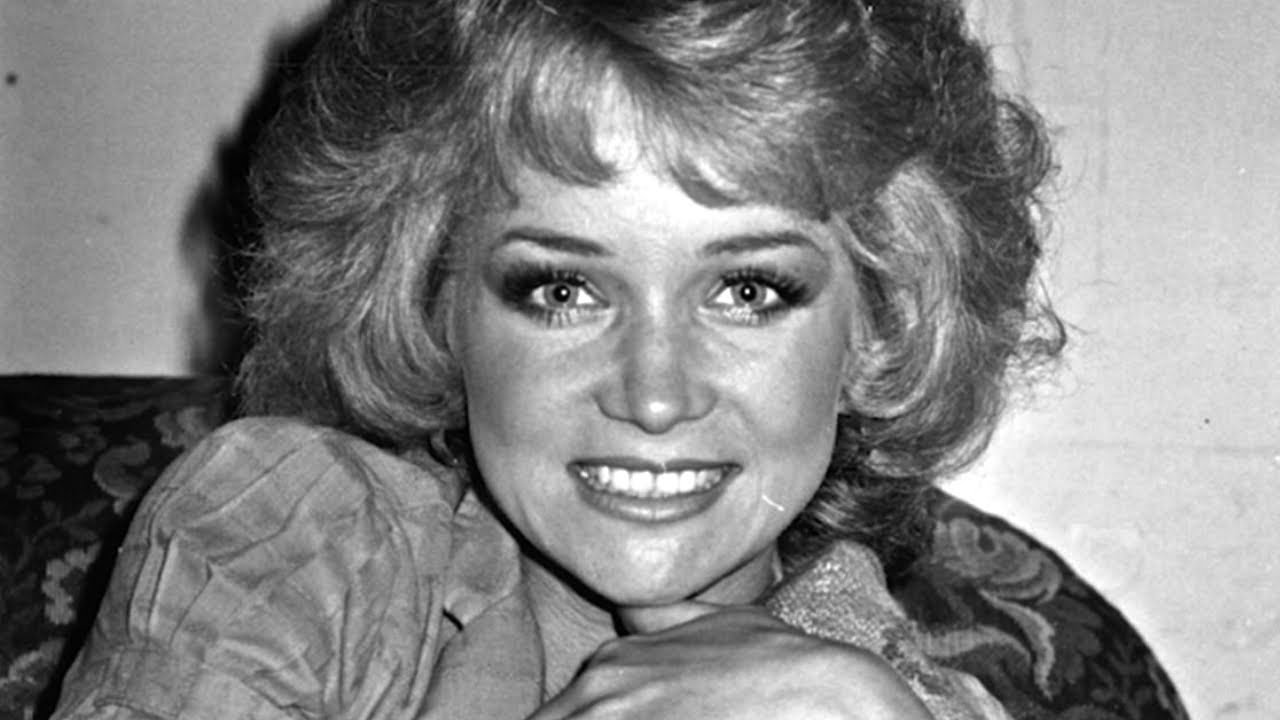
Glenn Shirley was a bank robber. By January 1968, that was already part of his life story.
People who wrote about him did not treat him as someone who had made one bad choice and walked away from it. They described him as a repeat offender, a man who had moved in and out of the California prison system until Folsom became another stop in his long fall. Inside that prison, Shirley had written a song.
It was about the chapel at Folsom, a granite building that stood inside the walls as a place of prayer, memory, and quiet escape. Shirley called the song Greystone Chapel.
On the day Johnny Cash came to Folsom, Shirley was sitting in the front row. A preacher had put him there. Shirley did not understand why.
He only knew that he was close enough to see everything. Then Cash walked onto the stage and during the show announced that the next song had been written by Glenn Shirley. The room exploded.
Men started shouting. Men started cheering. The whole place seemed to shake around him.
 Now imagine what that felt like. A man serving time inside Folsom Prison sat in the front row while the biggest country star in America said his name, then sang his song, inside his prison in front of the men he lived with every day. At the same time, a Columbia Records mobile unit was recording the moment for an album.
For Shirley, nothing could have felt more unreal. The album came out on May 6th, 1968. Folsom Prison Blues had already been released as a single at the end of April, and it became Cash’s first number one country hit in five years.
Because of that album, Glenn Shirley became known, too. Cash spoke up for him in public. He pushed for people to see Shirley as more than an inmate number.
In 1971, Shirley was paroled, and when he walked out of the prison gates, Johnny Cash was there waiting for him. Then Cash signed him. He brought Shirley on tour.
At the Los Angeles Forum, Glenn Shirley walked onto a stage in front of 17,000 people. His children, Bruce, who was 14, and Rhonda, who was 11, watched their father perform for the first time in their lives.
Their first memory of him as a performer did not happen in a small club. It happened in one of the largest venues in California. In 1972, Shirley remarried.
His daughter moved from California to Nashville so she could live with him. For about 18 months, the story looked exactly the way people wanted it to look. That part matters because to people watching from the outside, Shirley became more than a man who had caught one lucky break.
For a short time in the early 70s, he stood as living proof of a bigger idea. A bank robber with talent could be found. He could be released.
He could be given work. He could be brought back into the world. His story made people believe that prison was full of men who might be worth that same chance.
Shirley recorded his own album, too. It was taped live inside Vacaville, released under his name, and later brought back into print. Cash used him as proof of what he believed, and he did it in public.
He meant it.
Before we return to what happened to Glenn Shirley, we have to go to the second prison album because that one changed history in a way many people never understand. On February 24th, 1969, two days before his 37th birthday, Johnny Cash played San Quentin State Prison. It was his fourth time performing there.
His first show at San Quentin had happened on New Year’s Day near the end of the 1950s. The exact year is still debated. Some sources say 1958.
Others say 1959.
At least one outlet has even corrected itself on that detail. The year may be uncertain, yet the feeling of that day is remembered clearly. Cash and his band played in the middle of the prison yard while rain came down around them.
They kept playing until Luther Perkins’s amplifier finally stopped working because of the water. In that audience sat a 20-year-old inmate. He was serving time for burglary and attempted escape.
His name was Merle Haggard.
Haggard told the story of that day for the rest of his life. The detail he always remembered first was a glass of water. Before the show, Cash asked a guard for water.
The guard stood nearby chewing gum and ignored him. Cash looked at him and mocked him in front of everyone. With the whole room watching, Cash chewed imaginary gum right back at the guard.
Haggard later said that Cash won the whole audience in that moment. That is how Cash reached a prison crowd.
The song mattered, of course, but the gesture came first. 2,000 men saw him show open contempt for authority in a place where they could not do it themselves. That small moment said more to them than any speech could have said.
Merle Haggard was paroled in 1960. Governor Ronald Reagan pardoned him in 1972. Haggard said many times that seeing Johnny Cash inside San Quentin helped turn his life around.
By August 1969, Haggard was speaking about his prison past on Cash’s own network television show.
Some viewers complained to ABC because a former convict had been brought on air to talk about it. By then, Cash had already returned to San Quentin and made the record. The February 1969 concert produced a set of 22 songs.
The album came out on June 16th, 1969. This time, the prison show had something Folsom did not have, cameras. The San Quentin concert was filmed by Granada Television from the United Kingdom.
Michael Darlow produced and directed it. That footage still exists and it includes interviews with prison guards and inmates about life inside the walls.
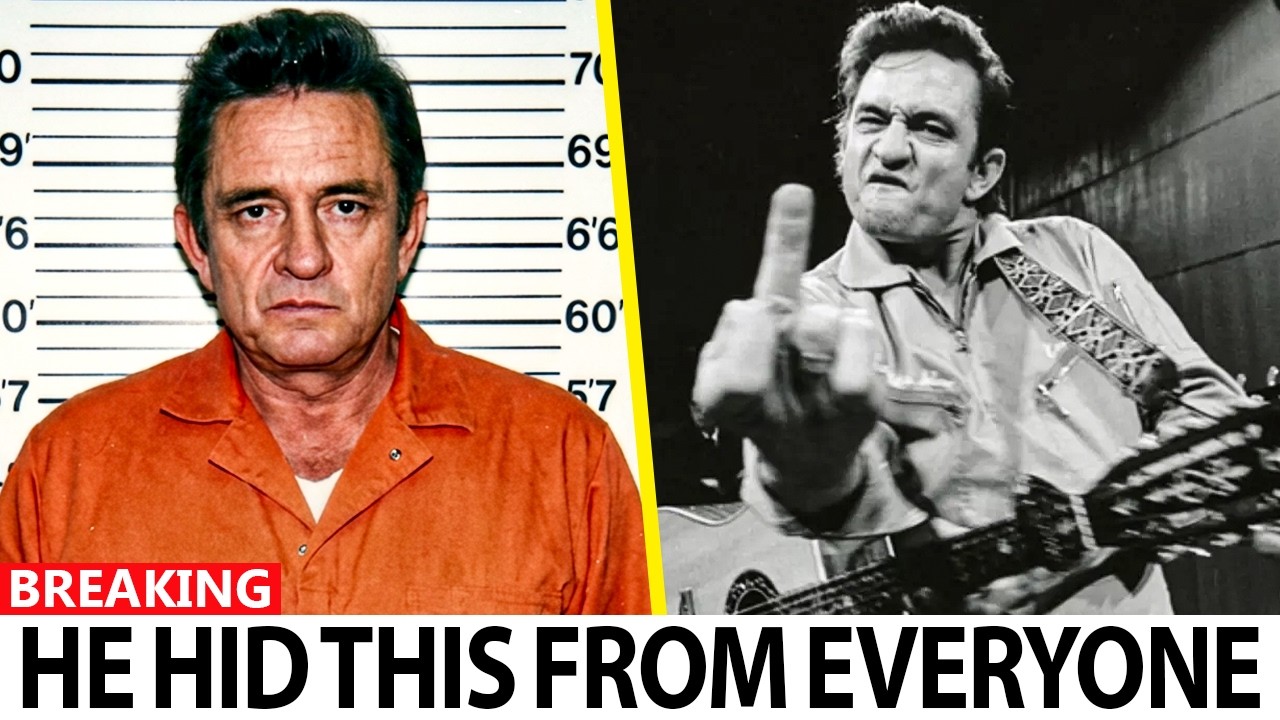
That brings us to the photograph. Everybody knows it. Johnny Cash in profile.
His face is hard. His eyes are locked on the lens. His right hand is raised in the most famous gesture of his career.
The real story behind it is more interesting than the legend. Cash was annoyed that day. His problem was with the Granada television crew.
They were standing between the inmates and the stage and they were blocking the view of the men who had come to see him.
Photographer Jim Marshall noticed Cash’s mood and asked him for a shot. He told Cash to do one for the warden. Cash raised his finger.
That means the most rebellious image in country music history came from a posed photograph. It was taken because a photographer asked for it. Yet the anger behind it was real.
And that anger came from Cash wanting the inmates to see the show clearly. That detail makes the picture even stronger.
Two more important things came from that day. Cash performed a new song called San Quentin. He had written it for that room.
In the song, he tells the prison how much he hates it and questions what good it thinks it does. The inmates demanded to hear it again. Cash played it again right away, straight through from the beginning.
He also performed a novelty song he had barely rehearsed. It came from a Shel Silverstein poem and was called A Boy Named Sue.
When it was released as a single on July 26th, 1969, it became a number one hit. Then at San Quentin became Johnny Cash’s first number one album on the pop chart. The prison albums did more than revive his career.
For a while, they made him the biggest recording artist in America. The scale of that comeback deserves to be clear. In 1969, Johnny Cash outsold the Beatles.
 A country singer in his 40s, a man many people had written off two years earlier, had rebuilt his career by recording two albums inside maximum security prisons. For a period, he became the highest selling recording artist in the United States.
Now we return to Glenn Shirley because the ending of his story is the part most documentaries leave out. The move into the outside world did not work. Shirley had gone from a cell in Folsom to a tour bus in a matter of months.
Soon after that came a record contract. Then came the Los Angeles Forum and 17,000 people watching him perform. His daughter, who had moved to Nashville to live with him, saw how hard that change was for him to carry.
Another piece of context made everything heavier. The one person who may have truly understood him was Spade Cooley, a former country band leader who had also been imprisoned in California and had become friends with Shirley inside. Cooley had been granted parole.
But before his release took effect, he died of a heart attack in late 1969 while performing on furlough. So Shirley had fame around him. But one of the few people who might have helped him understand it was gone.
Life on the road became harder. Shirley’s behavior grew more difficult. Eventually, his professional relationship with Cash ended.
On May 11th, 1978, Glenn Shirley died by suicide at his brother’s home. He did not want to go back to prison. Shirley was buried outside Bakersfield, California.
That detail feels almost too neat because Bakersfield is the town most closely tied to Merle Haggard, the other man whose life changed after hearing Johnny Cash play inside a California prison.
Two inmates heard the same singer inside California prisons. Their lives then moved in very different directions. Merle Haggard became one of the most decorated artists in American country music.
He received a full pardon from a sitting governor and lived to 79. Glenn Shirley lasted seven years outside prison walls. Nobody has ever explained the difference in a satisfying way.
Anyone who claims to know the full answer is guessing.
Haggard was paroled in 1960, then spent years playing Bakersfield bars before success arrived. Shirley moved from a prison cell to the Los Angeles Forum in only a few months. There is a painful possibility here.
The delay that Merle Haggard had to live through may have helped him survive the life that came later. Johnny Cash paid for Shirley’s funeral himself. That part deserves to be said clearly.
It does not usually appear in the legend, but it belongs there.
Cash had put Glenn Shirley on a stage. He had tried to give him a life outside prison. When he could not save him from what followed, he paid to bury him.
There is a version of the prison concert story that ends in the front row in January 1968 with Shirley hearing his song and the room roaring around him. The fuller version lasts another 10 years. It ends at his brother’s home.
So what did all of it amount to commercially? It changed everything. At Folsom Prison reached number one on the country chart and sold in the millions.
At San Quentin reached number one on the pop chart. Cash went from a stalled addict with no recent hits to a household name. Soon after he became the host of his own network television program.
The strongest proof of his sincerity came after the comeback was secure. He kept going.
A performer chasing a career trick would have walked away once the trick worked. By the middle of 1969, Cash had his number one albums. By that summer, he had his own network television show.
He had no practical need to keep playing for prison audiences. Cash continued anyway. In 1973, he recorded at a Swedish prison.
In 1976, he recorded a concert behind prison walls at Tennessee State Prison. Beyond those albums, he kept playing institutions that brought him no major publicity at all.
Then he went further than music. In 1972, Johnny Cash testified before a United States Senate subcommittee on prison reform. He also met President Nixon to discuss the subject.
The prison records had given him a larger public voice. And he used that voice in front of lawmakers to argue for change. In 1971, he wrote Man in Black, the closest thing he ever made to a statement of purpose.
In that song, he explained that he wore black for the poor, the beaten down, and the prisoner who had long paid for his crime.
That is the real legacy. And it is more interesting than the myth because it is more complicated. The myth says a hardened former convict walked into a prison and found his people.
The record shows something richer. Cash had never served prison time. He wrote his signature prison song about a place he had never seen after watching a film in Germany when he was 21.
Then he spent 11 quiet years playing inside institutions before anyone thought to record one of those shows.
When the albums came, they were shaped by professionals. They were assembled from multiple performances. Atmosphere was added later.
The most famous photograph from the whole story was taken because a photographer asked for it. All of that construction was real. So was the commitment.
Cash helped shape the albums carefully, and he testified before the Senate. He posed for the finger photograph and his anger came from the fact that a camera crew was blocking the inmates from seeing the show.
The last word belongs to the moment that started it all. On the night of January 12th, 1968, a preacher knocked on Cash’s motel room door with a tape in his hand. Cash listened to Greystone Chapel once.
Then he stayed up all night learning it. The next day, he performed another man’s song at the climax of the most important recording of his own life. After that, he said Glenn Shirley’s name in front of 2,000 inmates, then spent the next decade trying to help him get out and stay out.
He failed at the last part. Still, almost nobody else in that industry before him or after him even tried. That is what people often miss about the prison concerts.
They were made carefully by professionals and they were also deeply sincere. The records were shaped for listeners yet the feeling inside them was real. At the center of the story was the man in the front row.
His song helped make the Folsom concert unforgettable. His life became proof of Cash’s hope. His ending showed how fragile that hope could be.
And today, Glenn Shirley is buried outside Bakersfield with a funeral paid for by the singer who once stood in front of a prison crowd and gave his name back to him.