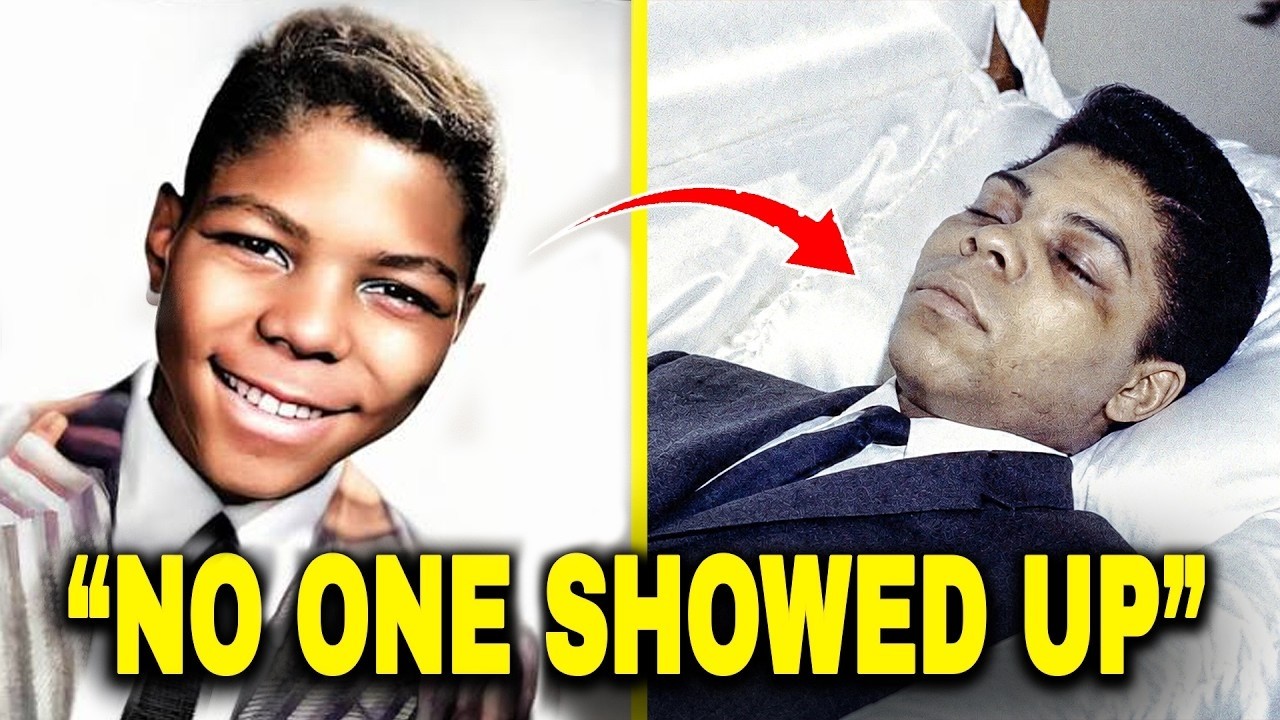
Frankie Lymon, the 1950s rock and roll prodigy whose voice once captivated the world, died tragically alone at age 25. Found dead in his grandmother’s Harlem apartment from a heroin overdose, Lymon’s demise was mourned in obscurity, with his funeral shunned and his grave unmarked for years, a haunting end to a superstar’s stormy life.
Frankie Lymon’s rise to fame was meteoric. At just 13, his soaring vocals on “Why Do Fools Fall in Love” ignited the dawn of rock and roll. Instantly an icon, he shattered race barriers and inspired generations, claiming a spot in music history alongside legends like Michael Jackson and the Jackson 5.
Born September 30, 1942, in New York City’s Washington Heights, Lymon’s childhood was far from carefree. Raised in a struggling household, music became both his refuge and ticket out. By 12, his talent led him to form The Teenagers, a racially diverse vocal group that defied segregation norms and dazzled audiences with dynamic harmony.
Their breakthrough track, “Why Do Fools Fall in Love,” released in January 1956, scaled charts globally, hitting No. 1 on R&B and sparking an international sensation. Lymon’s voice, fresh and youthful, catapulted him into an adult music scene, demanding maturity he was too young to grasp.

Behind the scenes, exploitation shadowed their success. Disputes over songwriting credits and royalties plagued Lymon and his bandmates. Record executives, including George Goldner and later Morris Levy, claimed credit and profits, leaving the young artists shortchanged and vulnerable in a ruthless industry.
As fame mounted, Lymon faced the harsh pressures of stardom. Touring relentlessly, balancing schoolwork, and maintaining an image drained the boy behind the voice. The record label increasingly isolated him from The Teenagers, pushing him toward a solo career that faltered as his adolescent voice changed.
The shifting music landscape and racial prejudice dealt blows too. A 1957 TV performance featuring Lymon dancing with a white girl provoked southern backlash, revealing segregation’s grip and foreshadowing the shrinking commercial opportunities awaiting him.

Compounding these struggles was a devastating heroin addiction beginning at age 15, introduced by an older woman. His dependency hampered his career, eroded professional bonds, and clouded every effort at a comeback, despite stints in rehab and brief reunions with his original band.
In the 1960s, Lymon cycled through failed record contracts and the military, seeking discipline and redemption. His personal life was tumultuous, marked by overlapping and disputed marriages, complicating his estate and future claims to royalties.
By early 1968, with hopes pinned on a new recording session to resurrect his career, tragedy struck. On February 27, Frankie Lymon was discovered dead on his grandmother’s bathroom floor, a syringe nearby—his promising life extinguished by overdose, ending a chapter of unparalleled promise turned heartbreak.
The aftermath was cruelly silent. Unlike his meteoric rise, Lymon’s death attracted scant public mourning, with reports suggesting no one attended his funeral. His final resting place in the Bronx remained unmarked for years, symbolizing the emptiness left by his sudden fall from grace.
Legal battles over his name and fortune dragged on for decades. Three women—Elizabeth Waters, Zola Taylor, and Amira Eagle—claimed spousal rights, their bitter disputes underscored by unclear marriages and complex documentation, finally resolved in court only years after his passing.
Despite these hurdles, Frankie Lymon’s influence endures. His youthful vocal style shaped the sound of Motown and inspired legends across genres. Inducted posthumously into the Rock and Roll Hall of Fame in 1993, his legacy stands as a testament to talent sadly curtailed by addiction and exploitation.

Frankie Lymon’s story is a stark reminder of the costs behind early stardom. His trajectory from groundbreaking child star to forgotten casualty highlights the music industry’s failures to protect its young talents. Addiction, racial barriers, and industry greed converged to destroy a once-bright light.
Today, Lymon is remembered not merely for his hits but as a cautionary tale of fame’s double edge. The boy who once owned the world’s admiration fell victim to an unforgiving mix of circumstance and circumstance, leaving the world to ponder what might have been.
This is the breaking story of Frankie Lymon – a prodigy who rose too fast, burned too brightly, and left an indelible tragedy in his wake. The forgotten legacy of a teen who changed rock and roll forever, only to die alone and overlooked, reminds us how fleeting fame can be.