Police Said They Had a Suspect but No Charges — The Reason Reveals How Major Crime Investigations Really Work
The most shocking part of the press conference wasn’t what police said.
It was what they were willing to say before making an arrest.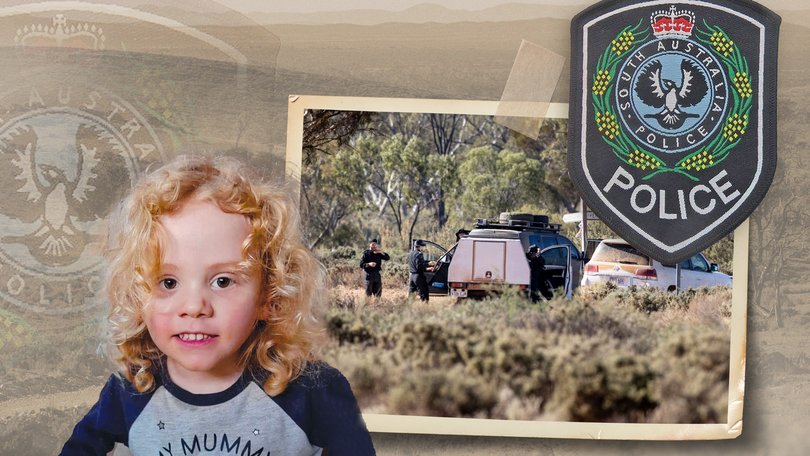
For nearly five months, investigators had worked largely in silence.
Then suddenly, they stood before cameras and revealed something extraordinary.
Their focus had narrowed.
Significantly.
Not toward a stranger.
Not toward an unknown abductor.
But toward someone Gus Lamont knew.
Someone connected to his daily life.
Yet despite that declaration, police still hadn’t laid charges.
No one had been arrested.
And Gus himself had not been found.
For many people following the case, the question was immediate.
If investigators are so confident, why not make an arrest?
According to policing experts, the answer is simple.
Because confidence isn’t enough.
Evidence wins cases.
Not suspicion.
Not theories.
Not even strong beliefs.
Investigators may think they know exactly what happened.
But unless they can prove it in court, charges can fall apart.
Former Detective Superintendent Vincent Hurley explained that police often reach conclusions long before they have enough evidence to prosecute.
The challenge is building a case that survives a courtroom.
A case capable of convincing twelve jurors beyond a reasonable doubt.
And sometimes that takes time.
A lot of time.
According to Hurley, investigators appear to have spent months systematically eliminating possibilities.
First, they searched for evidence that Gus wandered away.
They found none.
Then they explored the possibility of an unknown abductor.
Again, they found none.
Eventually, investigators were left with a far more troubling possibility.
Someone Gus knew.
Someone close.
Someone familiar.
But proving that possibility requires much more than suspicion.
It requires evidence that can withstand scrutiny from defense attorneys, judges, and juries.
Which is why some experts believe the press conference itself was part of the strategy.
Not just an update.
A tactic.
Hurley believes police deliberately used the word “suspect.”
Not “person of interest.”
Not “someone investigators want to speak with.”
Suspect.
A word carrying enormous legal and psychological weight.
A word police rarely use lightly.
Especially in a case involving a missing child.
According to Hurley, investigators would likely have received legal advice before making such a public statement.
Because once that word is spoken publicly, there is no taking it back.
The pressure changes.
The dynamics change.
Everything changes.
“When police give press conferences, there’s always a specific reason and strategy,” Hurley explained.
And many observers believe that strategy may now be aimed directly at the person investigators suspect.
A public declaration can create pressure that private interviews cannot.
Pressure to explain inconsistencies.
Pressure to account for evidence.
Pressure to respond when investigators reveal just how much they already know.
And experts believe police may know far more than they have publicly disclosed.
Associate Professor Xanthe Weston, a forensic anthropologist and criminologist, said investigators almost certainly continue holding critical information back.
Information the public has never heard.
Information known only to detectives and the people directly involved.
That secrecy serves an important purpose.
If someone falsely confesses, police can compare their story against facts never released publicly.
If witnesses come forward, investigators can test whether they truly know details of the case.
And if suspects change their stories, detectives can compare those changes against evidence they’ve kept hidden.
In other words…
The public sees only part of the investigation.
Detectives see the whole picture.
That picture has already led investigators back to Oak Park Station.
Earlier this year, police executed a search warrant at the property.
For two days, investigators conducted what they described as a comprehensive forensic search.
They seized a vehicle.
A motorcycle.
Electronic devices.
Potential evidence that would later undergo detailed forensic examination.
And according to Detective Superintendent Fielke, additional searches may still occur.
Not only at Oak Park Station.
But also at nearby locations as new information emerges.
The investigation is clearly far from over.
Meanwhile, experts say the emotional toll on Gus’s family is impossible to measure.
Especially his mother, Jessica Lamont.
For months, families in missing child cases often hold onto hope.
Hope that their child will be found.
Hope that answers will come.
Hope that somehow the nightmare will end.
But the latest police announcement changed the landscape dramatically.
What was once viewed publicly as a missing child investigation is now being discussed as a likely homicide investigation.
That shift carries enormous emotional consequences.
According to Dr. Weston, cases involving people close to the victim are among the most psychologically devastating.
Because the source of pain isn’t outside the family.
It’s potentially inside it.
And that possibility creates a different kind of trauma.
A deeper one.
A more complicated one.
As investigators continue their work, one reality remains.
A four-year-old boy vanished.
Months have passed.
No body has been recovered.
No charges have been laid.
Yet police have publicly declared that their focus is now on someone known to him.
That statement alone suggests how far the investigation has progressed.
And perhaps how close detectives believe they are to the truth.
But until evidence reaches the legal threshold required for prosecution, the case remains unfinished.
The questions remain unanswered.
And somewhere in the vast South Australian outback, the mystery of what happened to Gus Lamont continues to haunt everyone involved.
Investigators.
Family members.
The local community.
And a nation waiting for answers.
Because while theories may come and go…
And speculation may fill social media…
Only one thing truly matters.
Finding out what happened to a little boy who disappeared.
And making sure the truth eventually catches up to whoever knows it.
#GusLamont #JusticeForGus #MissingChild #AustraliaNews #TrueCrime #MajorCrime #SouthAustralia #OakParkStation #CrimeInvestigation #BreakingNews #MissingPerson #UnsolvedMystery #CrimeStory #TrueCrimeCommunity #StoryTime #Part2

