The world watched in horror on January 28, 1986, as the space shuttle Challenger disintegrated 73 seconds after liftoff, killing all seven crew members aboard. But decades of investigation, declassified documents, and the testimony of the engineers who tried to stop the launch have revealed a story far more disturbing than the official narrative. This was not a tragic accident, but a preventable catastrophe born from political pressure, corporate cowardice, and a calculated cover-up that nearly succeeded.
The day before the disaster, January 27, 1986, was not just another routine evening for a small group of engineers at Morton Thiokol, the contractor responsible for the shuttle’s solid rocket boosters. They were locked in a desperate, hours-long battle to stop what they saw coming like a freight train. At the center of the storm was Bob Ebeling, a senior engineer who would carry the weight of that night for the rest of his life.
 Alongside Roger Boisjoly, Arnie Thompson, Joel Maw, and Brian Russell, the team had uncovered a chilling reality, one that hinged on the temperature forecast for the following morning.
The Kennedy Space Center predicted a low of 18 degrees Fahrenheit by launch time, the coldest conditions ever for a shuttle launch. To the public, this was a footnote. To these engineers, it was a red flag screaming at full volume.
The rubber O-rings, tiny but crucial seals between the segments of the booster rockets, were not designed for such extreme cold. The engineers weren’t working on a hunch; they had documented evidence, O-ring erosion, blowby, photographs from previous flights, and mathematical models that predicted a total failure. Test results showed that at low temperatures, the rubber became so stiff it couldn’t seal properly, allowing superheated gas to escape, a death sentence for the vehicle.
Despite the mounting evidence, their pleas for a launch delay were ignored. The decision to launch was not rooted in engineering reality but in a web of political pressure that NASA could not afford to break. The launch had already been delayed multiple times, and the agency felt backed into a corner, worried that any further postponement would make it look weak and embarrass the Reagan administration.
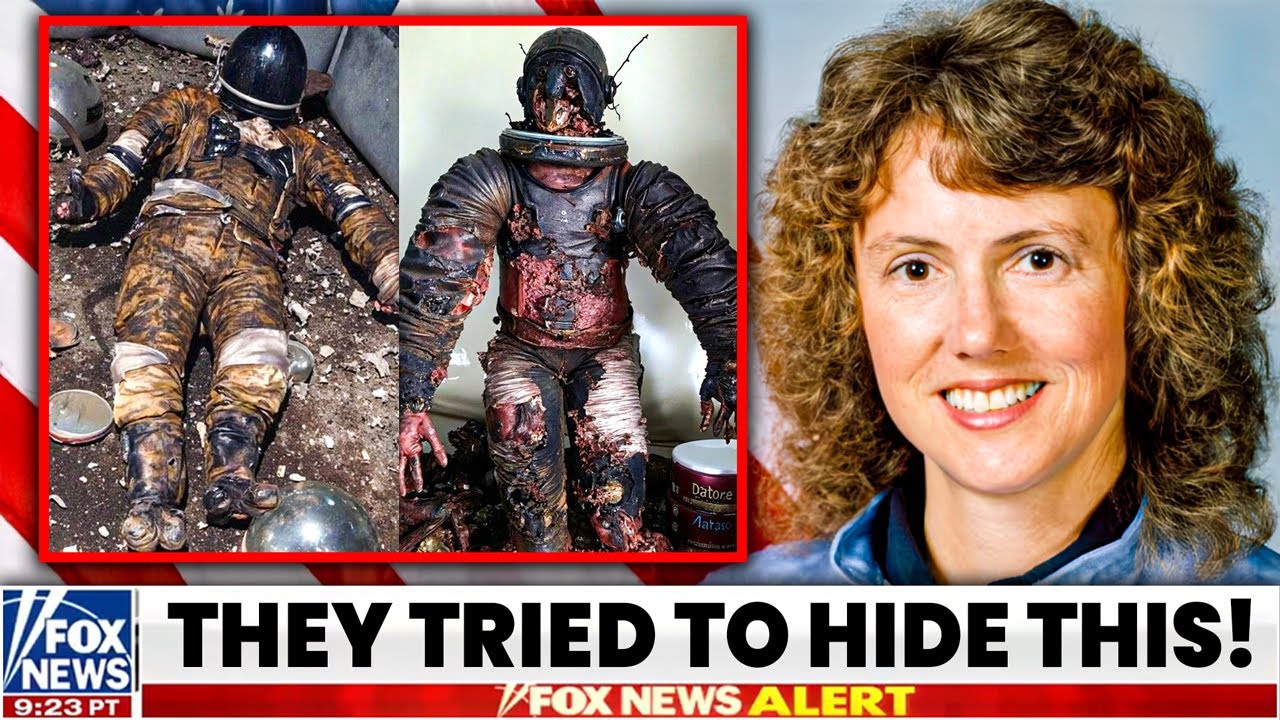
The political stakes were enormous, with a national spotlight fixed on Christa McAuliffe, the teacher selected for the mission, designed to be Reagan’s PR victory to inspire a generation. With the President’s State of the Union address looming, getting McAuliffe into space on time was critical, overriding every safety protocol.
 The most damning moment in this saga occurred off-camera hours before liftoff. Under direct pressure from NASA management to get the fuel moving, Morton Thiokal’s executives made a decision that had nothing to do with engineering. They asked the engineers who had raised the red flags to leave the conference room.
Behind closed doors, with no new data and no scientific analysis to base their decision on, the executives reversed the original recommendation and approved the launch. The launch director was informed, and the countdown continued, despite the crew on board, including Commander Dick Scobee, pilot Michael Smith, and the rest of the crew, unaware of the deal.
Chris McAuliffe was not just a teacher; her tragic fate was inherently linked to politics. Selected for the Teacher in Space program, her mission was never about science but about public relations. She was supposed to conduct a lesson from orbit to revitalize American interest in space flight.
However, this pushed the launch schedule into an unrealistic deadline structure. McAuliffe’s presence meant millions of school children would be watching live, adding a new layer that made cancellation not just a technical failure but a national embarrassment. What the public never learned until years later was that this political pressure forced NASA to routinely violate its own safety protocols, specifically the requirement to prove a launch was safe, rather than assuming it was.
 The morning of the launch, Challenger stood on the pad against the pale sky, covered in ice. Yet an ice inspection team cleared the vehicle for flight, marking the dominance of schedule over safety. As the shuttle accelerated from 0 to 100 mph in six seconds, mission control saw data showing flawless performance.
But at the 46,000-foot mark, the bogeyman created by the cold weather, the O-ring failure, caused superheated gas to burn through the external tank’s support structure. To the watching public, a fireball that signaled an explosion. Yet, the most impallenge of failure is that the blast did not immediately 𝓀𝒾𝓁𝓁 the crew.
the most devastating truths to emerge from the debris and data is a fact that NASA initially denied to spare the families the horror. The crew did not die instantly. The explosion seen on TV was actually the shuttle coming apart due to tank rupture; the crew compartment remained intact and continued to hurtle upward.
It wasn’t until the cabin began its 2-minute and 45-second fall from 65,000 feet to the Atlantic Ocean that the emergency oxygen packs were activated. At least three crew members–Judith Resnik, Michael Smith, and Ellison Onizuka–were alive and conscious, flipping switches to try to regain control, a horrific fall where they knew they were doomed but could not communicate with the public. When the cabin hit the water at 200 mph, the story truly ended.
 One of the most 𝓈𝒽𝓸𝒸𝓀𝒾𝓃𝑔 revelations said by NASA in the aftermath was the attempted cover-up. In the hours and days after the tragedy, NASA issued a coordinated effort to mitigate its responsibility. Communications were slow-walked, and engineers at Morton Thiocale were ordered to not speak to investigators about the temperature data.
Testimony shows that NASA initially presented the event as a random accident, a “risk of spaceflight,” while hiding the true cause of the launch. Top NASA officials, including Lawrence Mulloy, pushed back against safety warnings, demanding that the engineers prove the launch was unsafe, a reversal of the burden of proof that violated all engineering ethics.
The cover-up attempt nearly worked, but it shattered when engineer Allan Macdonald refused to sign the launch recommendation and testified before the Rogers Commission that an investigation had been silenced. His testimony opened the floodgates, revealing evidence that Morton Thiocale’s management collapsed to fire. The truth was further confirmed by the discovery of a 20-foot piece of the shuttle on the ocean floor in 2022, which was found by a diving crew searching for a World War II documentary.
The artifact, untouched, stands as a silent witness to lives lost.
The disaster forced many NASA into a period of introspection, but even as the shuttle was redesigned, the agency’s culture of leadership placed schedule over safety. The “normalization of deviance” continued, leading to the Columbia disaster in 2003.” You showed the same pattern repeating itself.
The original engineers—Boisjoly, Ebeling, and Macdonald—were ostracized by the aerospace industry, their careers destroyed, and their bold departure as heroes for the truth. The tragedy of Challenger was not a technicality; it was a decision, a decision to silence the experts who had the math to save seven lives. But as the world watched the Challenger burn, we must remember but that instead of being a one-in-a-million failure, it was a manufactured disaster born from the dangerous intersection of power, politics, and a failure to listen to the warnings of reason.