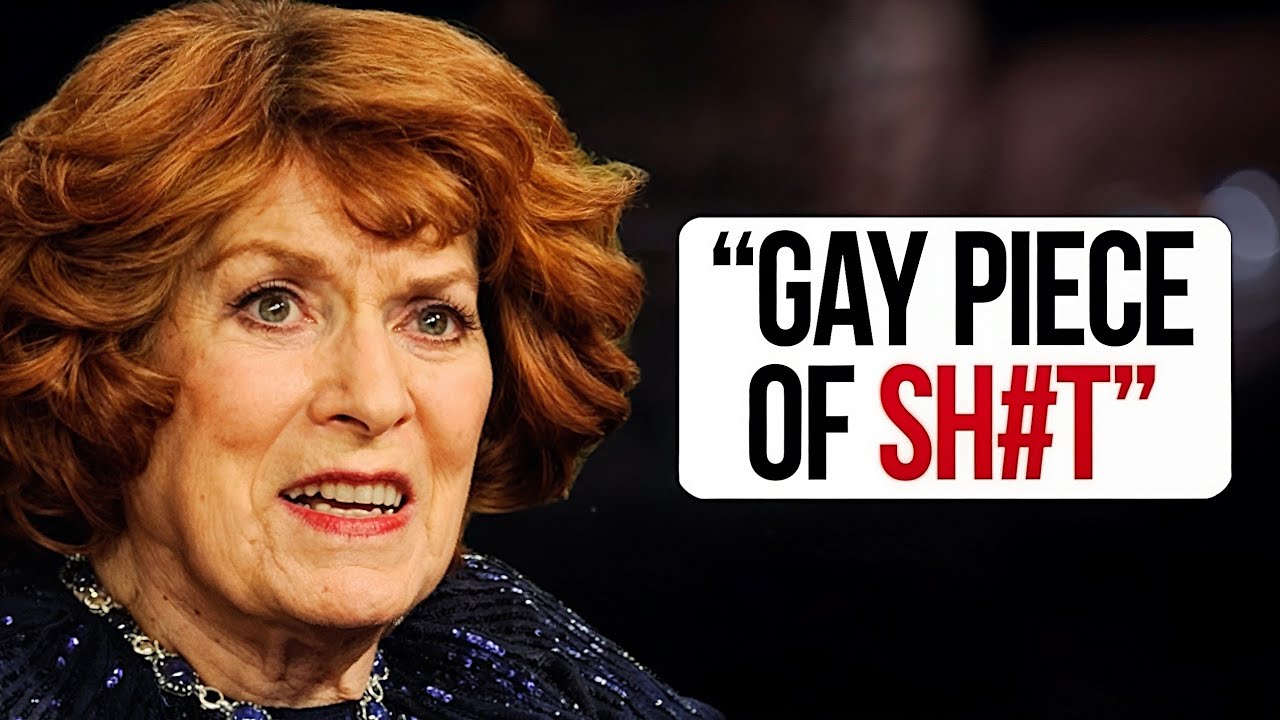
Maureen O’Hara stood out in Hollywood not just for her striking red hair and green eyes, but for her refusal to follow the rules that confined most actresses of her era. Born Maureen FitzSimons on August 17, 1920, in a Dublin suburb, she trained at Ireland’s Abbey Theatre before catching the attention of actor Charles Laughton in the late 1930s. He signed her to a contract and cast her in the 1939 Alfred Hitchcock film *Jamaica Inn*, which launched her international career. That same year, she played Esmeralda in *The Hunchback of Notre Dame*, marking her entry into Hollywood during its golden age.
She became known for playing strong, independent women in films like *How Green Was My Valley* (1941), which won the Academy Award for Best Picture, and later adventure classics such as *Sinbad the Sailor* (1947). Her most celebrated work came alongside actor John Wayne and director John Ford, with whom she made *Rio Grande* (1950), *The Quiet Man* (1952), and *McLintock! * (1963). The chemistry between O’Hara and Wayne, both on-screen and in their real-life friendship, made *The Quiet Man* one of the most beloved romances in film history.
O’Hara’s public image was that of a fierce, dignified leading lady who refused to be pushed around. Off-screen, she was just as firm. She demanded fair pay, chose roles carefully, and rejected scripts she found shallow or degrading to women. She also refused to dye her hair or hide her Irish accent for studio bosses, later noting that she was the only leading lady in Hollywood allowed to keep her natural accent.
Her personal life was marked by both heartbreak and resilience. She married three times. Her first marriage, to English film producer George H. Brown, happened secretly in 1939 when she was just 19.
The union was annulled in 1941. That same year, she married American film director William Houston Price, with whom she had her only child, daughter Bronwyn, born in 1944. The marriage deteriorated due to Price’s alcoholism, and the couple divorced in 1951. Following that divorce, O’Hara had a long relationship with wealthy Mexican banker Enrique Parra that lasted from 1953 to 1967.
In 1968, she married pilot and retired Brigadier General Charles F. Blair Jr. , a man she described as her true lasting love. Blair encouraged her to step away from acting, and she retired in the 1970s to support his aviation business and build a quieter life in the U.
S. Virgin Islands. Their marriage lasted a decade until Blair died in a plane crash in 1978. That same year, O’Hara was diagnosed with uterine cancer, which she survived after surgery and treatment.
O’Hara was also one of the first major female stars to speak openly about the dark side of the Hollywood studio system. She later revealed that she was harassed and mistreated by powerful executives and producers, and that her career suffered because she refused to comply with what was then called the “casting couch culture. ” In a 1957 statement, she described being insulted, humiliated, and effectively blacklisted for refusing advances. Decades before the #MeToo movement, she warned publicly about predatory behavior in the film industry, even when the accusations involved respected figures.
One of the most painful relationships in her career involved director John Ford. While Ford gave her defining roles and helped make her a star, O’Hara later described his behavior as emotionally cruel, controlling, and abusive. She said he humiliated her on set, and in one incident, slapped her during filming, which he tried to pass off as part of his directing style. She believed Ford had a one-sided obsession with her and turned his frustration into anger because she did not return his feelings.
Despite her honesty about his conduct, she never denied the brilliance of his films and acknowledged the complexity of the man behind them. Her courage came at a cost. O’Hara lost roles and faced pushback for refusing to trade her self-respect for career advancement. She remained steadfast, and her legacy grew as the industry began reckoning with the abuses she had described years earlier.
She was honored with an honorary Oscar in 2014 for her lifetime of work, walking on stage with the same quiet strength and grace she had shown throughout her career. O’Hara died peacefully in her sleep on October 24, 2015, at her home in Boise, Idaho, at age 95. She was buried at Arlington National Cemetery beside her husband Charles Blair, a final tribute to a man whose service as a pilot and general she deeply admired and whose love defined her later years.