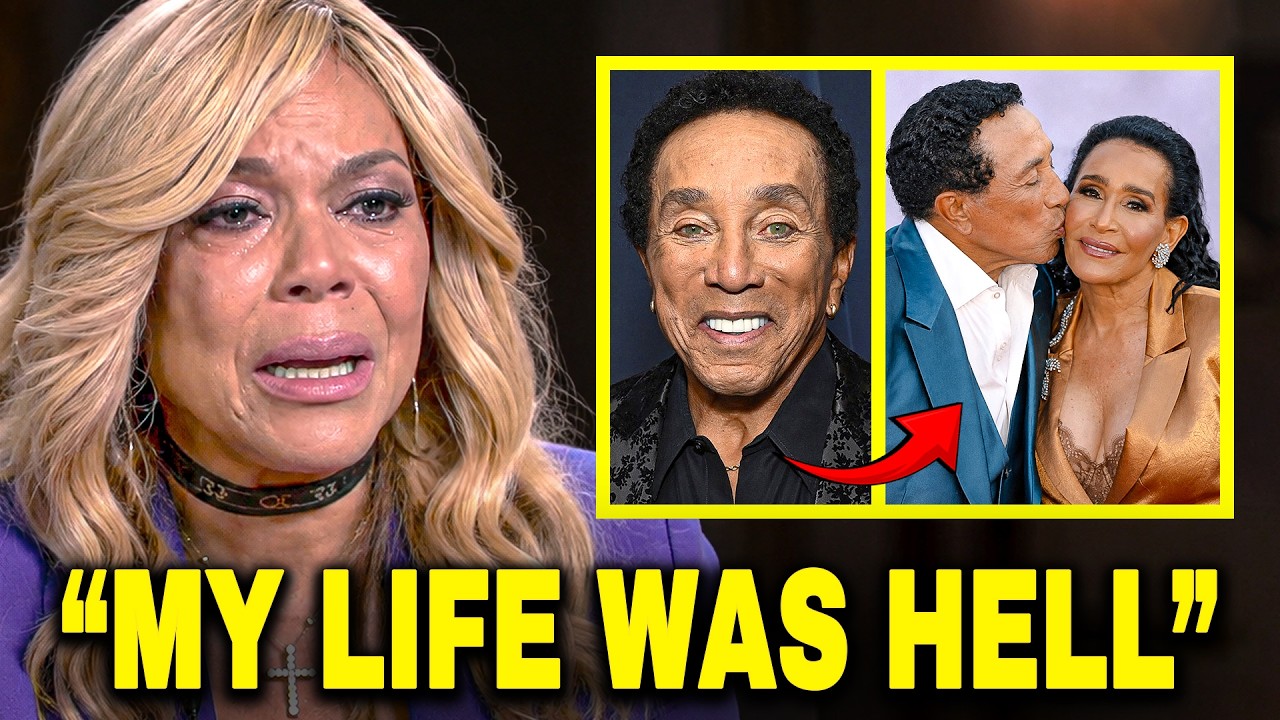
The fairy tale of Motown love was, for Claudette Robinson, a private ordeal marked by profound loss, deep betrayal, and a legal war over the very songs that defined an era.
For decades, the public image of Claudette Robinson and Smokey Robinson was one of perfect harmony. They were the first couple of Motown, the architects of a sound that would conquer the world. But behind the closed doors of a life that seemed engineered by fate, a story of devastating loss, infidelity, and legal warfare was unfolding.
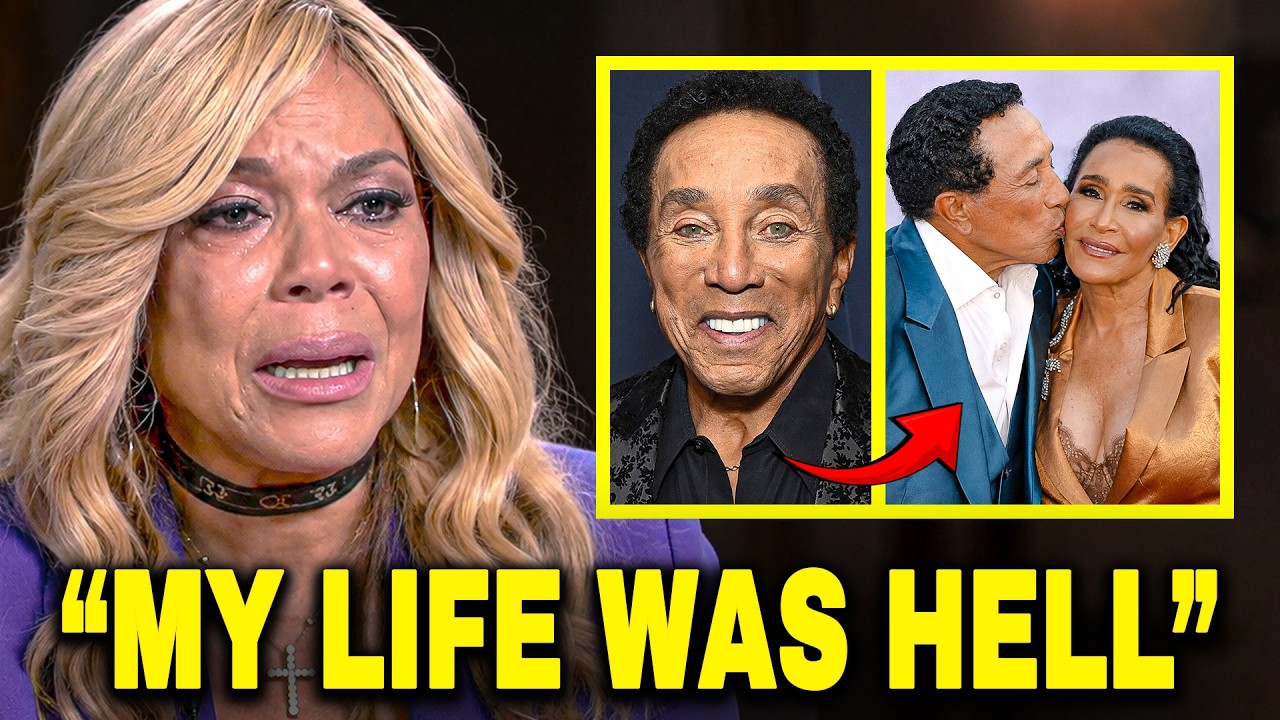 Now, the full, harrowing scope of what Claudette privately called a “cruel nightmare” has come into sharp focus, revealing a relationship that bore wounds fame could not heal.
Their story began not with glamour, but with pure musical camaraderie in the late 1950s Detroit. Claudette Rogers was a vocalist with the Matadorettes, while her brother, Emerson “Sonny” Rogers, was a member of a doo-wop group called the Matadors, which included Smokey Robinson. When Sonny was drafted into the Army, Claudette stepped into the group, an act of familial duty that would stitch her life indelibly to Robinson’s.
The Matadors became The Miracles, and in 1959, Claudette and Smokey married, their partnership becoming professionally and personally untethered.
The rise of Motown was a whirlwind that claimed everything in its path. The Miracles became the label’s pivotal first act, and their 1960 hit “Shop Around” became Motown’s first million-seller. Claudette was given the official title of “First Lady of Motown,” a recognition that made her a foundational figure in music history.
However, the relentless lifestyle was exacting a catastrophic toll on her body. Behind the veneer of success, Claudette suffered the devastating and repeated loss of pregnancies. Contemporary accounts report that she endured eight miscarriages, a painful consequence she attributed to the physical and emotional strain of relentless touring.
In a decision that equity highlights the sacrifice behind the legacy, Claudette stopped touring with The Miracles in 1964. She did not leave the group entirely but instead transitioned to a less visible role, contributing vocals on recordings until 1972. She remained behind in Detroit, desperate to maintain herself and finally secure the family she so desperately wanted.
That relief came with the birth of their son Berry in 1968, and their daughter Tamla in 1971, names that deliberately whispered the legacy of the Motown empire from which they were born.
But while Claudette was building a home, Smokey was building an empire. The asymmetry of their lives created a chasm between them. He was becoming a vice president at Motown, a celebrated songwriter, and the face of one of their most successful acts.
 Claudette’s world, once so professionally intertwined with his, now revolved around their children. Smokey’s world, meanwhile, began to be populated by other levels of temptation and profoundly destabilizing secrets that would eventually bring the marriage to its knees.
The first major rupture appeared in the mid-1970s when Robinson publicly acknowledged having an extramarital affairs, including a significant, lengthy relationship with none other than Motown icon Diana Ross. Robinson later admitted that the relationship occurred during his marital to Claudette, often being described as a period of “forbidden love.” While Robinson has comfortably spoken of his affection for Ross, the revelation was a staggering betrayal for Claudette, who worked in the same small, interconnected Motown orbit.
The couple separated in 1974, and prolonged a brief return, and their public timeline showed a period marked by distinct emotional turbulence.
The fragility of that renewed connection was portrayed, again, by Robinson’s candid acknowledgment of a long-running involvement with another woman, later identified in his autobiography as “Candy.” This extramarital relationship created a permanent, undeniable link when Candy gave birth to Smokey’s son, Trey, in 1984. The birth was the decisive event that imploded the marriage.
Having a child outside the legal boundaries of a marriage made a permanent rewrite of the terms, and the history could no longer be contained.
And then there was Robinson’s descent. His autobiography, Smokey: Inside My Life, is unflinchingly direct in its description of his sustained dependence on illicit substances, a dark period constellate around the rough times of his failing marriage. The image of the singer of “You Really Got a Hold on Me” was failing into addiction, imperceptible the smooth identity he had built.
The impact on the home, already burdened by years of strain, was threatening. Claudette was essentially managing a household while the man who was supposed to be the head was in a fog. The romantic ballads that defined his catalogs were written, conversely, against a backdrop of severe, personal discord.
 Finally, number of years after the first public break, the troubled marriage, a legal conclusion. In 1986, the couple filed for divorce, ending a marriage of 27 years. The termination became the stage for a subsequent war over the music itself.
As part of the divorce, a court stipulated that Claudette had a 50% community property interest in the royalties from Smokey’s future songwriting during their time together.
Yet, in 2014, a new legal battle erupted. Smokey pursued federal copyright claims under the Copyright Act to reclaim composers’ rights. His action directly threatened the financial settlements from the 1986 divorce, opening a well-documented legal battle.
Claudette counterclaimed, arguing that he had breached disclosed duties, misrepresentation, and fraud by failing to seek her approval over something he labeled a legal obligation. The dispute became an explosive confrontation between state marital law and massive federal copyright law.
The irony was that the very music which had idealized their love became the instrument of their last contested courtroom. The Robinsons’ legal team dissolved the case privately before a verdict, allowing the final details to be muffled behind settlement agreements. But what the settlement could not adjudicate was the ideological warfare they embodied: one between the soulful intent of creativity and the legal scrutiny of property.
What did Claudette’s legacy out of the wrecking ball? It’s the source of her own identity. She has remained prominent, not as a voice of the past, but as its principal archivist.
In 2012, she was inducted into the Rock and Roll of Fame as part of the original Miracles. She has utilized her platform for education, publishing Claudette’s Miraculous Motown Adventure, and presenting a narrative of Motown that transcends the myth to capture the monumental reality of the people who built the machinery. Her relationship with the public was no longer defined by Smokey Robinson’s wife, but by her steadfast role as the true “First Lady of Motown.”
 While the direction of their final fight may have been over property, the true “cruel nightmare” she now speaks of confronts a much deeper cultural truth. It embodies the cost of a celebrity that women are forced to pay to maintain the image of a generation. Claudette spent her youth sacrificing her health, her body, and her own career for the sake of a family and a partnership that ultimately became a battlefield for the men and the women’s own power.
The happenings that shattered her illusion—the friendliness of the business, the addiction, the affair—were happening all along.
As Smokey’s song “The Agony and the Ecstasy” speaks to a tortured love, Claudette’s revelation forces the audience to reinterpret those words through the lens of reality. She wasn’t just a woman on an album cover; she was the first artist signed to Motown, a desert of a singer, a mother, a survivor of the decades of trauma that her partner has supersized him into him. The legacy that is no longer defined by a marriage, but by the strength of a woman who navigated a public life of betrayal, loss, and personal destruction while had to remain connected to the music that was once a symbol of love.
The irony of their legacy is that in their final legal battle—over copyrights—Claudette was fighting for property but, simultaneously, for the permanence of the life she was integrated into during their union. She was defining her own value against the man’s self-identification as “author.” The fact that they both had to use the music that they created as an explosive weapon says much about the cold truth of the musical business, but even more about two people who never actually left each other.
To fully understand Claudette’s phrase “cruel nightmare” is to see that a divorce decree doesn’t sever the threads of a legacy that had built an empire. It is to understand that the illusion of the perfect marriage was, for her, a life of deferred dreams, hidden tears, and repeated cruelty. She is a woman who toiled for record-breaking records and endured unbearable losses while managing to build a family and become, eventually, the sole guardian of a narrative that extends beyond the perfect reunion rewrite her former husband has been wielding for decades.
In the end, the story of the Robinsons is not just a story of a music empire and its fall. It is a testament to the resilience of a woman who withstood a public tragedy and a private destruction. Claudette’s testimony is amplified just as much by the fact that she is willing to speak the “cruel nightmare” out loud.
It reminds all audiences that she had to heal not just from a marriage, but from a romance of a nation’s soundtrack, and the hope that was built within it.