The love songs that defined an era were written inside a marriage that Claudette Rogers Robinson would later describe as a “cruel nightmare,” and now the full scope of that pain has come into focus. Behind the velvet-smooth vocals and the Motown magic lay a story of repeated miscarriages, public infidelity, and a legal war over the very music that made them legends.
The relationship began with a practical shift in 1958 when Claudette’s brother, Emerson “Sonny” Rogers, was drafted into the Army. Smokey Robinson asked Claudette to fill the vacancy in their vocal group, the Matadors. That move created the Miracles, the first act signed to Berry Gordy’s Tamla label, and it brought Claudette and Smokey closer together.
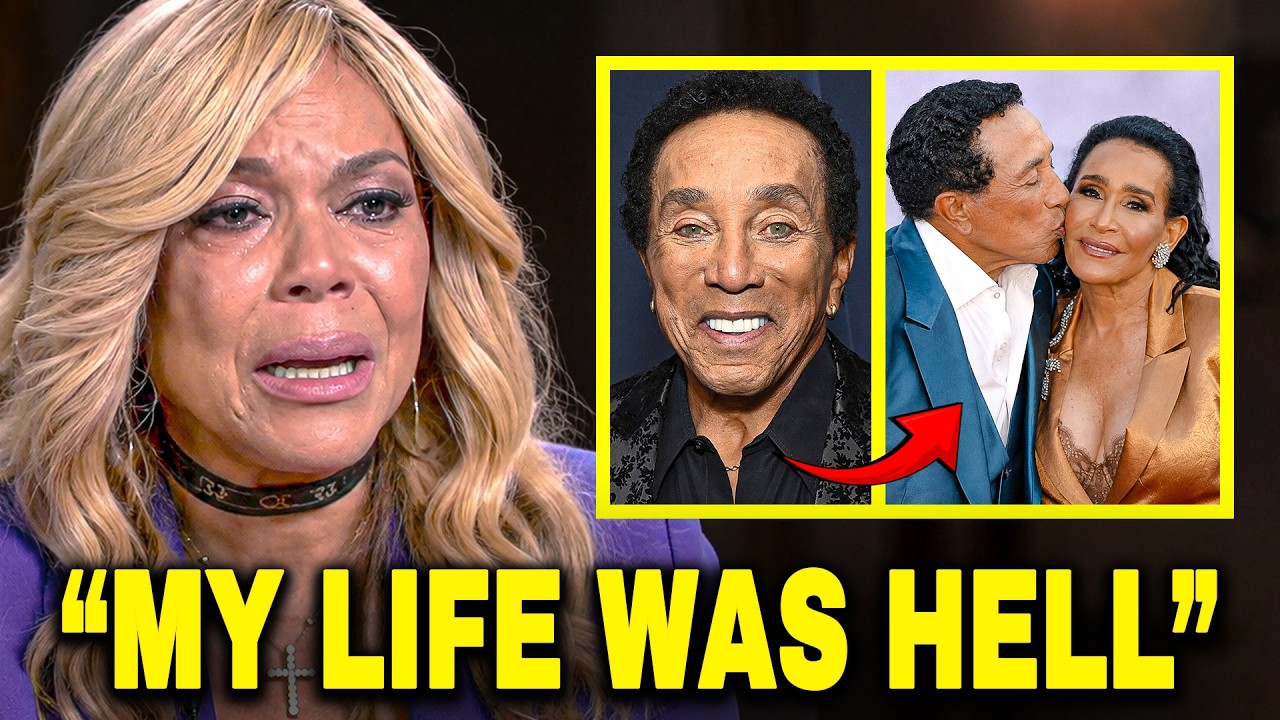 They married on November 7, 1959, their lives permanently intertwined with the new label’s explosive rise.
When “Shop Around” became Motown’s first million-selling record, Claudette was not just a witness; she was a key voice. She earned the official title of “First Lady of Motown” as the first female artist signed to a Motown-affiliated label. Yet, the demands of the road were silently destroying her body.
She suffered approximately eight miscarriages during the years she was touring, which she connected resolutely to the severe stress and physical exhaustion of her career.
The grueling tour schedule forced a cruel compromise. In 1964, Claudette stopped touring, trading the stage for stability. She continued to sing on recordings until 1972, but the distance from the road created a divide at home.
 While she focused on becoming a mother—welcoming son Berry in 1968 and daughter Tamla in 1971—Smokey’s universe expanded into a vice presidency at Motown and a celebrity orbit that Claudette was not part of.
The breaking point was not just distance; it was betrayal. Smokey later admitted to a year-long 𝒶𝒻𝒻𝒶𝒾𝓇 with Diana Ross during their marriage, describing it as part of a “forbidden love.” That caused a separation in 1974, but the couple reconciled.
The situation worsened as Smokey struggled with addiction and maintained another near-long-running relationship with a woman identified as Candy, who gave birth to his son, Trey, in 1984. Fathering a child outside the marriage was the definitive blow that pushed the relationship past repair.
 Claudette and Smokey divorced in 1986 after 27 years. But their connection refused to end. Three years later, a California court granted Claudette a 50% community property interest in the royalties from the songs he wrote during their marriage.
That financial link exploded a federal legal battle began in 2014 when Smokey filed a lawsuit to reclaim copyrights under the 1976 Copyright Act. Claudette countersued for breach of fiduciary duty and constructive fraud.
The case became a collision between state property rights and federal copyright law. The music they had created together became the battlefield for their final dispute. Both sides eventually reached a private settlement in late 2014, but not before revealing the ugly truth that their partnership was a lifelong struggle over ownership, not just love.
 Claudette didn’t vanish into obscurity after the divorce. She remained an architectural figure in Motown’s history, fighting for the legacy of the Miracles as a group. She oversaw the 2012 Rock and Roll Hall of Fame induction program and wrote children’s books to preserve her perspective on the label’s early days.
She became a historian, but the weight of the past remained heavy.
As Smokey found sobriety and remarried in 2002, Claudette’s story became defined less by the love and coldly by the cost. Her legacy is a dual one: as the voice behind the formation of the Miracles and as the woman who endured the cruel silence of a marriage that looked perfect from the audience. The “My Girl” marriage was ultimately a story of terrifying sacrifice and the painful reality that a happy ending was never guaranteed.


