Viggo Mortensen has spent decades chasing authenticity in his performances, but he now says one of the most profound lessons he ever learned came from Christopher Lee on the set of The Lord of the Rings. Mortensen was 43 during filming, while Lee was 81 and a decorated World War II veteran. According to Mortensen, Lee carried a weight of lived experience onto the fantasy set that no drama school could teach. Mortensen, born in New York City in 1958, moved constantly as a child, living in Venezuela, Denmark, and Argentina, where Spanish became his second native tongue.
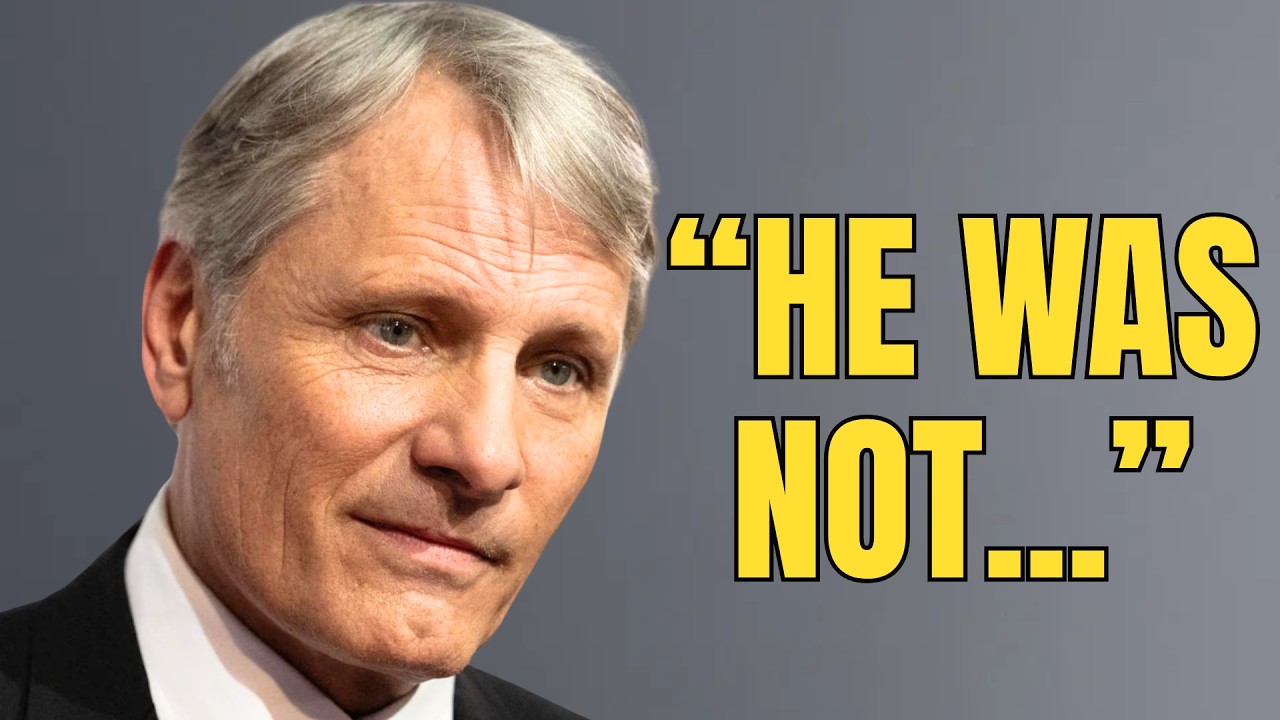
After graduating from St. Lawrence University in 1980, he drifted through odd jobs in Europe before accidentally ending up in an acting school, a mistake that became his career. His first film role was a small part in 1985’s Witness, and though critics barely noticed him early on, his intense physical commitment was already evident. In the 1987 horror film Prison, he shook so violently in one scene that he broke a chair and ran through freezing water in his underwear because faking it felt dishonest.
Through the late ’80s and into the ’90s, he built a body of work that directors admired but audiences largely missed. He earned critical notice for The Reflecting Skin in 1990 and delivered an unsettling performance in Sean Penn’s directorial debut, The Indian Runner. By 1993, he was working constantly but broke, taking parts in films like Boiling Point and Carlito’s Way simply to pay the bills. For Ridley Scott’s G.
I. Jane in 1997, he interviewed real Navy SEALs for months and skipped boot camp with his castmates, deliberately engineering their resentment toward him because the character needed to be resented. The film did not review well, but his commitment was remembered
The Lord of the Rings had been in trouble before Mortensen entered the picture. Peter Jackson had cast Stuart Townsend as Aragorn, but Townsend refused to rehearse, learn horseback riding, or practice sword choreography, repeating to anyone who pushed him, "You’ll get it on the day.
" By the second day of filming, Jackson told his producer, "I don’t think I can work with Stuart. " The studio scrambled for a replacement, considering Jason Patricandrejecting him, while Russell Crowe passed, not wanting to be typecast in period epics again. That left Mortensen, an outdoorsman and trained horseman who already knew European folklore deeply. But he almost said no, because the role meant months away from his young son, Henry.
It was Henry who changed everything. A serious fan of the books, Henry essentially asked his father, will you deny me the opportunity for my father to be Aragorn? Mortensen agreed because his son asked him to. He was on a plane to New Zealand within days
Jackson later admitted that in Mortensen’s first scenes, particularly his introduction at the Prancing Pony, the actor was still finding his footing.
Fans have noted since that this visible uncertainty actually deepened the performance, since Aragorn at that point in the story is a man in hiding from his own destiny. By the confrontation with the Ringwraiths at Weathertop, something clicked. The iconic shot of Aragorn swinging a torch into the camera lens was entirely improvised. Mortensen insisted on a real steel sword rather than rubber or aluminum, training with it constantly, which led to uncomfortable conversations with local police.
The fight choreographer called him the best swordsman he had ever trained. He broke two toes kicking a helmet, and his actual scream of pain made the final cut. He snapped a tooth at Helm’s Deep, and visited a dentist in full costume rather than break continuity
It was in this atmosphere of total commitment that Mortensen found in Christopher Lee something he had never quite encountered before. Lee, born in 1922 in London, had joined the Royal Air Force in 1941 and served through World War II, rising to Flight Lieutenant as an intelligence officer.
By variously accounts, he had also been involved in operations with British special forces that he would decline mid-sentence to discuss. Producer Barrie Osborne later said only that Lee had been part of British Secret Service or OSS or whatever they were called, confirming nobody on the production fully knew his history and Lee preferred it that way. Lee spoke seven languages, had met J. R.
R. Tolkien personally decades earlier, making him the only person involved in Jackson’s productions who had ever actually spoken with the author, and read The Lord of the Rings cover to cover once every year. He had wanted to play Gandalf, but by the time Jackson was casting, Lee was approaching 80 and the physical demands were beyond his body. He took the role that fit what he could still give
The two men found each other in the quiet spaces between takes.
While other cast members played cards, Mortensen and Lee would find a corner and speak in German, Spanish, sometimes Old Norse, not for the film, but because they had always wanted to. They talked about the mythological roots Tolkien himself had drawn from. Lee noticed, too, the sword, and remarked that Mortensen possessed a natural combative instinct, rare in actors who train for a role rather than having it inside them
And then there was the death scene. The day Jackson tried to direct Lee’s scream.
Lee explained, unhurried, exactly why the direction was wrong. He had heard once precisely what a man sounds like when a blade goes into his back from behind. The air does not allow for a scream. It is forced out in a single choked exhale.
Jackson, to his credit, let Lee play it the way Lee knew it had to be played, because Lee was not guessing. He was performing a fact paid for decades earlier in circumstances none of the cast around him could imagine
Mortensen has said since that what Lee brought to that set was a kind of weight no drama school could teach, the feeling of being near someone who carried real war inside a fantasy story about war. For an actor who had spent his career trying to manufacture that exact distinction through sheer physical commitment, watching Christopher Lee simply already possess it as lived history was its own kind of education
There was warmth underneath the gravity, too. Lee, despite decades of villain roles, had a genuinely sensitive artistic temperament.
He sang opera. He would, in his 80s, record heavy metal albums, purely because the idea amused him. Mortensen, who founded his own small publishing company, Perceval Press, specifically to fund art that mainstream industry ignored, recognized a kindred instinct immediately
Christopher Lee died on June 7th, 2015, at a hospital in London, 10 days after his 93rd birthday. Peter Jackson wrote afterward that visiting Lee with his wife had been one of the genuine pleasures of his own life, hours spent listening to stories Jackson knew he would never hear the entirety of
In the years after The Lord of the Rings, Mortensen refused to cash in.
He declined to return as Aragorn for The Hobbit, since the character did not appear in that book. Instead, he made A History of Violence with David Cronenberg in 2005, calling it the best film he had ever made. Two years later came Eastern Promises, in which he played a Russian mob enforcer so convincingly that he traveled across Russia without a translator and studied prison tattoo culture in obsessive detail. The role earned him his first Oscar nomination.
For The Road in 2009, he starved himself down roughly 30 lb and slept in his character’s filthy clothes between takes until he was once mistaken for a homeless man. For Captain Fantastic in 2016, he earned a second Oscar nomination. In 2018, Green Book won Best Picture, and Mortensen earned his third Oscar nomination for playing Tony Lip, gaining 20 lb, eating in nearly every food scene rather than faking it, and folding an entire pizza into quarters on camera because the real Tony Lip used to do exactly that
None of this happened by accident. Mortensen could have spent the rest of his career playing variations of a beloved hero.
He chose instead the kind of relentless, specific commitment that Christopher Lee had modeled for him on a New Zealand film set two decades earlier. Mortensen has spoken about Lee with the reverence of an actor describing not a colleague but a living artifact. A man who carried real history into a story about invented violence and used that knowledge to make the fiction more honest.
Of everything the trilogy gave him, what he chooses to talk about now at 67 is an 81-year-old man in a wizard’s robe who knew exactly what it sounded like when someone was stabbed in the back and was generous enough to share what else he knew with the one young actor on set, paying close enough attention to understand the gift he was being given