Melissa Gilbert, the actress who played Laura Ingalls in the original “Little House on the Prairie,” has found herself at the center of a debate she never asked to join. Rumors spread online that she hated Netflix’s new adaptation of the beloved books. Gilbert has now made her position clear, and it is far more nuanced than the headlines suggested. The controversy began long before a single episode of the new series aired.
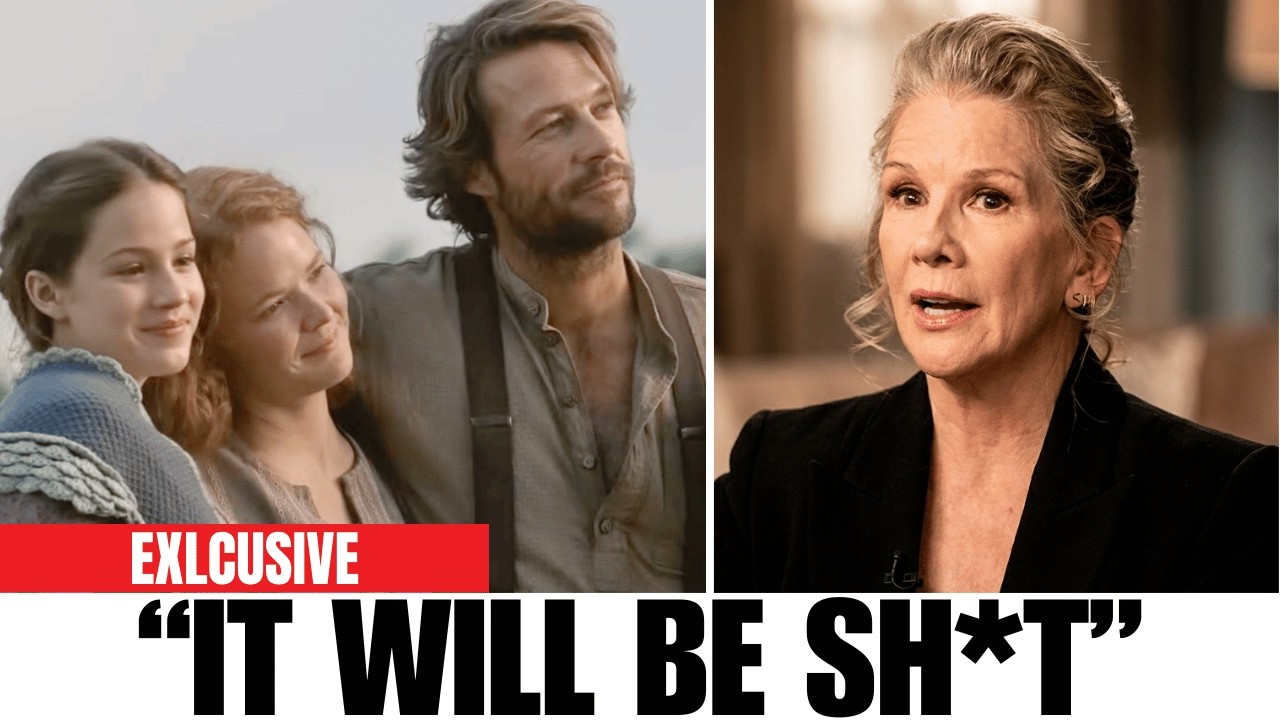
Netflix announced the project in early 2025, describing it not as a remake of the 1974 Michael Landon series but as a fresh adaptation of Laura Ingalls Wilder’s novels. Almost immediately, the project became another battlefield in the culture wars, with critics arguing over what the streaming giant might do to a cherished American classic. Commentator Megyn Kelly fueled the fire by publicly warning that Netflix risked making the series “too woke. ” The phrase spread rapidly across social media and became one of the defining narratives surrounding the production, even though audiences had not yet seen any footage.
The debate focused on creator Rebecca Sonnenschine’s stated intentions to include Native American perspectives and address the historical realities of the Ingalls family settling on land that belonged to the Osage Nation under federal treaties. Gilbert, who was just nine years old when she won the role of Laura in 1974 and grew up on screen over nine seasons, initially surprised fans by welcoming the idea of another interpretation of the story. She noted that there was room for someone else’s take on the material, pointing out that the Landon series was one interpretation of Wilder’s books, not the only possible one. When the online backlash intensified, Gilbert redirected the conversation.
She reminded audiences that the original series had never shied away from difficult subjects. Over its nine seasons, the Landon show tackled racism, antisemitism, alcoholism, poverty, disability, domestic violence, child abuse, and prejudice. She pointed specifically to the 1976 episode “The Wisdom of Solomon,” which followed a Black boy adopted by a white family and confronting racism in Walnut Grove. “I don’t think we can get more woke than that,” she said.
Gilbert also visited the Netflix set and met Alyce Hailey, the young actress cast as the new Laura. Hailey later described the visit as generous, supportive, and encouraging, with no reports of tension or warnings about taking on such an iconic role. After the series premiered in July 2026, Gilbert largely remained silent. That silence became another source of speculation, with some interpreting it as quiet disapproval.
When she finally explained her reasoning, it was notably straightforward. She said she was so emotionally attached to the original series that she found it difficult to judge the new version fairly. Having spent nearly a decade playing Laura and building lifelong relationships with the cast, she believed audiences deserved the chance to experience the new series without her opinions shaping the conversation. When Gilbert did speak publicly, she defended the new version against some of its harshest attacks.
She acknowledged that the Netflix adaptation differs from Michael Landon’s series but reminded viewers that Landon’s adaptation was itself radically different from Wilder’s books. She went further, noting that Wilder’s novels were never literal historical records but carefully crafted memories of frontier life. Many critics have spoken as if Landon’s series represents the definitive, historically accurate version of “Little House on the Prairie. ” Gilbert knows otherwise.
She lived through nine seasons of invented characters, altered timelines, and fictional tragedies that never appeared in Wilder’s writing. Rather than denying those creative liberties, she embraced them as part of what makes adaptations meaningful. The original series was never the sacred text many now remember. When it premiered on NBC on September 11, 1974, audiences quickly embraced its warmth and emotional storytelling, but longtime readers of the books complained that the show strayed too far from Wilder’s work.
Characters appeared years earlier than they did in the novels, others were invented entirely, and storylines involving kidnappings, explosions, murders, and bank robberies had no basis in the books. Albert Quinn, one of the most beloved characters in the series, never existed in Wilder’s novels or her real family. He was created specifically for television. Landon rarely apologized for those deviations.
His priority was compelling television, not documentary accuracy. Ironically, many episodes now remembered as classics were complete inventions. The show also explored themes that surprised even contemporary viewers, including racism, antisemitism, addiction, disability, child abuse, domestic violence, and religious intolerance. Some critics questioned whether such serious subjects belonged in a family program, while others praised Landon for refusing to sugarcoat difficult truths.
The Netflix adaptation has faced criticism from opposite directions. Some argue it is too progressive, while others contend it does not go far enough in exploring the violence and long-term consequences of westward expansion. The project was accused of being both too faithful to Wilder’s novels and too different from the television classic. In reality, many viewers were not judging the show itself but reacting to entirely different expectations.
Some measured Netflix against the books, others against the 1974 series. Those are two very different standards. The historical context surrounding the new series is more complex than many realize. The Ingalls family settled in southeastern Kansas in the late 1860s on land that had been assigned to the Osage Nation under federal treaties.
Thousands of white settlers moved into the region believing the government would eventually open it to permanent settlement. Instead, federal officials ruled the occupation unauthorized, and settlers, including the Ingalls family, were ordered to leave. Wilder incorporated this uncertainty directly into her novel. The family leaves their cabin in the book because settlers were required to vacate land they never legally had the right to occupy.
The Osage Nation had already endured decades of displacement before the Ingalls family arrived. A treaty signed in September 1865 required the Osage to sell large portions of their remaining Kansas land to help fund their transition to what is now Oklahoma. While negotiations dragged on in Washington, settlers flooded into southeastern Kansas faster than the government could enforce its own policies. The result was legal chaos in which thousands of settlers occupied land that remained technically under Osage ownership.
For most of the twentieth century, westerns and frontier dramas rarely explored these legal and political complexities in depth. The Landon series largely followed that approach, moving the family to Walnut Grove, Minnesota, and focusing on weekly stories about neighbors, schools, churches, and family life. The Kansas land disputes that drive Wilder’s novel received minimal attention. The Netflix series shifted toward the difficulties depicted in the books.
Crops failed with serious consequences, debt loomed large, and daily survival required exhausting physical labor. Caroline Ingalls received more attention as an equal partner in keeping the family alive. The tone was also markedly different. The Landon series balanced tragedy with hope, typically ending with reconciliation around the family table.
The Netflix version deliberately took a different path. Cabins felt more cramped, winters harsher, and mud, hunger, exhaustion, and isolation became recurring visual themes. The frontier no longer seemed like a place where hardships could be quickly overcome through determination alone. The biggest irony concerns faithfulness to the source material.
Many viewers accused Netflix of betraying the original work. But the Landon adaptation introduced characters who never existed in Wilder’s books, created entirely new storylines, changed character traits, rearranged timelines, and compressed historical events whenever a stronger emotional narrative required it. Those creative decisions helped turn “Little House on the Prairie” into one of television’s most beloved family dramas. But because generations grew up on Landon’s version, many remember it as the original story itself.
During the 1970s, Landon was criticized for changing Wilder’s books. More than fifty years later, Netflix has been criticized for changing Landon’s television series. History appears to be repeating itself. Gilbert’s advice to viewers reflected that same philosophy.
Watch the show if it interests you. Skip it if it does not. But do not pretend the original television series did not take its own liberties. Her position was balanced, neither an enthusiastic endorsement nor a blanket condemnation.
The debate surrounding the new adaptation reveals more about changing cultural conversations than about the series itself. The original “Little House” was never as sacred as many now remember, having spent decades at the center of heated discussions about race, historical accuracy, and the treatment of Native Americans. The controversy over the Netflix version reflects a broader national conversation about how to remember the American frontier, a conversation that has been unfolding for decades and shows no signs of reaching a definitive conclusion.