What was supposed to be an eight-day mission turned into a months-long ordeal that captured the attention of the entire world.
In June 2024, veteran NASA astronauts Butch Wilmore and Sunita Williams launched aboard Boeing’s long-awaited Starliner spacecraft on what should have been a routine test flight to the International Space Station.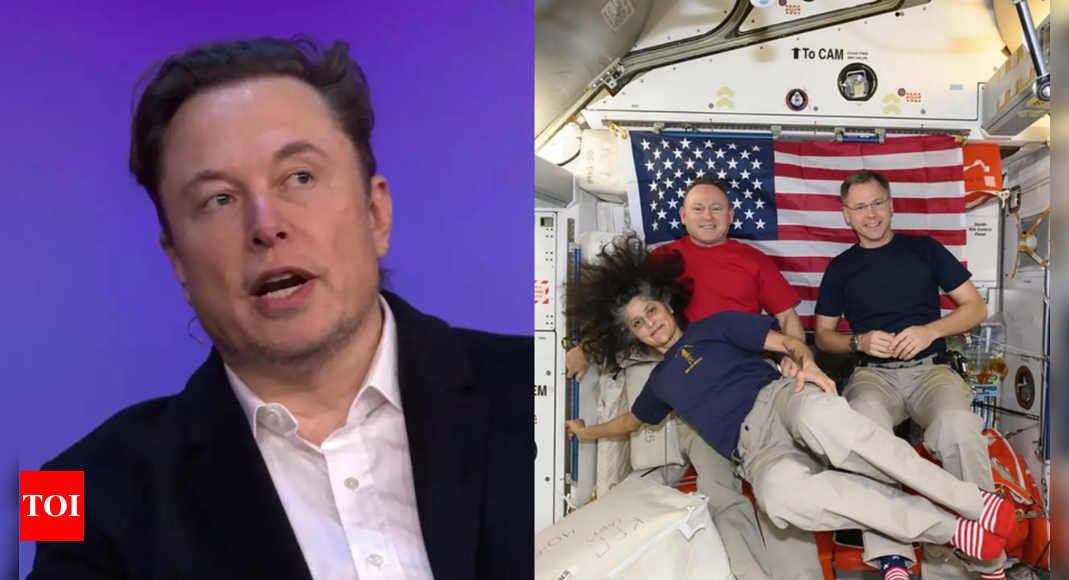
The mission was designed to prove that Boeing could finally join SpaceX in transporting astronauts to and from orbit.
Instead, it became one of the most embarrassing crises in the company’s history.
Technical problems began appearing almost immediately.
Thruster failures.
Helium leaks.
Unexpected system malfunctions.
One issue after another raised serious concerns about the spacecraft’s ability to safely return its crew to Earth.
As engineers scrambled to understand the problems, NASA faced a difficult decision.
Should they trust Boeing’s troubled spacecraft with the lives of two astronauts?
Or should they find another way home?
Eventually, NASA made its choice.
The agency announced that Wilmore and Williams would not return aboard Starliner.
Instead, they would remain aboard the International Space Station and eventually come home using a SpaceX Crew Dragon capsule.
A mission originally scheduled to last just over a week suddenly stretched into months.
For Boeing, the decision was devastating.
For SpaceX founder Elon Musk, it was proof of something he had been saying for years.
In August 2024, Musk posted a message that many interpreted as a direct attack on Boeing.
He argued that traditional aerospace giants were losing their dominance in space just as traditional automakers never became leaders in aviation.
The implication was impossible to miss.
Despite receiving billions of dollars in government funding, Boeing had spent years struggling to build a spacecraft that SpaceX had already surpassed.
But then Musk made a statement that sparked even more attention.
Referring to the stranded astronauts, he suggested that without SpaceX, NASA might have been forced to rely on Russia once again to bring American astronauts home.
It was a startling reminder of how much had changed over the previous decade.
Back in 2014, NASA awarded contracts to two companies.
Boeing received $4.2 billion.
SpaceX received $2.6 billion.
At the time, Boeing was considered the safer choice.
It was one of the largest aerospace companies in the world, backed by decades of experience and countless government contracts.
SpaceX was still viewed as an ambitious newcomer.
Many experts expected Boeing to dominate.
The opposite happened.
While SpaceX rapidly developed Crew Dragon and began routinely carrying astronauts to the International Space Station in 2020, Boeing suffered delay after delay.
Software failures.
Engineering mistakes.
Valve problems.
Parachute concerns.
Budget overruns.
Every attempt to move forward seemed to reveal another obstacle.
The warning signs appeared years earlier.
In 2019, Starliner’s first orbital test flight ended in embarrassment when a software timing error caused the spacecraft to believe it was in a different phase of flight.
The mistake triggered incorrect maneuvers that burned precious fuel and prevented the vehicle from reaching the International Space Station.
NASA investigators later uncovered dozens of serious issues that required correction.
The setback delayed Boeing’s crewed missions by years.
Meanwhile, SpaceX continued launching astronauts successfully.
By 2024, Crew Dragon had already completed multiple operational missions, becoming NASA’s most reliable transportation system for human spaceflight.
Starliner, however, was still trying to prove it could perform a single successful crewed mission.
Then came Butch Wilmore and Sunita Williams.
Both astronauts were among NASA’s most experienced veterans.
Wilmore was a former Navy test pilot who had spent months aboard the International Space Station and conducted multiple spacewalks.
Williams was one of NASA’s most accomplished astronauts, holding records for spacewalking and long-duration missions.
If anyone could handle an uncertain situation, it was them.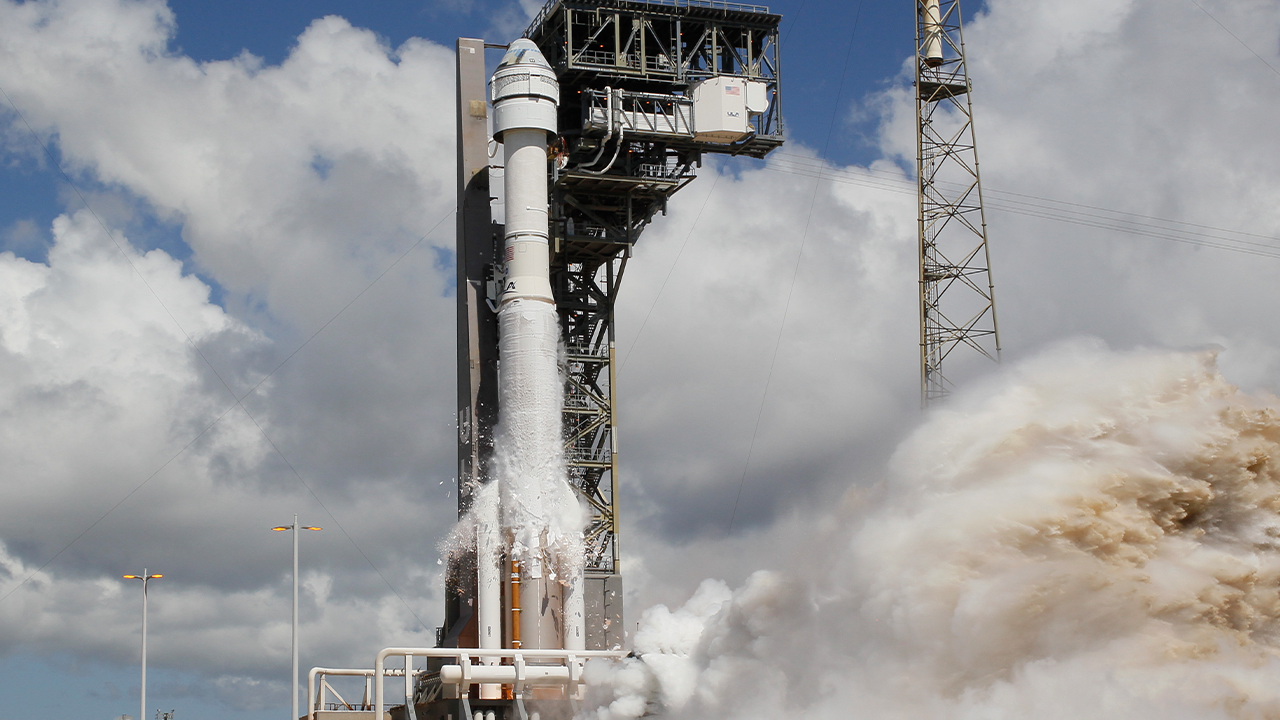
Yet even their experience could not eliminate concerns about Starliner’s growing list of technical problems.
As the spacecraft remained docked to the station, engineers on Earth continued analyzing data.
Every new review raised additional questions.
Could the propulsion system be trusted?
Would the thrusters perform correctly during reentry?
Could the spacecraft safely protect its crew during the most dangerous phase of the mission?
NASA’s answer became increasingly clear.
The risk was simply too high.
As public confidence in Boeing continued to decline, the story grew larger than a single spacecraft.
It became a symbol of two companies moving in opposite directions.
One struggling to overcome years of setbacks.
The other reshaping the future of human spaceflight.
And as the drama unfolded, Elon Musk’s comments added fuel to an already explosive debate.
Was Starliner merely experiencing normal development challenges?
Or was this the latest sign that the balance of power in space exploration had permanently shifted?
For Boeing, the answer could determine the future of its entire space program.
For NASA, it was about protecting the lives of two astronauts.
And for the world watching from below, one question remained:
How did a mission designed to last eight days become one of the most controversial spaceflight stories of the decade?