Morgan Freeman is 89 years old now, and when he talks about the summer of 1993, he does not lead with the awards or the box office resurrection. He leads with the friendship. The film that would become the highest-rated movie in cinema history was shot inside a real, shuttered Ohio reformatory, and it took decades for the world to catch up to what the cast and crew built there. For Freeman, that summer came after 50 years of waiting for a role that demanded everything his life had given him.
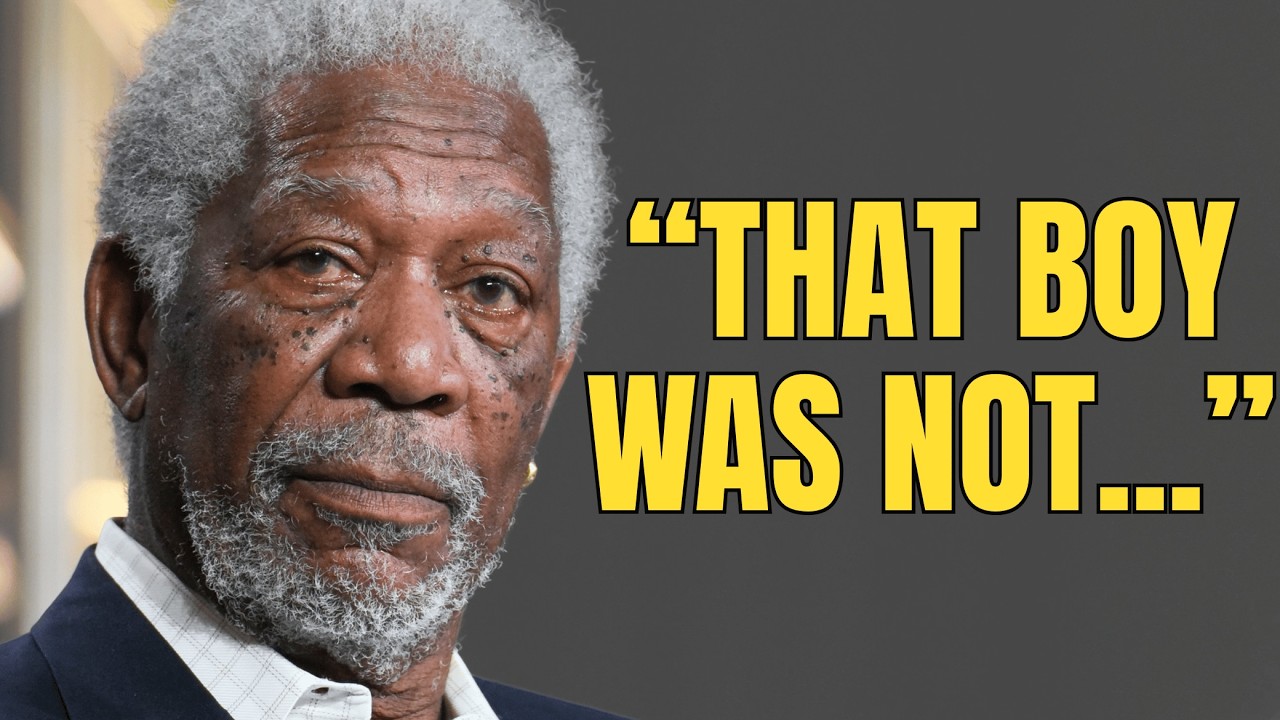
Born in Mississippi, Freeman first felt the pull of acting at age nine, when he walked onto a makeshift stage for a school play and felt, for the first time, that he was seen. That feeling carried him through years of rejection. He left Mississippi, served in the Air Force, moved to Los Angeles in 1959, and found Hollywood’s doors closed. He relocated to New York, drove taxis, danced in the 1964 World’s Fair Chorus, and kept hearing no.
At 40, he found work on PBS’s “The Electric Company,” playing Easy Reader, a role that made him beloved by children but invisible to Hollywood. In 1987, at 50, he earned his first Academy Award nomination for “Street Smart. ” He didn’t win. Two more nominations came back-to-back in 1989 for “Driving Miss Daisy” and “Glory.
” Still no Oscar. The losses continued, and Freeman carried them with the grace of a man who had learned the world moves on its own schedule. Then came the script for “The Shawshank Redemption. ” Freeman has described it as one of the best he had ever read, a draft so complete that very little changed from the page to the screen.
He wanted to be in it in any capacity. The role they offered him was Red, the narrator and conscience of the film. Freeman later admitted he was flabbergasted. He said, “I thought I control the movie.
”
There was one complication. In Stephen King’s original novella, Red was described as a middle-aged Irishman with graying red hair. Freeman closed the book after the first page and never read another line. He trusted what he had found in Frank Darabont’s screenplay.
The spirit of the character—a man of hard wisdom and preserved hope—was a man Freeman had been preparing to play his entire life. The role had been considered for Clint Eastwood, Harrison Ford, Paul Newman, and Robert Redford before Castle Rock producer Liz Glotzer suggested ignoring the novella’s physical description entirely and casting Freeman. Darabont later said he could not see anyone else in the part. Principal photography began in the summer of 1993 in Mansfield, Ohio, at the Ohio State Reformatory, a gothic structure that needed no set dressing to feel like exactly what the story required.
Freeman spent that summer in a house rented from a Seventh-day Adventist dentist, a stay that included at least one backyard barbecue and eventually a tornado. He recalled the detail later with quiet humor. The work itself was smooth. Freeman described that summer as a good time, a delightful time, marked by camaraderie between the cast and a shared understanding of what they had in the script.
One documented detail from production speaks to Freeman’s professionalism. A key scene, the first real conversation between Andy and Red in the prison yard, where Red casually tosses a baseball while talking, took nine hours to shoot. Darabont wanted many takes. Freeman threw the baseball for nine uninterrupted hours without a complaint and showed up the next morning with his left arm in a sling.
He did not make a production of it. Tim Robbins, who played Andy Dufresne, had grown up watching Freeman on “The Electric Company. ” He read the script and felt what Freeman felt, that it was one of the best things he had ever encountered. Their on-screen dynamic, a friendship that breathes across years of shared prison yard afternoons, became one of the most studied things in modern cinema.
It worked because of presence, two men fully there in the scene. The film was released on September 23, 1994. It did not make a sound at the box office. The title confused people, and Freeman later recalled the creative ways audiences mangled it, including “Shim Shim Shank Reduction” and, his favorite, “Shank Reduction.
” He suggested with a straight face that had they used that title, the film would have been a blockbuster. As it was, it earned $16 million at the box office against a $25 million budget. The industry called it a noble failure. Then cable television got hold of it.
Ted Turner, who owned Castle Rock at the time, aired the film constantly. Slowly, then quickly, word of mouth spread. Working men stopped Freeman on the street to tell him what the film had meant. He understood then that they had made something that reached past the mechanics of cinema into something more essential.
Freeman believed the friendship between Andy and Red was part of it, noting that genuine friendship between adults is rare in cinema. But there was something else. He believed most people carry a version of Zihuatanejo, the beach at the end of the world that Andy carried in his mind for 19 years, inside themselves. Not a literal place, but the idea that somewhere beyond the circumstances that confine them, there is a place they are still capable of reaching.
Freeman’s steady voice delivered that permission directly to the listener. In 2005, at 67, after four nominations over 17 years, Freeman finally won the Oscar for “Million Dollar Baby. ” His acceptance speech was brief, almost uncomfortable with the attention. Those who knew his story understood what the statue represented: 50 years of auditions that went nowhere, of driving cabs and waiting.
Today, Freeman lives with the effects of a 2008 car accident that shattered his arm and left him with nerve damage and fibromyalgia. He wears a compression glove and has said plainly that the pain is constant. He works when the work interests him, and he spends time at his ranch in Mississippi, where he tends 26 beehives with the patience of a man who has learned that stillness is not the same as stopping. When he talks about “The Shawshank Redemption” now, 30 years later, he does not focus on the Oscar nomination it earned him or the film’s resurrection on cable or its place at the top of the IMDb rankings since 2008.
He comes back to the friendship with Tim Robbins, formed in the yard of an Ohio reformatory and sustained across three decades. There is an ease to it that has nothing to perform. Perhaps what he comes back to most is the idea that the 50 years of waiting were building toward a role that required exactly what his life had made him. Red was a man who had survived by going inward and still kept a light on.
Red was the voice people needed to believe that getting busy living was still an option. Morgan Freeman had been preparing to play that man since he was nine years old on a stage in Mississippi. When the moment came, in a real prison in Ohio, he threw a baseball for nine hours and showed up the next morning with his arm in a sling.
The work always was the thing.